Roe v. Wade at Forty

Posted this morning on Maddow blog this new chart which includes information from an NBC/Wall Street Journal poll.

Exactly 40 years ago today, the U.S. Supreme Court issued its Roe v. Wade ruling. In a 7-2 decision, the court majority decided that Americans have a constitutional right to privacy, which includes being able to terminate an unwanted pregnancy.

I think that the Republican efforts to curtail abortion, to close clinics and to subject women who want to terminate an unwanted pregnancy are having an opposite effect than the one they want.  Kinda like voter suppression which just made people angry enough to stand in line for hours.

The high level of support for Roe comes with some underlying issues that we need to work on.  Bryce Covert just posted some interesting charts at the Nation about the economics of having an abortion.  The charts come from the Guttmacher Institute.  Here are two.

Guttmacher poor women

GuttmacherProviders

The support for keeping Roe has been steadily increasing.  Now we have to figure out how to implement the decision so it means something.

Civil Rights and President Obama: the Second Inaugural Address

“We, the people, declare today that the most evident of truths — that all of us are created equal — is the star that guides us still, just as it guided our forebears through Seneca Falls and Selma and Stonewall,”

Inaugural Addresses, particularly second addresses are not generally remembered.  There is John F. Kennedy’s “Ask Not” address and there is Lincoln’s Second address.  You could throw in Franklin D. Roosevelt’s Second.

Lincoln said these now famous words

With malice toward none, with charity for all, with firmness in the right as God gives us to see the right, let us strive on to finish the work we are in, to bind up the nation’s wounds, to care for him who shall have borne the battle and for his widow and his orphan, to do all which may achieve and cherish a just and lasting peace among ourselves and with all nations.

FDR noted the 150th anniversary of the Constitutional Convention and spoke about the role of government.

“We of the Republic sensed the truth that democratic government has innate capacity to protect its people against disasters once considered inevitable, to solve problems once considered unsolvable. We would not admit that we could not find a way to master economic epidemics just as, after centuries of fatalistic suffering, we had found a way to master epidemics of disease. We refused to leave the problems of our common welfare to be solved by the winds of chance and the hurricanes of disaster.”

and pointed out that success would be judged not by adding wealth to those who already had wealth but whether it could

“provide enough for those who [had] too little.”

Add to the great second inaugural speeches of Roosevelt and Lincoln, Barack Obama’s.

John Nichols writing in the Nation said Obama’s speech “charts the arc of history that bends toward justice.”  The President took on  the unfinished business of civil rights – in equal pay for women, voting rights for minorities, and equal rights for gay and lesbian Americans.  He said

It is now our generation’s task to carry on what those pioneers began, for our journey is not complete until our wives, our mothers and daughters can earn a living equal to their efforts.

Our journey is not complete until our gay brothers and sisters are treated like anyone else under the law, for if we are truly created equal, then surely the love we commit to one another must be equal, as well.

Our journey is not complete until no citizen is forced to wait for hours to exercise the right to vote.

Our journey is not complete until we find a better way to welcome the striving, hopeful immigrants who still see America as a land of opportunity, until bright young students and engineers are enlisted in our workforce rather than expelled from our country.

Our journey is not complete until all our children, from the streets of Detroit to the hills of Appalachia to the quiet lanes of Newtown, know that they are cared for and cherished and always safe from harm.

That is our generation’s task, to make these works, these rights, these values of life and liberty and the pursuit of happiness real for every American.

He echoed FDR

“We do not believe that in this country, freedom is reserved for the lucky, or happiness for the few,”

I think the speech showed that second terms can liberate and that his second term will see him push unapologetically for an agenda that includes everyone – even Republicans if they choose to listen.

Photographs: Chang W. Lee/The New York Times and Doug Mills/The New York Times

Taking the oath

President Obama just became the 16th President to take the oath of office for the second time.  There have been 57 inaugurations.

President Barack Obama is officially sworn-in by Chief Justice John Roberts in the Blue Room of the White House. | AP Photo

Josh Gerstein commented on Politico

Barack Obama and John Roberts were all smiles when the chief justice swore in  the president on Sunday — and they’ll likely repeat the performance on  Monday.

But the serene tableau obscures the tumultuous relationship between the two  men since their first awkward public interaction during the botched oath of  office four years ago.

On Sunday, Roberts read the oath from a piece of paper — and both men seemed  relieved when it was over. They exchanged congratulations and thanks, and then  Obama turned to his daughter Sasha. “I did it,” he told her.

Vice President Joe Biden was sworn in earlier by Justice Sotomayor.

Vice-president Joe Biden takes the oath

Obama Photograph AP

Biden photograph Carolyn Kaster/AP

Impeaching President Obama?!

Every time I think that the Republican party has reached the apex of craziness something else happens.  Have the Republican’s who have called for President Obama’s impeachment over his 23 Executive Orders to promote gun safety and curb gun violence actually read them?  I know anyone who wants to impeach him will not read this blog, but here is the complete list as posted on the Wonkblog:

The White House also announced 23 executive orders on guns and gun violence that Obama would sign immediately:

1. Issue a Presidential Memorandum to require federal agencies to make relevant data available to the federal background check system.

2. Address unnecessary legal barriers, particularly relating to the Health Insurance Portability and Accountability Act, that may prevent states from making information available to the background check system.

3. Improve incentives for states to share information with the background check system.

4. Direct the Attorney General to review categories of individuals prohibited from having a gun to make sure dangerous people are not slipping through the cracks.

5. Propose rulemaking to give law enforcement the ability to run a full background check on an individual before returning a seized gun.

6. Publish a letter from ATF to federally licensed gun dealers providing guidance on how to run background checks for private sellers.

7. Launch a national safe and responsible gun ownership campaign.

8. Review safety standards for gun locks and gun safes (Consumer Product Safety Commission).

9. Issue a Presidential Memorandum to require federal law enforcement to trace guns recovered in criminal investigations.

10. Release a DOJ report analyzing information on lost and stolen guns and make it widely available to law enforcement.

11. Nominate an ATF director.

12. Provide law enforcement, first responders, and school officials with proper training for active shooter situations.

13. Maximize enforcement efforts to prevent gun violence and prosecute gun crime.

14. Issue a Presidential Memorandum directing the Centers for Disease Control to research the causes and prevention of gun violence.

15. Direct the Attorney General to issue a report on the availability and most effective use of new gun safety technologies and challenge the private sector to develop innovative technologies.

16. Clarify that the Affordable Care Act does not prohibit doctors asking their patients about guns in their homes.

17. Release a letter to health care providers clarifying that no federal law prohibits them from reporting threats of violence to law enforcement authorities.

18. Provide incentives for schools to hire school resource officers.

19. Develop model emergency response plans for schools, houses of worship and institutions of higher education.

20. Release a letter to state health officials clarifying the scope of mental health services that Medicaid plans must cover.

21. Finalize regulations clarifying essential health benefits and parity requirements within ACA exchanges.

22. Commit to finalizing mental health parity regulations.

23. Launch a national dialogue led by Secretaries Sebelius and Duncan on mental health.

I think the NRA wanted more cops at schools.  That is #18.  A cop at a school is a resource officer who is especially trained to be around kids and knows what to do in a school setting.  See also #19.  They also wanted more emphasis on mental health issues.  Look at #17, #20, #21, and #22.

Here are the pictures of those who, as of today, are supporting impeachment I guess because they got some of what they wanted.   Remember impeachment begins in the House.  These were posted by Think Progress.

Rep. Steve Stockman (R-TX)

Rep. Trey Radel (R-FL)

Rep. Louie Gohmert (R-TX)

Former Attorney General Edwin Meese (R)

And I’m sure there will be more to add.  Like Senator Rand Paul.

Like I said, it just gets crazier.

Shaking hands – or not

Shaking hands is an almost universal and very ancient custom likely begun to show that neither person was holding a weapon.  Is it time to give up the custom?  And if we do, what would we replace it with?  I started thinking about this important question after reading Scott Lehigh’s column in today’s Boston Globe.

Let’s call our group of health-conscious citizens POSH: People Opposed to Shaking Hands.

Which brings me to the silver lining: This is the only time of year when it’s socially acceptable to refuse a handshake. Confronted with a presumptuously proffered paw, one need only invoke this magical phase: “The health experts say you really shouldn’t shake hands in flu season.”

If only those experts would make that a year-round recommendation. I mean, what, really, is the point? I’d understand it if humans were like those old cast-iron water pumps, and you had to lift and lower their arms a few times to bring forth a flow of conversation. But most folks I encounter are so impulsively chatty they feel no compunction whatsoever about sallying right into subjects that are none of their business. Like, say, why you don’t want to shake hands.

I know, I know, some people see it as a mark of friendship. But here at POSH, we see an outstretched hand for what it is: An amphibious landing craft crammed with an infantry of infectious microbes.

“OK, boys, we’re about to make contact. Move fast, travel light, and dig in as soon as you can.  Cold, Cough, and Fever, take the lead.”

I’ve been known to say that I have a cold so the other person doesn’t want to shake hands with me so I guess I’m a member of POSH.

I suggest we substitute another form of greeting.

There is the Japanese custom of bowing.  In Japan there can be complicated rules about the deepness of the bow to indicated relative social importance, but we don’t have to adopt that, we can just place our hands on our thighs or at our sides and incline slightly from the waist.

Or we could adopt the Sanskrit, namaste, which has more spiritual significance.

Finally, there is the good American fist bump.

Obama Fist Bump

Dap, first bump, whatever you call it: Barack and Michelle Obama showed their togetherness.

Even Mitt does it!

From christopherstreet

And Dubya tried.

So I’m with Scott Lehigh – lets stop shaking hands.

The President, Big Business and the Republicans

You may have noticed that the President has met more than once with various business groups and corporate leaders about fiscal and economic issues.  In today’s New York Times, Jackie Calmes has an interesting analysis.

Corporate chiefs in recent months have pleaded publicly with Republicans to raise their taxes for the sake of deficit reduction, and to raise the nation’s debt limit without a fight lest another confrontation like that in 2011 wallop the economy. But the lobbying has been to no avail. This is not their parents’ Republican Party.

In a shift over a half-century, the party base has been transplanted from the industrial Northeast and urban centers to become rooted in the South and West, in towns and rural areas. In turn, Republicans are electing more populist, antitax and antigovernment conservatives who are less supportive — and even suspicious — of appeals from big business.

The article quotes Senator Cruz

“One of the biggest lies in politics is the lie that Republicans are the party of big business,” Ted Cruz, a new senator from Texas and a Tea Party favorite, told The Wall Street Journal during his 2012 campaign. “Big business does great with big government. Big business is very happy to climb in bed with big government. Republicans are and should be the party of small business and of entrepreneurs.”

Senator Cruz

This brings me to the question, once more, as to who is actually represented by people like Senator Cruz.  OK, I get the small town and rural but what I don’t get is what exactly does he and his wing of the party want to do for those they represent.  My husband would tell me that they don’t want to do anything except blow up government.  Maybe so, but how politically popular would it be to do away with money for roads and railroads that move the farm products that are produced?  (Heard of infrastructure, Senator?)  Or the rural subsidies that provide phone and internet services?  Or the various farm subsidies?  I admit, that I’m not clear on where they are on the corporate farm versus the family farm issue.

But big business isn’t interested in blowing up the government.

Big business is so fearful of economic peril if Congress does not allow the government to keep borrowing — to pay creditors, contractors, program beneficiaries and many others — that it is nearly united in skepticism of, or outright opposition to, House Republicans’ demand that Mr. Obama first agree to equal spending cuts in benefit programs like Medicare and Medicaid.

That explains the administration’s outreach to corporate chiefs, like Monday’s conference call. Mr. Obama wants business’s support to buttress his vow that he will never again negotiate over so essential an action like he did in 2011, when the nation flirted with default and the economy suffered. Vexing Republicans, many business leaders are siding with him.

“I’m agreeing with the president — you should not be using the debt limit as a bargaining chip when it comes to how you run the country,” said David M. Cote, chief executive of Honeywell, and a Republican. “You don’t put the full faith and credit of the United States at risk.”

And the party reaction?

Some of the Republicans’ distancing from big business is a matter of political tactics — to alter their image as the party of wealth and corporate power. A writer for the conservative Weekly Standard said of the fiscal fight last month, “While big business cozies up to Obama once again, Republicans have an opportunity to enhance their reputation as the party of Main Street.”

But if we default on our debt by no raising the debt ceiling, what will happen to all those small Main Street businesses?  People with no social security, unemployment, and in the case of thousands of furloughed government workers at all levels will have no money to spend and those very businesses will be at risk.

Let’s face it.  No one “likes” government until they want or need government to do something for them then we all love government.  All those Republican’s in Congress, many from the South, who voted against Sandy relief will be crying in August and September when a storm hits the Gulf.

President Barack Obama talks with Michael G. M...

President Barack Obama talks with Michael G. Morris, right, of American Electric Power Company, and David Cote in the Cross Hall of the White House, before a dinner with CEOs, Feb. 24, 2010. (Photo credit: Wikipedia)

Clarence Speaks – and makes news

It has been seven years or so since Justice Clarence Thomas has said word at  Supreme Court during oral arguments so when he spoke, he made the news.  But he still hasn’t asked a question, so that streak is intact, and we aren’t really sure what he said.

According to the Washington Post

Thomas seemed to be making a lighthearted joke about lawyers trained at his alma mater, Yale Law School, or its rival, Harvard; the Ivy League is a common Thomas target. But several justices were speaking and laughing at the time, and Thomas’s exact comments apparently are lost to history.

Too bad.  This is what we have for a transcript.

Monday’s case was from Louisiana, and the question was whether years-long delays in funding lawyers for an indigent man facing the death penalty violated his right to a speedy trial.

Jonathan Boyer’s lawyer, Richard Bourke of New Orleans, said the delay meant that Boyer did not have lawyers competent to handle a complicated murder case that brought the prospect of the death penalty.

Justice Antonin Scalia, however, suggested that Boyer did have qualified lawyers. Didn’t one of them go to Yale? he asked Carla S. Sigler, the Louisiana assistant district attorney in the case.

She did, Sigler said. And didn’t another attend Harvard? Scalia asked. Yes, again, Sigler said.

“Son of a gun,” Scalia said.

Thomas was among the justices — all nine attended either Harvard or Yale — who either laughed or made side comments at that point.

All that appears in the transcript is Thomas saying, “Well — he did not — ”

It seems likely that the rest of the sentence was along the lines of “have competent counsel.” Sigler, smiling, replied: “I would refute that, Justice Thomas.”

Sotomayor, a Yale graduate, then asked Sigler what was enough to make a lawyer constitutionally adequate.

“Is it anybody who’s graduated from Harvard and Yale?”

More laughter.

“Or even just passed the bar?” Sotomayor asked.

“Or LSU law,” Sigler said, referring to Louisiana State University.

Thomas famously does not believe that the Justices should be asking pesky questions during oral argument believing that it is the time that the lawyers for each side should lay out their cases.  Other Justices don’t agree.

None of his colleagues, conservative or liberal, share such a view. They believe that the lawyers make their case in briefs filed with the court, and that oral arguments are the chance for the justices to challenge their theories and make them respond to their opponents’ arguments.

Makes me wonder if he reads any of the briefs.  He doesn’t have to because Justice Scalia is around to tell him how to vote.

English: The United States Supreme Court, the ...

English: The United States Supreme Court, the highest court in the United States, in 2009. Top row (left to right): Associate Justice Samuel A. Alito, Associate Justice Ruth Bader Ginsburg, Associate Justice Stephen G. Breyer, and Associate Justice Sonia Sotomayor. Bottom row (left to right): Associate Justice Anthony M. Kennedy, Associate Justice John Paul Stevens, Chief Justice John G. Roberts, Associate Justice Antonin G. Scalia, and Associate Justice Clarence Thomas. (Photo credit: Wikipedia)

The Lord of the Coin or another take on the trillion dollar coin.

Ruben Bolling’s take on the magic coin.

td130111.gif

And so, once again Joe Biden causes trouble.

The trillion dollar coin explained – sort of

When I started hearing about the possibility of the treasury minting a trillion dollar coin which could end all the endless debates about the debt ceiling, I thought it was a joke.  Turns out, that is only partly true.  Here are two views of the platinum coin.

The first is Neil Irwin’s as posted on the Wonkblog.

I’ll lay out this econo-pundit’s conclusion upfront: I hate the platinum coin idea. But if there is no resolution of the debt ceiling through the legislative process, I hate some of the alternatives more.

The issue, for those who need a refresher: To avoid running into the debt ceiling in the next couple of months, the Treasury secretary could exploit a legal loophole, create a platinum coin, assign it a value of $1 trillion or some other very high number, and deposit it at the Fed, thus enabling the government to carry out its previously promised tax and spending policies without broaching the legal cap on debt issuance.

To back up a minute, it is important to understand what the debt ceiling does, and why it is problematic. Congress passes laws to spend money: This many dollars for fighter aircraft, Social Security benefits paid according to such and such formula, and so on. It passes laws to enact a tax code. And the difference between that spending and the money raised in taxes the government funds by issuing debt. But Congress also has a third constraint: An overall ceiling on how much debt the Treasury can issue. In the past, Congress has raised that ceiling to whatever it needed to be to match the previously approved taxes and spending as a matter of course.

Now, House Republicans are viewing the debt ceiling differently. They are treating the debt ceiling–and the need to raise it–as a lever through which to try to win battles over spending that they lost in previous negotiations. They want to not pass an increase to the debt ceiling unless they get some major concessions from Democrats on cutting spending—concessions that Democratic senators and the White House say are non-starters.

So the idea of the trillion dollar coin would be to put this whole impasse to rest.  Irwin goes on to explain what the coin would not do.

A couple of the widespread objections don’t hold water. So long as the Federal Reserve does its job, the platinum coin would not be inflationary. In the current ultra-low interest rate environment, the Treasury depositing a $1 trillion coin at the Fed would not affect the supply of money in the broader economy any differently from it issuing $1 trillion in Treasury bills. Nothing about the platinum coin would prevent the Fed from hiking interest rates when it sees an inflationary threat on the horizon.

That’s not to say a platinum coin gambit would be much fun for the Fed. Chairman Ben Bernanke and New York Fed president Bill Dudley would face a moment of truth, and scores of Fed lawyers would be working overtime, as the central bank had to decide whether to treat the $1 trillion coin as a legal deposit. The Fed in general hates to end up in the middle of political disputes, and this would be a highly uncomfortable spot.

On the other side is Paul Krugman who begins by explaining the whole debt ceiling business.

Where does the debt ceiling fit into all this? Actually, it doesn’t. Since Congress already determines revenue and spending, and hence the amount the Treasury needs to borrow, we shouldn’t need another vote empowering that borrowing. But for historical reasons any increase in federal debt must be approved by yet another vote. And now Republicans in the House are threatening to deny that approval unless President Obama makes major policy concessions.

It’s crucial to understand three things about this situation. First, raising the debt ceiling wouldn’t grant the president any new powers; every dollar he spent would still have to be approved by Congress. Second, if the debt ceiling isn’t raised, the president will be forced to break the law, one way or another; either he borrows funds in defiance of Congress, or he fails to spend money Congress has told him to spend.

So in reality, Congress would just have to authorize borrowing money that they have already said could be spent.  And part of the issue is that not enough people are working and paying enough taxes to create enough revenue.  In some ways you can understand the Republicans who want to set a fixed amount for a budget and then make everything fit.  No borrowing.  But then you have things like Hurricane Sandy and extra spending for the Bush wars for which no revenue was ever raised, and etc., etc. and we end up either cutting things no one wants to cut or borrowing.  Back to Krugman.

Finally, just consider the vileness of that G.O.P. threat. If we were to hit the debt ceiling, the U.S. government would end up defaulting on many of its obligations. This would have disastrous effects on financial markets, the economy, and our standing in the world. Yet Republicans are threatening to trigger this disaster unless they get spending cuts that they weren’t able to enact through normal, Constitutional means.

Republicans go wild at this analogy, but it’s unavoidable. This is exactly like someone walking into a crowded room, announcing that he has a bomb strapped to his chest, and threatening to set that bomb off unless his demands are met.

Which brings us to the coin.

Here’s how it would work: The Treasury would mint a platinum coin with a face value of $1 trillion (or many coins with smaller values; it doesn’t really matter). This coin would immediately be deposited at the Federal Reserve, which would credit the sum to the government’s account. And the government could then write checks against that account, continuing normal operations without issuing new debt.

But wouldn’t the coin trick be undignified? Yes, it would — but better to look slightly silly than to let a financial and Constitutional crisis explode.

A downgrade of the United States credit rating again will end up costing us in interest which seems to me to defeat the purpose since we will probably have to borrow more to pay extra to borrow.  Maybe enough Republicans will join with enough Democrats to raise the ceiling to a trillion dollars and we won’t need the magic coin.  This is what Irwin is hoping for.

The platinum coin gambit could be terrible for the U.S. government’s long-term standing as a premier destination for global capital. This is a moment for Republicans to take responsibility for governing and to accept the fact that their leverage is limited with control of only one house of Congress. But if the alternative truly is default, a crazy coin option may indeed be less bad than the alternatives.
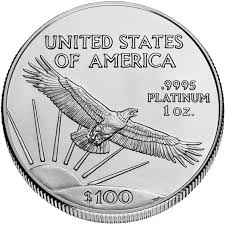
What would be on the other side?  Some suggestions include the Cat in the Hat, Alfred E. Newman (both sent in to the Takeaway) and my favorite idea, Mark Twain who once said, “Suppose you were an idiot. And suppose you were a member of Congress. But I  repeat myself.”

Jack Lew, Secretary of the Treasury UPDATED

If Jack Lew is confirmed, we have a great thing to look forward to according to Ezra Klein.

The Treasurer signs our money.  This is Lew’s signature.

lew sig

I can’t wait to get my first bills signed by him.

But as Klein cautions

Obviously, that would turn American currency into the best money
ever. Unfortunately  there’s always the chance that Lew could ruin everything by
making his signature less, well, loopy. That’s what the fun destroyer Timothy
Geithner didwhen he became treasury secretary.

We can only hope that Mr. Lew is true to himself and we have great money for the next four years.  Don’t change your signature, Mr. Lew!


UPDATED:

President Obama had this today about his signature

“I had never noticed Jack’s signature” until media coverage of the looping letters on Wednesday, Obama said at the East Room ceremony where he announced his nomination of Lew. “I considered rescinding my offer to appoint him.”

Obama said he’s asked Lew to “make at least one letter legible in order to not debase our currency should he be confirmed as secretary of the Treasury.”