Hopes for Obama 2.0

I thought this was a good summary of President Obama’s first term and what we hope can be avoided.

And they are still working on it.  Just look at Mike Luckovich

The more things change the more they stay the same.  John McCain is mischaracterizing Hillary Clinton’s testimony and it looks, right now like Harry Reid is going to cave on filibuster reform after all but it is an evolving situation.

And if you want another sign that nothing has changed, John Boehner is accusing Obama of destroying the Republican party.  I think they are doing a pretty good job without the President’s help.

Collage of pictures of John Boehner crying.

Boehner Collage – Jed Lewison

Taking the oath

President Obama just became the 16th President to take the oath of office for the second time.  There have been 57 inaugurations.

President Barack Obama is officially sworn-in by Chief Justice John Roberts in the Blue Room of the White House. | AP Photo

Josh Gerstein commented on Politico

Barack Obama and John Roberts were all smiles when the chief justice swore in  the president on Sunday — and they’ll likely repeat the performance on  Monday.

But the serene tableau obscures the tumultuous relationship between the two  men since their first awkward public interaction during the botched oath of  office four years ago.

On Sunday, Roberts read the oath from a piece of paper — and both men seemed  relieved when it was over. They exchanged congratulations and thanks, and then  Obama turned to his daughter Sasha. “I did it,” he told her.

Vice President Joe Biden was sworn in earlier by Justice Sotomayor.

Vice-president Joe Biden takes the oath

Obama Photograph AP

Biden photograph Carolyn Kaster/AP

Impeaching President Obama?!

Every time I think that the Republican party has reached the apex of craziness something else happens.  Have the Republican’s who have called for President Obama’s impeachment over his 23 Executive Orders to promote gun safety and curb gun violence actually read them?  I know anyone who wants to impeach him will not read this blog, but here is the complete list as posted on the Wonkblog:

The White House also announced 23 executive orders on guns and gun violence that Obama would sign immediately:

1. Issue a Presidential Memorandum to require federal agencies to make relevant data available to the federal background check system.

2. Address unnecessary legal barriers, particularly relating to the Health Insurance Portability and Accountability Act, that may prevent states from making information available to the background check system.

3. Improve incentives for states to share information with the background check system.

4. Direct the Attorney General to review categories of individuals prohibited from having a gun to make sure dangerous people are not slipping through the cracks.

5. Propose rulemaking to give law enforcement the ability to run a full background check on an individual before returning a seized gun.

6. Publish a letter from ATF to federally licensed gun dealers providing guidance on how to run background checks for private sellers.

7. Launch a national safe and responsible gun ownership campaign.

8. Review safety standards for gun locks and gun safes (Consumer Product Safety Commission).

9. Issue a Presidential Memorandum to require federal law enforcement to trace guns recovered in criminal investigations.

10. Release a DOJ report analyzing information on lost and stolen guns and make it widely available to law enforcement.

11. Nominate an ATF director.

12. Provide law enforcement, first responders, and school officials with proper training for active shooter situations.

13. Maximize enforcement efforts to prevent gun violence and prosecute gun crime.

14. Issue a Presidential Memorandum directing the Centers for Disease Control to research the causes and prevention of gun violence.

15. Direct the Attorney General to issue a report on the availability and most effective use of new gun safety technologies and challenge the private sector to develop innovative technologies.

16. Clarify that the Affordable Care Act does not prohibit doctors asking their patients about guns in their homes.

17. Release a letter to health care providers clarifying that no federal law prohibits them from reporting threats of violence to law enforcement authorities.

18. Provide incentives for schools to hire school resource officers.

19. Develop model emergency response plans for schools, houses of worship and institutions of higher education.

20. Release a letter to state health officials clarifying the scope of mental health services that Medicaid plans must cover.

21. Finalize regulations clarifying essential health benefits and parity requirements within ACA exchanges.

22. Commit to finalizing mental health parity regulations.

23. Launch a national dialogue led by Secretaries Sebelius and Duncan on mental health.

I think the NRA wanted more cops at schools.  That is #18.  A cop at a school is a resource officer who is especially trained to be around kids and knows what to do in a school setting.  See also #19.  They also wanted more emphasis on mental health issues.  Look at #17, #20, #21, and #22.

Here are the pictures of those who, as of today, are supporting impeachment I guess because they got some of what they wanted.   Remember impeachment begins in the House.  These were posted by Think Progress.

Rep. Steve Stockman (R-TX)

Rep. Trey Radel (R-FL)

Rep. Louie Gohmert (R-TX)

Former Attorney General Edwin Meese (R)

And I’m sure there will be more to add.  Like Senator Rand Paul.

Like I said, it just gets crazier.

The President, Big Business and the Republicans

You may have noticed that the President has met more than once with various business groups and corporate leaders about fiscal and economic issues.  In today’s New York Times, Jackie Calmes has an interesting analysis.

Corporate chiefs in recent months have pleaded publicly with Republicans to raise their taxes for the sake of deficit reduction, and to raise the nation’s debt limit without a fight lest another confrontation like that in 2011 wallop the economy. But the lobbying has been to no avail. This is not their parents’ Republican Party.

In a shift over a half-century, the party base has been transplanted from the industrial Northeast and urban centers to become rooted in the South and West, in towns and rural areas. In turn, Republicans are electing more populist, antitax and antigovernment conservatives who are less supportive — and even suspicious — of appeals from big business.

The article quotes Senator Cruz

“One of the biggest lies in politics is the lie that Republicans are the party of big business,” Ted Cruz, a new senator from Texas and a Tea Party favorite, told The Wall Street Journal during his 2012 campaign. “Big business does great with big government. Big business is very happy to climb in bed with big government. Republicans are and should be the party of small business and of entrepreneurs.”

Senator Cruz

This brings me to the question, once more, as to who is actually represented by people like Senator Cruz.  OK, I get the small town and rural but what I don’t get is what exactly does he and his wing of the party want to do for those they represent.  My husband would tell me that they don’t want to do anything except blow up government.  Maybe so, but how politically popular would it be to do away with money for roads and railroads that move the farm products that are produced?  (Heard of infrastructure, Senator?)  Or the rural subsidies that provide phone and internet services?  Or the various farm subsidies?  I admit, that I’m not clear on where they are on the corporate farm versus the family farm issue.

But big business isn’t interested in blowing up the government.

Big business is so fearful of economic peril if Congress does not allow the government to keep borrowing — to pay creditors, contractors, program beneficiaries and many others — that it is nearly united in skepticism of, or outright opposition to, House Republicans’ demand that Mr. Obama first agree to equal spending cuts in benefit programs like Medicare and Medicaid.

That explains the administration’s outreach to corporate chiefs, like Monday’s conference call. Mr. Obama wants business’s support to buttress his vow that he will never again negotiate over so essential an action like he did in 2011, when the nation flirted with default and the economy suffered. Vexing Republicans, many business leaders are siding with him.

“I’m agreeing with the president — you should not be using the debt limit as a bargaining chip when it comes to how you run the country,” said David M. Cote, chief executive of Honeywell, and a Republican. “You don’t put the full faith and credit of the United States at risk.”

And the party reaction?

Some of the Republicans’ distancing from big business is a matter of political tactics — to alter their image as the party of wealth and corporate power. A writer for the conservative Weekly Standard said of the fiscal fight last month, “While big business cozies up to Obama once again, Republicans have an opportunity to enhance their reputation as the party of Main Street.”

But if we default on our debt by no raising the debt ceiling, what will happen to all those small Main Street businesses?  People with no social security, unemployment, and in the case of thousands of furloughed government workers at all levels will have no money to spend and those very businesses will be at risk.

Let’s face it.  No one “likes” government until they want or need government to do something for them then we all love government.  All those Republican’s in Congress, many from the South, who voted against Sandy relief will be crying in August and September when a storm hits the Gulf.

President Barack Obama talks with Michael G. M...

President Barack Obama talks with Michael G. Morris, right, of American Electric Power Company, and David Cote in the Cross Hall of the White House, before a dinner with CEOs, Feb. 24, 2010. (Photo credit: Wikipedia)

The Lord of the Coin or another take on the trillion dollar coin.

Ruben Bolling’s take on the magic coin.

td130111.gif

And so, once again Joe Biden causes trouble.

The trillion dollar coin explained – sort of

When I started hearing about the possibility of the treasury minting a trillion dollar coin which could end all the endless debates about the debt ceiling, I thought it was a joke.  Turns out, that is only partly true.  Here are two views of the platinum coin.

The first is Neil Irwin’s as posted on the Wonkblog.

I’ll lay out this econo-pundit’s conclusion upfront: I hate the platinum coin idea. But if there is no resolution of the debt ceiling through the legislative process, I hate some of the alternatives more.

The issue, for those who need a refresher: To avoid running into the debt ceiling in the next couple of months, the Treasury secretary could exploit a legal loophole, create a platinum coin, assign it a value of $1 trillion or some other very high number, and deposit it at the Fed, thus enabling the government to carry out its previously promised tax and spending policies without broaching the legal cap on debt issuance.

To back up a minute, it is important to understand what the debt ceiling does, and why it is problematic. Congress passes laws to spend money: This many dollars for fighter aircraft, Social Security benefits paid according to such and such formula, and so on. It passes laws to enact a tax code. And the difference between that spending and the money raised in taxes the government funds by issuing debt. But Congress also has a third constraint: An overall ceiling on how much debt the Treasury can issue. In the past, Congress has raised that ceiling to whatever it needed to be to match the previously approved taxes and spending as a matter of course.

Now, House Republicans are viewing the debt ceiling differently. They are treating the debt ceiling–and the need to raise it–as a lever through which to try to win battles over spending that they lost in previous negotiations. They want to not pass an increase to the debt ceiling unless they get some major concessions from Democrats on cutting spending—concessions that Democratic senators and the White House say are non-starters.

So the idea of the trillion dollar coin would be to put this whole impasse to rest.  Irwin goes on to explain what the coin would not do.

A couple of the widespread objections don’t hold water. So long as the Federal Reserve does its job, the platinum coin would not be inflationary. In the current ultra-low interest rate environment, the Treasury depositing a $1 trillion coin at the Fed would not affect the supply of money in the broader economy any differently from it issuing $1 trillion in Treasury bills. Nothing about the platinum coin would prevent the Fed from hiking interest rates when it sees an inflationary threat on the horizon.

That’s not to say a platinum coin gambit would be much fun for the Fed. Chairman Ben Bernanke and New York Fed president Bill Dudley would face a moment of truth, and scores of Fed lawyers would be working overtime, as the central bank had to decide whether to treat the $1 trillion coin as a legal deposit. The Fed in general hates to end up in the middle of political disputes, and this would be a highly uncomfortable spot.

On the other side is Paul Krugman who begins by explaining the whole debt ceiling business.

Where does the debt ceiling fit into all this? Actually, it doesn’t. Since Congress already determines revenue and spending, and hence the amount the Treasury needs to borrow, we shouldn’t need another vote empowering that borrowing. But for historical reasons any increase in federal debt must be approved by yet another vote. And now Republicans in the House are threatening to deny that approval unless President Obama makes major policy concessions.

It’s crucial to understand three things about this situation. First, raising the debt ceiling wouldn’t grant the president any new powers; every dollar he spent would still have to be approved by Congress. Second, if the debt ceiling isn’t raised, the president will be forced to break the law, one way or another; either he borrows funds in defiance of Congress, or he fails to spend money Congress has told him to spend.

So in reality, Congress would just have to authorize borrowing money that they have already said could be spent.  And part of the issue is that not enough people are working and paying enough taxes to create enough revenue.  In some ways you can understand the Republicans who want to set a fixed amount for a budget and then make everything fit.  No borrowing.  But then you have things like Hurricane Sandy and extra spending for the Bush wars for which no revenue was ever raised, and etc., etc. and we end up either cutting things no one wants to cut or borrowing.  Back to Krugman.

Finally, just consider the vileness of that G.O.P. threat. If we were to hit the debt ceiling, the U.S. government would end up defaulting on many of its obligations. This would have disastrous effects on financial markets, the economy, and our standing in the world. Yet Republicans are threatening to trigger this disaster unless they get spending cuts that they weren’t able to enact through normal, Constitutional means.

Republicans go wild at this analogy, but it’s unavoidable. This is exactly like someone walking into a crowded room, announcing that he has a bomb strapped to his chest, and threatening to set that bomb off unless his demands are met.

Which brings us to the coin.

Here’s how it would work: The Treasury would mint a platinum coin with a face value of $1 trillion (or many coins with smaller values; it doesn’t really matter). This coin would immediately be deposited at the Federal Reserve, which would credit the sum to the government’s account. And the government could then write checks against that account, continuing normal operations without issuing new debt.

But wouldn’t the coin trick be undignified? Yes, it would — but better to look slightly silly than to let a financial and Constitutional crisis explode.

A downgrade of the United States credit rating again will end up costing us in interest which seems to me to defeat the purpose since we will probably have to borrow more to pay extra to borrow.  Maybe enough Republicans will join with enough Democrats to raise the ceiling to a trillion dollars and we won’t need the magic coin.  This is what Irwin is hoping for.

The platinum coin gambit could be terrible for the U.S. government’s long-term standing as a premier destination for global capital. This is a moment for Republicans to take responsibility for governing and to accept the fact that their leverage is limited with control of only one house of Congress. But if the alternative truly is default, a crazy coin option may indeed be less bad than the alternatives.
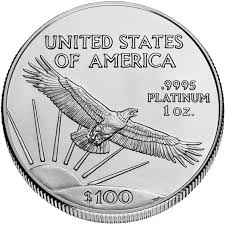
What would be on the other side?  Some suggestions include the Cat in the Hat, Alfred E. Newman (both sent in to the Takeaway) and my favorite idea, Mark Twain who once said, “Suppose you were an idiot. And suppose you were a member of Congress. But I  repeat myself.”

Jack Lew, Secretary of the Treasury UPDATED

If Jack Lew is confirmed, we have a great thing to look forward to according to Ezra Klein.

The Treasurer signs our money.  This is Lew’s signature.

lew sig

I can’t wait to get my first bills signed by him.

But as Klein cautions

Obviously, that would turn American currency into the best money
ever. Unfortunately  there’s always the chance that Lew could ruin everything by
making his signature less, well, loopy. That’s what the fun destroyer Timothy
Geithner didwhen he became treasury secretary.

We can only hope that Mr. Lew is true to himself and we have great money for the next four years.  Don’t change your signature, Mr. Lew!


UPDATED:

President Obama had this today about his signature

“I had never noticed Jack’s signature” until media coverage of the looping letters on Wednesday, Obama said at the East Room ceremony where he announced his nomination of Lew. “I considered rescinding my offer to appoint him.”

Obama said he’s asked Lew to “make at least one letter legible in order to not debase our currency should he be confirmed as secretary of the Treasury.”


Looking back at 2012 progressively

2012 was a pretty good year for those of a progressive/liberal political point of view and Winning Progressive has compiled a good summary.  You can read the entire article here, but I’ve pulled out some of my particular favorites – in my own order of significance.

First I have to talk about Mitch McConnell who not only lost his effort to make President Obama a one-termer, but last night voted to increase taxes.  (Although since it happened after we technically went off the cliff  at midnight, he will probably spin it as a decrease.)  I think he an John Boehner were the big losers last year, not Mitt.  Mitt is done with politics, but McConnell and Boehner have to continue to try to herd their Republican members and get re-elected.

President Obama re-elected

So now to some accomplishments.

* President Obama Re-Elected With A More Diverse and Progressive Congress– The November elections saw the re-election of President Obama and the election of four new progressive U.S. Senators – Mazie Hirono (D-HI), Elizabeth Warren (D-MA), Chris Murphy (D-CT), and Tammy Baldwin (D-WI).  In addition, Joe Lieberman (I-CT) is finally leaving the Senate!  On the House side, the Democrats elected in November will be the first major party caucus in US history that is majority female and people of color.  New House progressives will include Alan Grayson (FL-09), Jared Huffman (CA-02), Dan Kildee (MI-05), Ann McLane Kuster (NH-02), Grace Meng (NY-06), Patrick Murphy (FL-18), Rick Nolan (MN-08), Mark Pocan (WI-02), Raul Ruiz (CA-36), Carol Shea-Porter (NH-01), Mark Tacano (CA-41), Hakeem Jeffries (NY-08), and Kyrsten Simena (AZ-09).  On the flip side, tea party conservatives Allen West (FL), Chip Cravaack (MN), Bobby Schilling (IL), Roscoe Bartlett (MD), Ann-Marie Buerkle (NY), Francisco Canseco (TX), and Joe Walsh (IL) were all defeat and, hopefully, will never be heard from politically again.

* LGBT Equality– 2012 was, of course, a banner year for advancing LGBT equality.  For the first time in US history, equality was supported by a majority of voters facing ballot proposals approving marriage equality in Maine, Washington, and Maryland, and refusing to ban equality in Minnesota. The first openly lesbian U.S. Senator, Tammy Baldwin (D-WI) was elected in November as were a record seven openly-gay House members.  President Obama publicly supported marriage equality, and anti-equality forces in Iowa failed in their effort to recall a state Supreme Court justice who declared that state’s ban on marriage equality unconstitutional.  In February, a federal appellate court ruled California’s anti-marriage equality Proposition 8 unconstitutional, and two federal courts in 2012 did the same with the Defense of Marriage Act.

* Health Care Reform – In a decision that surprised many commentators, the U.S. Supreme Court upheld the Patient Protection and Affordable Care Act, aka “ObamaCare.”And while the GOP-controlled House has voted at least 33 times to repeal ObamaCare, President Obama’s re-election in November virtually guarantees that will never occur.   In implementing ObamaCare, the Obama Administration, standing up to strong opposition from conservative religious organizations, finalized rules requiring that contraception be included as a preventive health service that insurance policies must cover with no co-pay.  This will help millions of women afford access to birth control and also save money by reducing unintended pregnancies.

Those are my personal big three.

Yes, there is a lot left to do and a lot that happened that I didn’t particularly think was terrific, but on the first day of a new year, we should celebrate our successes!

Going over the cliff?!

The Senate is back in town with very unhappy members who would rather be kicking back at home and who can blame them.  Senator McConnell who really, really doesn’ t want to make a fool of  himself a la Boehner and Plan B, keeps asking for a proposal from the President.  I thought the President had made at least two proposals, but I guess Mitch doesn’t follow the new much.  Meanwhile the House is called back into session on Sunday night.  That is the night of December 30 a little more than 24 hours before the cliff.  So what is going on here?  Not being an economist, I can’t explain it all but I have found a couple of things this morning that have given me some things to think about as we play chicken with the deadline.

First is this handy chart from the New York Times from the Debt Reckoning blog.

It was posted last night with this explanation.

The deadline for resolving the pending fiscal crisis is less than a week away and, absent a breakthrough, spending cuts and tax increases on every income level will go into effect on Jan. 2. During their negotiations, President Obama and Speaker John A. Boehner have sought to keep tax rates at their current level for some taxpayers while letting them rise for high earners, but they have not agreed on where to set the income threshold. Mr. Obama has called for rates to go up on income above $250,000 (he later increased his offer to $400,000), Congressional Democrats have said they would agree to $500,000, and Mr. Boehner has called for a $1 million threshold.

So we aren’t talking about a lot of taxpayers here since the vast majority of us make under $250,000 in taxable income.  As I understand it, none of these proposals would impact investment income.  (Which as we have learned from Mitt Romney, is taxed differently.)  But we do pay a lot more taxes than just income tax and if we go over the cliff, these will go up.  Payroll taxes, business taxes, various tax credits like for child care, and unemployment insurance will all be affected.

The other thing I read this morning is from the Washington Post’s Wonkblog, They have put together a set of very helpful Frequently Asked Questions – with answers.

For example

What is the fiscal cliff in one sentence?

Much too much austerity, much too quickly.

And since this is Ezra Klein and company, there are a couple of helpful graphs.

On or around Jan. 1, about $500 billion in tax increases and $200 billion in spending cuts (see table 1) [ above] are scheduled to take effect. That’s equal to about four percent of GDP, which is according to the Congressional Budget Office, more than enough to throw us into a recession

Next question:  What matters most?

It’s important to recognize that the austerity crisis is a collision between deficit reduction and stimulus. The good news is that if you look at the various components of the fiscal cliff separately, you’ll see that the parts that do the most for deficit reduction do the least for the recovery, and vice versa. This suggests the possibility of “a la carte” approach to the fiscal cliff, in which we extend the most stimulative policies and wave goodbye to the most costly policies. And if you’re looking to go a la carte then here, via the Economic Policy Institute, is the menu.

I recommend that Senator McConnell take a look at this list and the chart showing the impact of various tax increase proposals, pull out his own calculator and make a proposal.  Of course given the House and Senate rules, we will probably go over the cliff before anything can be passed.

Petitions: Serious and not

The Obama administration created a place where people can petition for actions they want the government to take.  This is in a great American tradition as the Declaration of Independence was in a very real sense a petition to the British monarchy listing all the issues the founding fathers had with the King.  There are petitions for secession, for and against gun control (there has been a response to those), building a Death Star – you name it there is probably a petition.  When the process was started, I doubt that anyone expected so many and varied petitions.  So what happens to them?

Donovan Slack explains on Politico

So what happens to such petitions and will they actually get a response from the White House?

A quick look at program statistics on the White House web site shows that there are 159 open petitions, 45 of which that have reached the 25,000-signature threshold required for response.

Some of those have been waiting several months since reaching the threshold, including two asking about required labeling on genetically modified foods (created in September 2011 and April 2012), two asking the administration to denounce support of former Japanese “comfort women” (created in May and June), one asking that access to journal articles based on taxpayer-funded research be free (created in May) and another asking that foreign aid be pulled from Vietnam unless it returns land to former owners (created in August).

Some petitions don’t receive a response at all. The White House reserves the right to remove petitions that do not fall within its guidelines, for example those that ask for actions outside the power of the federal government. (A petition asking for the removal of Dallas Cowboys owner Jerry Jones was removed in December.)

The White House has responded to 87 petitions since the program’s inception in September 2011, according to the site. Many of the responses read like dry talking points, others are basically a “no comment.” But a few appear to have had some impact. For example, the White House issued its response to petitions on Internet privacy (SOPA and PIPA) at the same time the House was considering legislation on the issue. The White House came out against legislation, helping lead to its demise. And there was of course the one that prompted the release of the White House beer recipe.

While the White House has yet to comment on the various petitions for secession, Calvin Trillin has made his comment.

A Short Message to Those Who Have Signed Petitions Asking to Secede From the Union

We do respect your point of view.
We’re glad to see the back of you.

Two recent petitions have caught my attention.  The first is a serious one about Westboro Church; the second, is the matching set of petitions to deport or not CNN’s Piers Morgan.  Lets look at Morgan first.

British Citizen and CNN television host Piers Morgan is engaged in a hostile attack against the U.S. Constitution by targeting the Second Amendment,” the authors write. “We demand that Mr. Morgan be deported immediately for his effort to undermine the Bill of Rights and for exploiting his position as a national network television host to stage attacks against the rights of American citizens.”

Last Tuesday, Morgan interviewed Larry Pratt, executive director of Gun Owners for America, and called him “dangerous,” “stupid,” and “an idiot.” The next night he told John Lott, the author of More Guns, Less Crime that he needed “to stop repeating a blatant lie about what happens in other countries.”

This prompted a petition to deport Morgan and a counter petition by some British Citizens requesting that we keep him because they don’t want him.  I’m sure the White House response will involve a discussion of the First Amendment.  The counter petition doesn’t have many signatures so maybe when I finish writing this, I’ll log in and sign it.

The Westboro Chuch petition, however, is a serious matter.

Members of the Westboro Baptist Church chant anti-Marine Corps slogans and stand on American flags during their protest. | AP Photo

The church is composed mostly of members of one extended family who believe that every event is caused by tolerance for homosexuality.  Politico reports

More than 260,000 people have signed a petition to the White House asking for  it to label the notorious Westboro Baptist Church a hate group.

The petition aimed at the church best known for picketing military funerals  and other events with signs declaring “GOD HATES FAGS,” is believed to be the  most popular cause ever on the White House’s “We the People” petition site. Four  other petitions targeting the church’s tax-exempt status have attracted nearly  200,000 additional signatures. All five petitions have passed the number  required for a response from President Barack Obama’s administration.

“This group has been recognized as a hate group by organizations, such as The  Southern Poverty Law  Center, and has repeatedly displayed the actions typical of hate  groups,” the petition reads. “Their actions have been directed at many groups,  including homosexuals, military, Jewish people and even other Christians. They  pose a threat to the welfare and treatment of others and will not improve  without some form of imposed regulation.”

Westboro Church picketed funerals in Sandy Hook probably for no reason other than wanting publicity.  I thing that getting the IRS to look at tax exemption is a good way to go.  They, like Piers Morgan, have the right to free speech but they don’t have to be tax exempt.  I wonder if they claim travel expenses as a business deduction.

English: We the People, White House petition p...

English: We the People, White House petition platform logo (Photo credit: Wikipedia)

Photograph of Westboro Church member:  AP