Energy, Keystone and climate change

Now that everyone in the world is striving to own a car, a television, at least one computer, air conditioners, electric lighting and other energy using devices we need to develop more, cheaper and better sources of energy.  President Obama says we need to move away from carbon based fuel sources but still may approve the Keystone XL pipeline project.

I used to be opposed to the pipeline because of the environmental damage caused by the actual building through the midwest, through farms and endangered dunes and prairies.
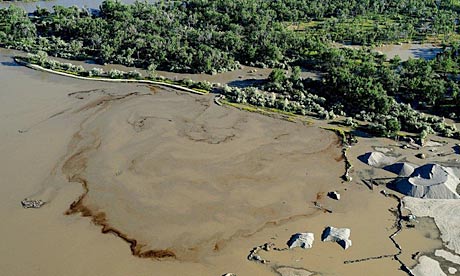
Oil swirls in the Yellowstone river after an Exxon Mobil pipeline ruptured near Billings, Montana.

Oil swirls in the Yellowstone river after an Exxon Mobil pipeline ruptured near Billings, Montana.

And then came the various ruptures of the existing pipeline in the Yellowstone River in 2011 and recently in an Arkansas neighborhood.  The New York Times reported

On Tuesday [April 2], vacuum trucks and crews were still working to clean up the accident, which the Environmental Protection Agency called a “major spill.” While it was unclear how much oil had leaked, Exxon Mobil said it had recovered thousands of gallons of oil mixed with water and had prepared for a spill as large as 420,000 gallons, though it said it believed that the amount released was smaller.

“Our focus is on the safety of the people in the community and restoring the environment as soon as we possibly can,” said Alan Jeffers, an Exxon Mobil spokesman. “We’re committed to the cleanup and will stay until it’s done.”

The spill appears to be the largest accident involving heavy crude since an Enbridge Energy pipeline spill in 2010 that dumped more than 840,000 gallons near Marshall, Mich., soiling a 39-mile stretch of the Kalamazoo River.

Somehow I can’t imagine what the interiors of the homes smell like.  The odor of the oil can permeate everything including furniture, rugs and bedding.

In addition to pipeline safety, I am learning more about the process of extracting the oil from the sand in Alberta.  Extraction of the oil releases CO2, uses water and by some estimates uses more energy to extract the oil than the oil produces.  So if our ultimate objective is to reduce dependence on fossil fuels and reduce green house emissions, extracting oil from the tar sands does not seem to be the answer.  The Scientific American has a long and interesting article on the subject.

TAR SANDS: At least 170 billion barrels of oil could be extracted from Alberta's oil sands deposits with today's technology. Image: © David Biello

TAR SANDS: At least 170 billion barrels of oil could be extracted from Alberta’s oil sands deposits with today’s technology. Image: © David Biello

If I understand the article, carbon is emitted twice:  once during the extraction and then, a will all oil, during the refining process which turns the oil into gas or heating oil.

The greenhouse gas emissions of mining and upgrading tar sands is roughly 79 kilograms per barrel of oil presently, whereas melting out the bitumen in place requires burning a lot of natural gas—boosting emissions to more than 116 kilograms per barrel, according to oil industry consultants IHS Cambridge Energy Research Associates. All told, producing and processing tar sands oil results in roughly 14 percent more greenhouse gas emissions than the average oil used in the U.S. And greenhouse gas emissions per barrel have stopped improving and started increasing slightly, thanks to increasing development of greenhouse gas–intensive melting-in-place projects. “Emissions have doubled since 1990 and will double again by 2020,” says Jennifer Grant, director of oil sands research at environmental group Pembina Institute in Canada.

In the U.S. State Department’s review of the potential environmental impacts of the Keystone project, consultants EnSys Energy suggested that building the pipeline would not have “any significant impact” on greenhouse gas emissions, largely because Canada’s tar sands would likely be developed anyway. But the Keystone pipeline represents the ability to carry away an additional 830,000 barrels per day—and the Albertan tar sands are already bumping up against constraints in the ability to move their product. That has led some to begin shipping the oil by train, truck and barge—further increasing the greenhouse gas emissions—and there is a proposal to build a new rail line, capable of carrying five million barrels of oil per year from Fort McMurray to Alaska’s Valdez oil terminal.

Then there’s the carbon hidden in the bitumen itself. Either near oil sands mines in the mini-refineries known as upgraders or farther south after the bitumen has reached Midwestern or Gulf Coast refineries, its long, tarry hydrocarbon chains are cracked into the shorter, lighter hydrocarbons used as gasoline, diesel and jet fuel. The residue of this process is a nearly pure black carbon known as petroleum (pet) coke that, if it builds up, has to be blasted loose, as if mining for coal in industrial equipment. The coke is, in fact, a kind of coal and is often burned in the dirtiest fossil fuel’s stead. Canadian tar sands upgraders produce roughly 10 million metric tons of the stuff annually, whereas U.S. refineries pump out more than 61 million metric tons per year.

Scientific American continues

In other words, tar sands are just a part of the fossil-fuel addiction—but still an important part. Projects either approved or under construction would expand tar sands production to over five million barrels per day by 2030. “Any expansion of an energy system that relies on the atmosphere to be its waste dump is bad news, whereas expansion of safe, affordable and environmentally acceptable energy technologies is good news,” Carnegie’s Caldeira says.

There’s a lot of bad news these days then, from fracking shale for gas and oil in the U.S. to new coal mines in China. Oxford’s Allen calculates that the world needs to begin reducing emissions by roughly 2.5 percent per year, starting now, in order to hit the trillion metric ton target by 2050. Instead emissions hit a new record this past year, increasing 3 percent to 34.7 billion metric tons of CO2 and other greenhouse gases.

If we are serious about climate change and serious about carbon emissions, we will not build the pipeline.  We can’t do much about what is going on in Canada, but we can not build terminals in Washington State and Alaska and stop pumping tar sands crude though existing pipelines.  It will be argued that gas at the pump is too expensive.  That is costs too much to heat one’s home in the winter and run air conditioning in the summer, but price is not determined solely by availability in the United States.  Energy is now a worldwide demand.  I hope President Obama does the right thing.

Photograph of the Yellowstone Larry Mayer/AP

A question for the Chief Justice

So, Mr. Chief Justice, where did you say you went to law school?  That’s what I want to ask Mr. Roberts after yesterday’s hearing on The Defense of Marriage Act or DOMA.

Here is the relevant exchange as reported by the New York Times.

He expressed irritation that the case was before the court, saying President Obama’s approach — to enforce the law but not defend it — was a contradiction.

“I don’t see why he doesn’t have the courage of his convictions,” the chief justice said. He said Mr. Obama should have stopped enforcing a statute he viewed as unconstitutional “rather than saying, ‘Oh, we’ll wait till the Supreme Court tells us we have no choice.’ ”

The White House took umbrage at the remark and said the president was upholding his constitutional duty to execute the laws until the Supreme Court rules otherwise. “There is a responsibility that the administration has to enforce laws that are on the books,” said Josh Earnest, a deputy White House press secretary. “And we’ll do that even for laws that we disagree with, including the Defense of Marriage Act.”

The Chief Justice should know that the President has to enforce laws until they are declared unconstitutional by a court.  Thus my question.

The situation, however, is a little bit more complicated.  NPR explains it this way.

Has the Obama administration abrogated its responsibility by continuing to enforce DOMA, while refusing to defend it in court?

Justice Antonin Scalia: “And I’m wondering if we’re living in this new world where the attorney general can simply decide, ‘Yeah, it’s unconstitutional, but it’s not so unconstitutional that I’m not willing to enforce it.’ If we’re in this new world, I — I don’t want these cases like this to come before this court all the time. And I think they will come all the time if that’s … the new regime in the Justice Department that we’re dealing with.”

Deputy U.S. Solicitor General Sri Srinivasan: “Justice Scalia, one recognized situation in which an act of Congress won’t be defended in court is when the president makes a determination that the act is unconstitutional. That’s what happened here. The president made an accountable legal determination that this act of Congress is unconstitutional.”

Paul Clement, lawyer for GOP House leadership in defense of DOMA: “The House’s single most important prerogative, which is to pass legislation and have that legislation, if it’s going to be repealed, only be repealed through a process where the House gets to fully participate.”

Justice Kennedy: “Suppose that constitutional scholars have grave doubts about the practice of the president signing a bill but saying that he thinks it’s unconstitutional — what do you call it, signing statements or something like that? It seems to me that if we adopt your position that that would ratify and confirm and encourage that questionable practice because if the president thinks the law is unconstitutional, he shouldn’t sign it, according to some view. And that’s a lot like what you’re arguing here. It’s very troubling.”

Deputy U.S. Solicitor General Sri Srinivasan: “But my point is simply that when the president makes a determination that a statute is unconstitutional, it can follow that the Department of Justice won’t defend it in litigation.”

What should a President do in a situation like this one?  Does he just continue to enforce the law while trying to get Congress to repeal it as Paul Clement seems to argue.  Or does he do what he did:  say he thought the law was unconstitutional while both appealing and enforcing it.  I suppose that he could have issued an executive order to the IRS to accept joint tax returns from all legally married couples but that would have created an even bigger uproar that going to the Supreme Court.

My point, Mr. Chief Justice, is that yes, this may be an unprecedented situation, but the job of the Supreme Court and therefore your job is to make the ultimate decision on Constitutionality.  So just do your job.  And by the way, where did you go to law school?

Edith Windsor, the plaintiff in the DOMA case,

Edith Windsor, the plaintiff in the DOMA case.

Photograph Christopher Gregory/The New York Times


Infrastructure, infrastructure, infrastructure

One  of my favorite promotional advertisements is an old one.  Rachel Maddow is standing in front of a pile of dirt which could be the beginning of a new highway or of a dam or a bridge abutment.  She points out that the country needs infrastructure and that the private sector does not build it.  And then Elizabeth Warren famously said (quote from Michael Smerconsish on the Huffington Post.)

“There is nobody in this country who got rich on his own. Nobody.” And then she hit her stride:

“You built a factory out there? Good for you,” she says. “But I want to be clear: You moved your goods to market on the roads the rest of us paid for; you hired workers the rest of us paid to educate; you were safe in your factory because of police forces and fire forces that the rest of us paid for. You didn’t have to worry that marauding bands would come and seize everything at your factory, and hire someone to protect against this, because of the work the rest of us did.”

As for the tax implications, Warren said, “Now look, you built a factory and it turned into something terrific, or a great idea? God bless. Keep a big hunk of it. But part of the underlying social contract is, you take a hunk of that and pay forward for the next kid who comes along.” The crowd enthusiastically applauded.

Of course that morphed into the out of context quote used against President Obama:  “You didn’t build it.”

What puzzles me is why the Republicans are so afraid of spending for infrastructure.  And why their fear is making so many Democrats cautious.  Juliette Kayyem tries in her column in today’s Boston Globe to make the link between national security, which every politician is for, and infrastructure.

The United States now concedes that the security of nations is “being affected by weather conditions outside of historical norms, including more frequent and extreme floods, droughts, wildfires, tornadoes, coastal high water, and heat waves.” These have had an impact on food supplies and demographic trends. The global population is expected to hit 8.3 billion by 2030. About 60 percent (up from the current 50 percent) of people will live in cities, putting greater pressure on agriculture, energy, transportation, and water supplies.

We are not alone in our concerns. The American Security Project, a bipartisan think tank, analyzed military assessments worldwide. From China to Rwanda, Belarus to Brazil, over 70 percent of nations view climate change as a top threat to their national security.

The United States now concedes that the security of nations is “being affected by weather conditions outside of historical norms, including more frequent and extreme floods, droughts, wildfires, tornadoes, coastal high water, and heat waves.” These have had an impact on food supplies and demographic trends. The global population is expected to hit 8.3 billion by 2030. About 60 percent (up from the current 50 percent) of people will live in cities, putting greater pressure on agriculture, energy, transportation, and water supplies.

We are not alone in our concerns. The American Security Project, a bipartisan think tank, analyzed military assessments worldwide. From China to Rwanda, Belarus to Brazil, over 70 percent of nations view climate change as a top threat to their national security.

Protecting against it isn’t just a matter of preserving natural resources; it is about adapting everyday activities to the threat. We are in competition with other nations in this regard: Global investments are linked to cities that can function in bad weather, airports that can lure commerce, ports that can deliver goods. When storms are powerful enough to wipe out electrical grids, our nation’s ability to project power is limited by our powerlessness.

She goes on to say that much of the infrastructure fight is a local one.

And we still must become a more resilient society, one whose basic building blocks cannot be knocked out by threats that are utterly predictable. This effort to construct a society with climate challenges in mind isn’t necessarily new, but it comes at a time when the limits of America’s infrastructure are abundantly clear and entirely visible: We all feel them as we drive to work, head to school, or use the subways.

Local governments are already invested in these national security efforts, whether they know it or not. Such efforts range from a mayor’s desire to fix potholes on residential streets to a governor’s promise to modernize public transportation. More than a lack of commitment or resources, it’s actually our hodge-podge of governance structures — New York City has control over its building codes, while Boston’s are often at the mercy of state approval — that too often become impediments to local ingenuity in preparing for oncoming storms.

At the same time as our intelligence agencies were reminding us that the climate poses as much of a threat as Iran or North Korea, the American Society of Civil Engineers last week gave American infrastructure a pathetic “D+” grade (up from a D!). Delayed maintenance investments and the failure to commit to modernization projects undermine economic progress, global competitiveness, and the sense that we live in a well-functioning society.

Boston Public Works Department employees Aroll Victor and Julio Echemendia clear rocks from a pothole in South Boston on March 12.

Boston Public Works Department employees Aroll Victor and Julio Echemendia clear rocks from a pothole in South Boston on March 12.

So back to my question:  Why are Republicans (and many Democrats) so unwilling to invest in infrastructure?  Until we figure this out, our bridges will crumble, our power grids are subject to blackouts, and many people will be like us and spend thousands on front end work due to driving on crumbling highways.  Wouldn’t the money I am going to spend this spring on my car be better spent paying taxes that will fix the roads and put some people back to work?    Just asking.

Impasse?! We should look at the Progressive Caucus Budget

President Obama met with the Republicans in the House yesterday.  I think Politico had the best take on the meeting.

After years of pining for more face time with the president, House Republicans  found out Wednesday that Barack Obama looks and sounds the same behind closed  doors as he does on TV.

President Obama meets with Congress. AP Photograph

President Obama meets with Congress. AP Photograph

I think they are finally learning what many of us have known for a while:  what you see is what you get with Barack Obama.  Michelle has been trying to tell everyone this for years.  So he has his line and the Republicans led by Paul Ryan have theirs.  But where does that leave the rest of  us?  How to deal in a meaningful way with the sequester and the budget?  I see two paths:  One, those affected by the cuts start putting on the pressure and two, we begin looking at alternatives to either the Republican or White House budget proposals.

On the first, the lobbying has begun.  The New York Times reports

Construction companies are lobbying the government to spare their projects from across-the-board cuts. Drug companies are pleading with the White House to use all the fees they pay to speed the approval of new medicines.

And supporters of Israel have begun a campaign to make sure the Jewish state receives the full amount of military assistance promised by the United States.

A frenzy of lobbying has been touched off by President Obama’s order to slice spending this year by $85 billion, divided equally between military and civilian programs. The cuts have created new alliances and strange bedfellows.

Hunter R. Rawlings III, a historian of ancient Greece who is the president of the Association of American Universities, joined Wesley G. Bush, the chief executive of Northrop Grumman, the maker of surveillance drones and B-2 bombers, in a news conference in which they denounced the automatic cuts known as sequestration.

Health care and education groups, advocates for poor people, and state and local officials who fought in the past for bigger budgets are now trying to minimize the pain.

How much money do you think will be spent on lobbying?  I don’t even want to begin to add it up.  What a waste of money.  But I guess some people will still have jobs.

For an alternate budget we can look at the Congressional Progressive Caucus budget proposal.    The Economic Policy Institute assisted in putting the budget together and scoring it.  Dean Baker from the Center for Economic and Policy Research calls it “A Serious Budget That the Serious People Won’t Take Seriously”.  The Progressive Caucus has been proposing budgets for a number of years now and takes the position that if their proposals had been adopted, we wouldn’t be in the mess we are in now.

So what exactly are they proposing?

Direct hire programs that create a School Improvement Corps, a Park Improvement Corps, and a Student Jobs Corps, among others.

Targeted tax incentives that spur clean energy, manufacturing, and cutting-edge technological investments in the private sector.

Widespread domestic investments including an infrastructure bank, a $556 billion surface transportation bill, and approximately $2.1 trillion in widespread domestic investment.

Ends tax cuts for the top 2% of Americans on schedule at year’s end

Extends tax relief for middle class households and the vast majority of Americans

Creates new tax brackets for millionaires and billionaires

Eliminates the tax code’s preferential treatment of capital gains and dividends

Abolishes corporate welfare for oil, gas, and coal companies

Eliminates loopholes that allow businesses to dodge their true tax liability

Calls for the adoption of the “Buffett Rule”

Creates a publicly funded federal election system that gets corporate money out of politics for good.

Provides a Making Work Pay tax credit for families struggling with high gas and food cost 2013-2015

Extends Earned Income Tax Credit, and the Child and Dependent Care Credit

Invests in programs to stave off further foreclosures to keep families in their homes

Invests in our children’s education by increasing Education, Training, and Social Services

It would also end the war in Afghanistan and do selective, not blanket cuts to the military budget.  It basically spends money to put people back to work and stabilize the economy.  This assumes that people who work pay taxes and put money back into the economy.  It also achieves deficit reduction.  All through government spending.  As Dean Baker poinst out

For those upset that the budget debate is getting ever further removed from the real world problems of an economy that is suffering from a deficit of 9 million jobs, there is good news. The Congressional Progressive Caucus (CPC) has produced a budget that is intended to make the unemployment situation better rather than worse.

The story of course is that we are still in a situation where we need the government as a source of demand in the economy. This is independent of how much we like the government or the private sector. The private sector does not expand and create jobs just because governments want it to, as is being discovered now by leaders in the United Kingdom, Greece, Italy, Spain and everywhere else where deficit reduction is now in vogue. In the current economic situation, loss of demand from the government is a loss of demand to the economy. That is why recent steps to reduce the deficit, such as the ending of the payroll tax cut (which put money in consumers’ pockets) and the sequester, will lead to slower growth and higher unemployment.

Would this happen with the adoption of the progressive budget?  I don’t know, but I know that what is going on now isn’t working either.  And what is worse, people are tuning out and shrugging their shoulders assuming nothing can be done.

Gail Collins has this fantasy.

White smoke poured from the Capitol today and crowds of onlookers broke into shouts of jubilation, crying: “We have a budget!”

Inside, where the nation’s legislators had been walled off in seclusion, the newly chosen tax-and-spending plan was garbed in the traditional brass staples for its first public appearance. Insiders said it planned to take the name of Budget for Fiscal Year 2014.

I guess that is alternative number three.  Maybe we should try sequestering Congress.

Star Trek or Star Wars

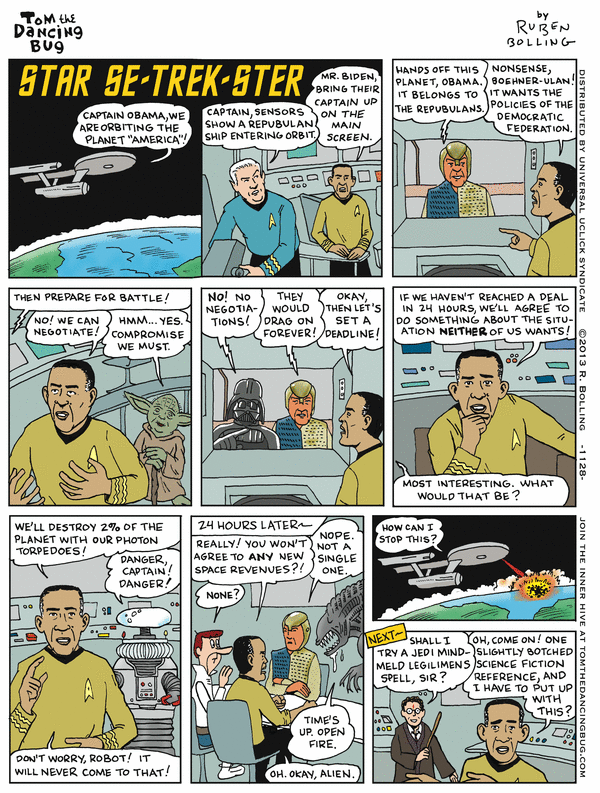
I’m a fan of the original Star Trek and of the first Star Wars trilogy.  I guess I dropped out after that, maybe moved on or something.  But putting that aside, I love this Ruben Bolling.  Sums up the cultural reference controversy and the sequester all in one.

tom 3-13-2013

OK. No one cares about the sequester

No one cares about the sequester.  Or maybe, no one knows about it.  Or maybe everyone is just tired of Congress.

Here is Mike Luckovich today with a history of our recent financial crises.

Gee.  I don't know why you think all this is my fault.

Gee. I don’t know why you think all this is my fault.

No wonder the general public doesn’t care right now.  And they probably won’t care until cuts start to hurt them.  Let’s face it:  both sides are using those old techniques of  putting forward the arguments that make the best case for their point of view.  The Republicans are right in that it won’t hurt for a little while – maybe a month or so.  And the Democrats are right that this whole exercise is unnecessary and, in the long run not helpful to recovery.

Thomas Mann and Norman Ornstein who wrote the excellent book, “It’s Even Worse Than It Looks”, have an excellent piece in today’s Washington Post titled “Five myths about the sequester”.

1. Blame Obama — the sequester was his White House’s idea.

Identifying the origins of the sequester has become a major Washington fight. Bob Woodward weighed in recently with a Washington Post op-ed making the case that the idea began in the White House. He’s right in a narrow sense, mainly because he focuses on the middle of the 2011 negotiations between Obama and Republican lawmakers. If you look before and after, a different picture emerges.

In our view, what happened is quite straightforward: In 2011, House Republican leaders used their new majority to force their priorities on the Democratically controlled Senate and the president by holding the debt limit hostage to demands for deep and immediate spending cuts. After negotiations between Obama and House Speaker John A. Boehner failed (Eric Cantor recently took credit for scuttling a deal), the parties at the eleventh hour settled on a two-part solution: immediate discretionary spending caps that would result in cuts of almost $1 trillion over 10 years; and the creation of a “supercommittee” tasked with reducing the 2012-2021 deficit by another $1.2 trillion to $1.5 trillion. If the supercommittee didn’t broker a deal, automatic spending cuts of $1.2 trillion over the next decade — the sequester — would go into effect. The sequester was designed to be so potentially destructive that the supercommittee would surely reach a deal to avert it.

The sequester’s origins can’t be blamed on one person — or one party. Republicans insisted on a trigger for automatic cuts; Jack Lew, then the White House budget director, suggested the specifics, modeled after a sequester-like mechanism Congress used in the 1980s, but with automatic tax increases added. Republicans rejected the latter but, at the time, took credit for the rest. Obama took the deal to get a debt-ceiling increase. But the president never accepted the prospect that the sequester would occur, nor did he ever agree to take tax increases off the table.

And of course no deal has been reached yet.

2. At least the automatic cuts will reduce runaway spending and begin to control the deficit.

What runaway spending? The $787 billion stimulus was a one-time expenditure that has come and gone. Under current law not including the sequester, non-defense discretionary spending as a share of the economy will shrink to a level not seen in 50 years. Defense spending grew substantially over the past decade, but that pattern has slowed and will soon end. Additional reductions must be achieved intelligently, tied to legitimate national security needs.

The annual budget deficit is projected to fall by almost 50 percent in 2013 compared with the height of the recession. Reducing the deficit over the long term requires going where the money is — boosting economic growth, controlling health-care costs and increasing revenue to handle the expense of an aging population. Deeper discretionary-spending cuts are counterproductive; immediate cuts, as Europe has made recently, could lead to a recession and bigger deficits.

I guess the Republicans want us to be like Greece after all.

And finally, one for the Democrats.

4. The cuts are so large, they will be catastrophic.

The administration has released state-by-state estimates of the sequester and highlighted the cutbacks most likely to harm or inconvenience the public. The reality is not so immediate or dramatic. The damage will accumulate in less visible ways, as irrational reductions in public spending impede economic growth and job creation; reduce investments in education, infrastructure and scientific research; and further disrupt the routines of a modern democracy. The longer the sequester remains in place, the more harm is inflicted.

So it may take a while to feel the cuts.  Maybe long enough for the Obama Administration to submit a sensible budget that everyone can agree on.  And no, I’m not smoking anything.  Just counting on mayors and governors to continue to put the pressure on Congress.

Still more on sequestration

This morning The Fix by Chris Cillizza included this interesting post by Aaron Blake.  Blake posted four great graphics explaining the impact of the sequester.  I am going to copy 2 of them here, but you should look at the entire post.

Blake explains

First up is Pew’s illustration of the year-by-year spending cuts that are included in the sequester. As you can see, the cuts start out relatively small — less than $75 billion in 2013 — but they grow to more than twice that size by 2021, for a total of more than $1 trillion.

The biggest growth in cuts over that time occurs in the interest payments, but everything except for mandatory spending cuts grow steadily over time.

And then there is this depressing news.  Sequester will not have that big of a positive impact.

There has to be a better way.  Maybe spend some money to put people back to work and let them pay taxes thus increasing revenue?  And we do have to fix the tax code so Facebook executives actually pay taxes.  And maybe we can cut programs and defense more selectively.  This won’t be as dramatic, and it might be slower, but it will hurt fewer people.

Meanwhile, members of Congress of both parties are doing their best to keep funding for their own districts.  Politico quotes Senator Lindsey Graham, an opponent of the sequester

I’m almost relishing the moment all these tough-talking guys say: ‘Can you  help me with my base?’” Sen. Lindsey Graham (R-S.C.), one of the most vocal  critics of the sequester, told POLITICO.

“When it’s somebody else’s base and district, it’s good government. When it’s  in your state or your backyard, it’s devastating,” he added.

Of course Graham’s solution is to do away with the Affordable Care Act or Obama care.  Is the momentum swinging toward a rational budget and solution?  Probably not.

Marco and Barack and the State of the Union

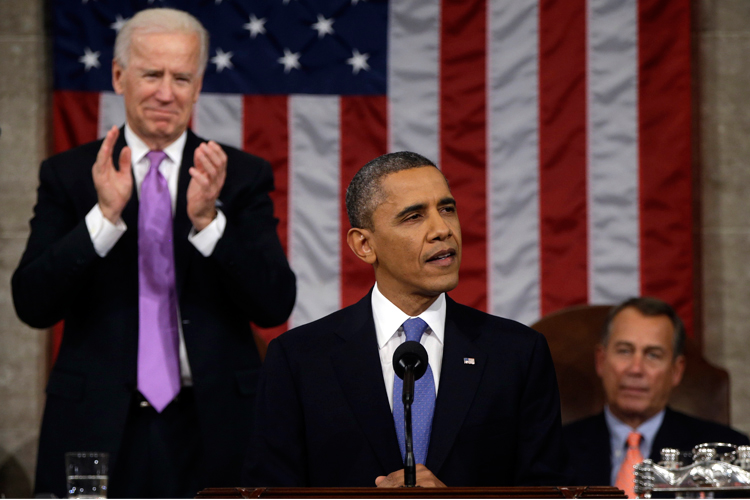
The President did not awkwardly reach for a bottle of water during his speech.  In fact, I don’t remember him drinking at all.  John Boehner, however, seemed to be sipping from his glass often.  When he wasn’t looking dour, that is.  I’ll write more about substance later, but this post is about impressions.

The best description of the Speaker is from Joan Walsh in Salon

But Boehner’s disdain was unrivaled. He also managed not to rise even for a shout-out to “wounded warriors,” or 102-year-old Deseline Victor, who waited seven hours to vote in Miami on Election Day. It was sometimes hilarious to watch him next to Vice President Joe Biden, who looked like a happy Easter Bunny with his white hair, lavender tie, pink-tinted glasses and green Newtown ribbon. Biden seemed to occasionally enjoy standing up, clapping while looking down at Boehner sulking in his chair.

This is what she means.

When John Boehner just sat there

And then we can move on to Maureen Dowd on Marco Rubio.

The ubiquitous 41-year-old — who’s on the cover of Time as “The Republican Savior” — looked as if he needed some saving himself Tuesday night as he delivered the party’s response to the State of the Union address in English (and Spanish). He seemed parched, shaky and sweaty, rubbing his face and at one point lunging off-camera to grab a bottle of water.

Oh, that water lunge.  How it will haunt poor Marco!

John Cassidy writing for the New Yorker, calls him “Water Boy”.

To be fair to Rubio, with a combination of eye contact and vigorous hand  gestures, he was doing a decent job with the tough task of delivering a lengthy  speech to a camera in an empty room. But then, for some reason—and it must have  seemed like an urgent one to him—he decided to reach for a small plastic bottle  on a nearby table and take a swig, thereby almost ducking out of the camera shot  and sending the Twitterverse into hysterics. “Uh-oh. Water gulp—really bad TV  optics,” Larry Sabato, a political science professor at the University of  Virginia, tweeted. “SNL, Colbert, Stewart…here they come.” After that  diversion, Rubio appeared to realize his error, and he looked a bit shaken. For  some reason, the camera closed in on his face, which didn’t improve things. As  the Democratic pundit Paul Begala cruelly noted on Twitter, the Senator was sporting a sheen  of sweat that inspired memories of Richard Nixon.

Meanwhile, the President looked confident and sometimes very passionate as when he mentioned the need for Congress to vote on gun safety legislation.

The Republicans looked more like their leader.

That is Paul Ryan in the center.

For right now, the President has the upper hand.  Neither Marco Rubio nor Rand Paul advanced any ideas beyond those from the last election – which they lost.  Plus they presented a bad image all around.  Maybe the Republicans are right in saying the President offered nothing new, nothing really that he didn’t talk about during the campaign, but there is a big difference:  Barack Obama won based in large measure on those ideas.  No wonder they look like four year olds being told they can’t have desert.  And poor Marco.  Only time will tell if he can overcome his reach for water.

Photographs AP/Charles Dharapak, Bill O’Leary/Post, Melina Mara/Post

Responses to the State of the Union Address: being picked isn’t always a good thing

Quick.  Name the four responders to President Obama’s State of the Union/Joint addresses to Congress.  (The first one is not considered to be formal State of the Union.)  Give up?  I could only remember Bobby Jindal and Bob McDonnell so I had to look them up.

2009 – Bobby Jindal in an address remembered for his Kenneth the Page imitation.  If he ever decides to run for President, this will haunt him.

English: Governor Bobby Jindal at the Republic...

English: Governor Bobby Jindal at the Republican Leadership Conference in New Orleans, Louisiana. (Photo credit: Wikipedia)

2010 – Bob McDonnell the governor of Virginia who tried to rectify Jindal’s mistakes by giving his speech in the Virginia State House before a live hand-picked audience.  And then he became known as Governor Ultrasound and his Presidential chances disappeared.

2011 – Paul Ryan.  Representative Ryan did run for higher office tied to Mitt and, as we know, they lost.  He is young and maybe can run again someday if the Tea Party ever gains firm control over the Republican Party.

2012 – Mich Daniels, governor of Indiana.  This was supposed to be a stepping stone to the Presidential nomination.  Didn’t happen.

So this year we have Marco Rubio giving the response in English and in Spanish (so we are told).  He is trying to position himself as the young, fresh face for a 2016 run for the Presidency.  I have alread heard some Republican consultants saying  he’s young and Joe Biden and Hillary Clinton are old and that is good for the Republicans.  But State of the Union responders don’t have a very good track record, so we shall see.

English: Official portrait of US Senator Marco...

English: Official portrait of US Senator Marco Rubio of Florida. (Photo credit: Wikipedia)

Go to this link to see a short video of memorable moments.

What does Chuck Hagel have to do with Benghazi?

I wish someone would explain to me what someone who was not even a government official at the time has to do with Benghazi?  Is Chuck Hagel just leverage?  Believe me, the Obama Administration could show live action footage of the event as it unfolded and the Republicans still wouldn’t be happy.

According to Politico

One Armed Services Committee member, South Carolina Republican Sen. Lindsey  Graham, has made clear that he considers Benghazi and Hagel to be one issue —“no confirmation without information,” he said Sunday, threatening to block both  Hagel and CIA nominee John Brennan. Graham is demanding more details from the  administration about its response to the Benghazi attacks, particularly the  direct involvement of President Barack Obama.

And then you have James Inhofe.  Again from Politico

A spokeswoman for Sen. Jim Inhofe (R-Okla.) confirmed to POLITICO that he wanted  to drag out the confirmation process for the former Republican senator from  Nebraska.

Inhofe’s threat continued GOP brinksmanship that got under way on Sunday when  Republican aides first said that some senators might walk out of a meeting that  included a vote on Hagel. Inhofe and another top Republican on the committee,  Sen. John McCain of Arizona, both said Monday they would not walk out, but  Inhofe repeated his vow to press the battle against Hagel.

It appears very much as if the Republicans have forgotten that they are a minority in the Senate.  If Chair Senator Carl Levin calls for a committee vote, it will be along party lines which he didn’t want.  But I don’t think there will be any bipartisan agreement there.  According to the New York Times, Levin

…called Monday for a committee vote on Tuesday afternoon on the nomination of former Senator Chuck Hagel to be the next secretary of defense.

The committee action has been postponed for the past week over evolving demands from Republicans for new documentation on Mr. Hagel’s past statements, personal financial records and even a sexual harassment allegation involving two former staff members, but not Mr. Hagel himself. As action has drawn closer, Republican opponents to a former Senate Republican colleague have threatened filibusters and even a walkout from the committee.

Once Hagel’s nomination reaches the floor, vote counters believe that there will be 60 votes to break any attempt at a filibuster.  Maybe Majority Leader Reid need to reconsider his agreement with Senator McConnell since I don’t think it is going to work.

But Mr. Levin’s decision to call for a public discussion and vote, starting at 2:30 p.m. Tuesday ahead of President Obama‘s State of the Union address, indicated that the chairman still believes that Mr. Hagel has enough support to be confirmed. Committee aides say they have no indication that any Democrats or Senate independents will oppose him, putting him at 55 votes to start. Two Republican senators, Thad Cochran of Mississippi and Mike Johanns from Mr. Hagel’s home state, Nebraska, have pledged their support, and at least four Republicans have said they will oppose a filibuster.

And I still want to know what Chuck Hagel has to do with Benghazi, Senator Graham.  I think we all know that this really has to do with the fact that Hagel is not a war hawk and will figure out a way to cut the defense budget.

Photograph Brendan Hoffman for The New York Times