Scandal in the Vermont legislature, Part 2

Senator Norman McAllister has been suspended from the Vermont Senate.  The vote, which was not on party lines, was 20 to 10. My Senators split, one for and one against.

Vermont Public Radio reported

For the first time in its history, the Vermont Senate has suspended one of its own members.

Senate Majority Leader Philip Baruth introduced the resolution.

“The situation we face today is an ugly one. No other word for it,” Baruth said. “It’s hard to imagine a more uncomfortable discussion and yet today’s debate is crucial to our future as a Senate,” adding that the “number and nature of felony charges against [McAllister] require us to suspend him.”

Baruth said that suspension was a step short of outright expulsion, and that it preserves the presumption of innocence McAllister should be afforded.

But Baruth said the Senate can’t allow McAllister to retain legislative powers he’s alleged to have abused so grossly. McAllister’s alleged victims include a 21-year-old Statehouse intern he paid to assist him in Montpelier.

At any place of business in Vermont, Baruth said, “no one would dream of allowing a manager who has been criminally accused of assaulting his assistant to remain in place.”

Those opposed to suspension argued that there were no rules in the Senate to cover the situation and that the Senate should let the criminal justice system work.

Rutland Sen. Peg Flory, however, said the Senate was overstepping its authority by preventing an elected official from carrying out his official duties. So long as McAllister is suspended, Flory said, Franklin County voters will lack representation in the Senate.

“We make the law. We don’t interpret it; we don’t enforce it,” Flory said.

Flory opposed the resolution because she said it violated the legal principle that a person is innocent until proven guilty.

“To step on that and say because somebody has been charged we are going to remove them just goes against every grain in my body,” Flory said.

Flory, a Republican, wasn’t alone in her opposition to the resolution. Windsor County Democrat Richard McCormack said the Senate ought not involve itself in matters of criminal law.

In the end, the arguments for suspension won out.

Back in December, after the rules committee had voted to recommend suspension, one of McAllister’s constituents, Sue Prent, wrote:

Mr. McAllister says he thinks his constituents will sue the Senate on his behalf, for being deprived of representation.

Is he kidding us? Any and all of his constituents with whom I am familiar (of every political stripe) wanted him gone as soon as the content of his confessional conversations with the victims became known.

A more likely scenario is that some of those same constituents, fed up with Mr. McAllister’s refusal to accept responsibility for his appetites and voluntarily step down from the Senate, will be motivated to sue Mr. McAllister for depriving them of legitimate representation in the face of conclusive evidence that he, at the very least, has grossly violated community standards.

After putting his colleagues and voters though the ordeal of deciding to suspend him (even the other Senator from Franklin County voted yes), McAllister has said he is thinking of resigning so a replacement can be appointed.

Unfortunately, the sad story of Vermont State Senator Norman McAllister is far from over.


Scandal in the Vermont legislature

The Vermont legislature opened yesterday.  There are many pressing issues:  school reform, how to pay for expanded Medicaid, the drug epidemic, and legalizing marijuana.  But overriding everything is what to do about Senator Norman McAllister.

McAllister is accused of raping an intern last session and of a long duration “rent for sex” scheme.  It is alleged that he let women maintain housing and jobs on his farm in Franklin County in exchange for sex.  All of this came to light as the session was ending last year.  The Burlington Free Press reported the story last May.

Prosecutors allege Sen. Norman H. McAllister, R-Franklin, over a period of several years sexually assaulted two women who were his tenants and employees, and that he attempted to solicit a third woman. That woman called police this week, launching a fast-moving investigation that by Friday was reverberating throughout the state capital of Montpelier.

The allegations, explained in sometimes graphic detail in court papers, shocked the governor and McAllister’s Statehouse colleagues, several of whom witnessed his arrest outside the Capitol on Thursday evening.

At that point, I think everyone was prepared for him to resign.  The Governor, a Democrat, would appoint his replacement.  I should say here that relations between the Democrats, Republicans, and Progressives here are not as divided and acrimonious as they are nationally probably because we are a small state and civility is important if any governing is to happen.  The Governor might even have appointed a Republican.

Sen. Norman McAllister, R-Franklin, returns to his seat in the Senate on the opening day of the Legislature.

Sen. Norman McAllister, R-Franklin, returns to his seat in the Senate on the opening day of the Legislature.

But Senator McAllister has not resigned.  The Legislative rules have nothing to cover this kind of situation.  Over the summer, there was some talk of expulsion, but the rules committee recommended suspension instead.  McAllister, denying the allegations, is fighting the suspension.  He says he is innocent and the criminal trial will prove it.  The trial is scheduled to begin in February.  That means he is going to miss part of the session in any case.

This is where I am of two minds.  He has been duly elected and I’ve read and heard nothing about any move from his constituents to recall him.  A suspension would leave them short one Senator to represent Franklin County.  (There are only 30 senators, statewide.)  On the other hand, if any other public employee were accused of these crimes, they would have been suspended back last May.  No police officer, firefighter, social worker, or RMV worker would be on the job today.  I think a lot of his fellow legislators are facing the same quandary.  The eight of the nine Senate Republicans caucused yesterday.  McAllister defended himself and they came to no conclusion except to urge him to resign.

Is an elected legislator a public employee?  In some sense, yes.  They are paid with taxpayer money.  On the other hand, they are “hired” by election.  Neither of my state senators have commented on the situation nor has my representative.  If I had to vote this afternoon, I’m not sure what I would do so I haven’t talked to any of them.  All three are women and I wonder if they, like me, have difficulty separating the alleged crime from what action to take.  Would it be easier if McAllister had embezzled money or falsified his tax returns?

Part 2 of this story, after the vote.

Photograph:  Roger Crowley/VTDigger


“The Tattoo Murder Case”

It is 1947 in post-war Tokyo and the police are confronted by a locked room murder in Akimitsu Takagi’s The Tatoo Murder Case.  The book was one of several Japanese mysteries I got for Christmas from my husband.  If the others are as interesting, he and David, the owner of Mystery on Main in Brattleboro, choose well.

Akimitsu Takagi

Akimitsu Takagi

Akimitsu Takagi was born in 1920.  According to both Wikipedia and eNotes, he studied metallurgy, but became a mystery writer when a fortune teller told him that was where his future lay.  He was a prolific writer up to the 1990’s; he died in 1995.  Only three of his books, including Tattoo, have been translated into English.

As with all good books, one learns a great deal.  Post-war Japan and the destruction in Tokyo are prominent.  At one point, we visit a house untouched by the war while the house next door is destroyed.  And I learned a lot about the art of tattooing.  Did you know that people with full-body tattoos have a shorter life span because the tattoo interferes with circulation?   Picking up facts like that is one reason I love good mysteries.

In the shadowy depths of Mount Togakushi in Nagano Prefecture, there lived three powerful, wicked sorcerers who were masters of the black arts of magic and enchantment.  These mysterious magicians were known as Tsunedahime, Jiraiya, and Orochimaru, and their legendary exploits have been the subjects of folk tales, Kabuki plays, woodblock prints, and some of the most spectacular Japanese art tattoos ever created.

This is the tragic story of three of those tattoos.

I’m not certain if that preface was written by Takagi or not, but assume that it was.  The folklore behind the tattoos plays as big a part in the story as the art of tattooing itself.  At the time of the mystery, tattooing is illegal in Japan, but there is a flourishing underground.  Tattooing is an art to the Japanese who are contemptuous of the random tattoos sported by the occupying Americans.  Their tattoos are referred to as sushi after a kind of rice featuring vegetables and other things scattered at random in flavored rice.  (Sushi refers to the rice and comes in many forms, not just rolled in seaweed or topped with fish.)  A good tattoo should be an entire picture and tell a story, not just be random names of girlfriends, flags, and anchors!

cover

The Tattoo Murder Case provides a glimpse into a different culture and time as well as a fascinating mystery.

Photograph of Takagi from Wikipedia.

Photograph of book cover from Amazon.

The book was translated by Deborah Boehm.


Main Stream Media

I confess that I am a news junky.  I will watch disaster coverage until it gets repetitious because there is nothing new to report.  I signed Bernie Sanders’ petition to get the MSM to cover him more (maybe after Iowa and New Hampshire?).  I have news alerts from the New York Times as one of my apps and I get email from at least 3 news organizations.  And I have even been known to watch the Brattleboro Selectboard meeting on local cable.

Part of what I watch on cable news is how breaking news stories are handled.  That is why I loved the Mutts series that ran last week.  I have long been a Patrick McDonnell fan following the adventures of Mooch and Earl (I get the new strip emailed to me every morning) closely.  They don’t often make what I would consider political comments unless about the environment but this was such as gentle poke at news coverage, I have to share it.  Here they are:  Monday through Saturday.


mutts1


Day two:

Mutts2


Day three features Mooch as the reporter:

Mutts3


Day four:  The family interview

Mutts4

Day five:

Mutts5


And the happy ending:

Mutts6


Drawings by Patrick McDonnell.

American Terrorists

Try this exercise.  Yesterday morning I thought about terror attacks here in the United States and as the day went on I wrote them down.  I ended up with two lists:  One of Muslim perpetrators, one of white males.  Guess which is longer.  The lists are in no particular order and are by place not shooter.

Muslim Killer:

-Boston Marathon Bombing (one US Citizen, one green card)

-Fort Hood Shooting (US Citizen)

-Chattanooga Recruiter Shooting (US Citizen)

– San Bernardino (one US Citizen, one legal resident)

– World Trade Center


White Male Killer:

– Charleston AME Church

– Oregon Community College

– Aurora, CO movie theater

– Atlanta Olympics (plus his other bombings)

– Colorado Planned Parenthood

– Unibomber

-Murrah Federal Building

-Lafayette, LA movie theater

– Gabby Giffords and others

– Sandy Hook Elementary School

-Columbine

-California McDonald’s

-Texas Tower

– Boston, MA Planned Parenthood


These lists are not the result of any research except to see which Muslim perpetrators were citizens and to confirm the race of the shooters when I wasn’t sure.  I know I haven’t remembered all the incidents as there have been too many.  Some who read this may not remember some of them like the Texas Tower sniper as they are not recent, but I remember them.  I have not included the SDS/WeatherUnderground incidents as I believe the only people killed were the bombers themselves.

Do your own list.  Let me know what I have forgotten.

And most of all, remember this list when Donald Trump and others start talking about excluding Muslims.  Many of the Muslims involved were citizens.  Do you think the way we talk about their religion had anything to do with their becoming violent?Remember who actually dominates these lists.  I am not saying there is no danger from Islamic extremists, but I am saying that our own disaffected white men are also a danger.  Our culture perpetuates violence.  We need make the guns and ammunition less available not scapegoat a particular group and stir up hatred.

Mourners near the Charleston AME Church.

Mourners near the Charleston AME Church.

Photograph:  Travis Dove for The New York Times


Some thoughts over breakfast, on America’s “deadly gun culture”

Some thoughts over breakfast, on America’s “deadly gun culture”

Having lived in Boston where hearing gun fire was a regular occurrence and then moving to Vermont, I have experienced both cultures. I agree: They need to talk to each other.

rwyckoff's avatarView from Prospect Hill

Reading the front page of the Brattleboro Reformer today over a half cup of coffee, after finishing my eggs and toast, I glance to the bottom of the page and see the lead to an inside-page editorial, “America grapples with its deadly gun culture”. My first thought is that “gun culture” is not a single thing, is not the same in every part of the country, and is neither wholly nor intrinsically “deadly”. My second thought, a little later, was of the seeming incompatibility of the concepts of ‘gun’ and of ‘culture’, the former being a tool of violence, the latter conveying thoughts of arts, food, dress, customs and other beautiful expressions of our many different human ways of living.

But I do think that there is such a thing as “gun culture”, so allow me to tell you a bit about my experience of gun culture and we’ll see if that sheds any light on…

View original post 1,263 more words

Being fired

It is the summer of being fired.  The man who made the phrase “you’re fired!” was fired from a bunch of stuff:  The Apprentice, Macy’s, NBC, and the list goes on.  But Donald Trump has not been fired by the Republican Party.  There is a way to go before the first caucuses and primaries so there is time, but as long as he stays at 25% of the Republican vote it will be hard to fire him as a candidate.

But there was another Don fired this summer in Boston.  Don Orsillo, the Red Sox television play-by-play announcer.  The public announcement was made in a very ungracious way by NESN and the Red Sox brass while Don was on the air.  We can only suppose that he had been told in advance.  Chad Finn wrote in his column for Boston.com

We’re veteran bickerers and dedicated cynics around here – hell, it’s why two sports radio stations are not just sustainable but successful in Boston. We can’t get a consensus on which glove Hanley Ramirez should take to work each day, and yet the support for Orsillo is overwhelming. It says something about the man, I think. It’s a remarkable tribute.

The genesis of the consensus and the disappointment is fundamental. You feel like you’ve lost a friend.

Orsillo has been a television voice of the Red Sox since 2001 and the sole TV voice since 2005, when the excellent Sean McDonough’s tenurecalling the team’s games met a similarly graceless end.

To add the icing to the not so edible cake was the lack of comment from the Red Sox management.  When Tom Werner finally spoke he basically said nothing.  Steve Buckley wrote in the Boston Herald

It was going to be impossible for the Red Sox and NESN to move the popular and talented Don Orsillo out of the television booth without there being a major public outcry.

Still, the situation could have been handled better — with better timing and a whole lot more candor. But the news of Orsillo’s ouster was leaked out, as often happens in these cases, and then Red Sox/NESN management got quiet instead of getting out in front of the story.

Which brings us to the question of the day: Why, exactly, is Orsillo being replaced?

The answer, in the opinion of Red Sox chairman Tom Werner and NESN president/CEO Sean McGrail, is that they believe Dave O’Brien, currently the play-by-play man on the radio side, will be an upgrade.

Don Orsillo

Don Orsillo

I listen to the radio quite a bit and, yes, Dave O’Brien is good.  But the combination of Orsillo and Jerry Remy is what I call entertainment.  I don’t want to debate the merits of various play-by-play announcers, but to pay tribute to Don Orsillo.

Don Orsillo has stayed on the air without betraying any of the bitterness he has a right to feel.  Unlike the Red Sox owners, he is a consummate professional.  He will land on his feet somewhere and that will be Boston’s loss.  I wish him well.


Reading mysteries in the summer

I’ve been spending considerable time this summer on our upstairs screened in porch watching the birds fly by (it must overlook some kind of bird flyway), the sky, and the squirrels dancing on the wires.  And reading.

In my reading life, I have always interspersed serious non-fiction and non-mystery fiction with lots of mysteries.  I’ve written in the past about some of my old favorites:  P. D. James, Dorothy L. Sayers, and Ngaio Marsh.  I began reading them in high school introduced by my mother who was also a prolific mystery reader.  But yesterday I was looking back at what I had been reading and re-reading this summer and it seems to be mostly three very different writers.

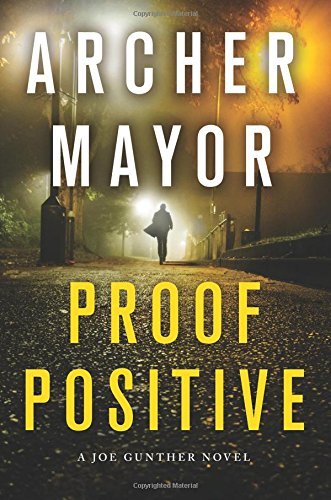
I had read the first two books in Archer Mayor/Joe Gunther series many years ago when they first were published.  I think my Vermont brother-in-law gave one to my mother who passed it on to me.  Fast forward.  I moved to Vermont a year ago and the local author, Archer Mayor, was just publishing Proof Positive.  I rushed down to the wonderful local bookstore, Mystery on Main, and purchased a signed copy.  I read it and loved it.  Now I was on a mission, one which has gone on into this summer, to read all the rest in the series before Mayor writes another.  I am probably not going to make it as it has a September release.  Six to go and I not only have to read them, but also find copies.

Archer

For anyone who hasn’t read Mayor, he writes about a Vermont police officer from my new hometown, Brattleboro.  At some point Joe Gunther stopped being a local Bratt cop and joined a made-up state investigative bureau.  The owner of Mystery on Main, some of the other members of the book group I just joined, and I were speculating that he had to go statewide because there just aren’t that many people murdered around here.  I have to confess that I find the books a bit uneven, but the best ones (The Skeleton’s Knee, Occam’s Razor, and Proof Positive) are excellent and even the ones I enjoyed the least (The Dark Root and The Disposable Man) are very good.  He evokes Vermont landscape and politics. One murder took place across the street from me.  I enjoy driving around town and locating scenes of the crimes.  Good reads.  I would call them a Vermont version of a hardboiled police procedural.

At the opposite end of the spectrum are the English novels of Robert Barnard featuring Charlie Peace.  I’ve read a couple of Barnard’s over the years including the very funny Political Suicide, but until I found The Chaste Apprentice unread on my bookshelf, I hadn’t realized that he had a written series featuring a black police inspector.  The plots are entertaining as Barnard generally is, but the discussion of how being black in the Leeds, England area and the effect on detection show how stereotyping are not just American.  I’ve only read three and a half books in the series and not in order as I’m reading them as I find them in the library, but in one of the later books, A Charitable Body, Peace is married to a white woman and they have two children.  Felicity (I haven’t finished the book yet) seems to be critical in solving the mystery.  Barnard is expert at taking ordinary situations like a summer festival and inserting not only a mystery, but poking fun at his characters and settings.

Maron

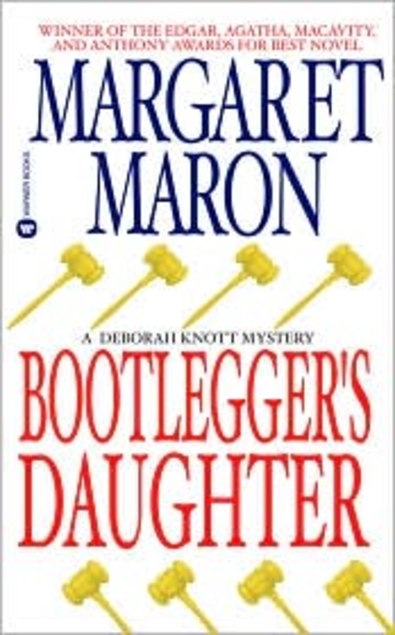
The third group of books I’ve been reading this summer are the Margaret Maron/Deborah Knott books.  Maron’s books evoke North Carolina in the same way Mayor evokes Vermont and Barnard, England.  But Joe Gunther is basically a loner with a small team and a few friends while Deborah Knott has 11 older brothers with all of the wives and children to say nothing of aunts, uncles and cousins surrounding her.  Knott is a district court judge who over the course of 19 books has been involved in a great many of the murders in Maron’s imaginary Colleton County (somewhere near Raleigh/Durham).  They aren’t quite “cozy” but they are very family centered.  Maron’s twentieth Deborah Knott book will be published tomorrow.  She has announced she expects it to be the last in the series, but like the rest of her fans I hope she will change her mind at some point down the road.

I’ve read all 19 of the Deborah Knott books before so this summer I was re-reading a few of them partly in anticipation of the new release but also because the church burnings that followed the murders in Charleston, SC reminded of me Home Fires.  Home Fires centers around the burning of three black churches and the discovery of a body which is identified as a young black organizer who had gone missing years prior.  It is about race relations in North Carolina between whites and blacks as well as the hierarchy of color between African-Americans themselves.  It is a very different take on race and racial attitudes that Deborah confronts than the one facing Charlie Peace.  I’ll have think about this and explore it further.

But for now, I’m enjoying being variously in England, North Carolina, and home in Vermont confronting crime from a distance.

The future of the Olympic Games: a permanent site needed

The United States Olympic Committee decided for some reason to pick Boston as the site for their bid.  Boston was a bad idea from the beginning.  Geographically too small, it would have destroyed neighborhoods even if some venues went to other parts of Massachusetts and New England.  From the beginning, it was promised that no taxpayer money would be spent on the Games.  How could that have been?  The Boston public transit system needs desperate upgrades already, and the crush of visitors would have overwhelmed it.  There would have to be investment in commuter rail upgrades to get people to out of town venues.  The final straw was, so it seems, Boston Mayor Marty Walsh refusing to sign a taxpayer guarantee.  Combined with strong opposition it spelled the end.

Hosting the Games has become expensive and disruptive.  Yes, I know there are countries that want the Games, but I worry about Brazil and how they can afford the games.  They will likely end up razing huge swaths of housing, as Boston probably would have done.  Actually, I worry about any place that wants the Games.

So I have a proposal.  Move the Summer Games permanently to Athens.  The facilities there are unused and deteriorating.

IN AN obscure corner of a park sits a forlorn reminder that, 10 years ago, Athens hosted the 2004 Summer Olympics.

The crumbling miniature theatre is inscribed with the words “glory, wealth, wisdom, victory, triumph, hero, labour” — and it is where visiting Olympic officials planted an olive sapling that would bear their names for posterity.

Once a symbol of pomp, the marble theatre is now an emblem of pointless waste in a venture that left a mixed legacy: a brand-new subway, airport and other vital infrastructure that significantly improved everyday life in a city of 4 million, set against scores of decrepit sports venues built in a mad rush to meet deadlines — with little thought for post-Olympic use.

This story is from last year.  And while no one blames the Olympics for the current meltdown of the Greek economy, it couldn’t have helped.

As Greece groans under a cruel economic depression, questions linger as to whether the Athens Games were too ambitious an undertaking for a weak economy. While economists agree it would be unfair to blame Greece’s meltdown on the 17-day Games, the post-Olympic era is seen as a decade of lost opportunities — including failure to significantly boost the country’s sporting culture. It’s a lesson to which Brazil may pay heed, as it races to complete projects ahead of the 2016 Olympics in Rio de Janeiro.

“We didn’t take advantage of this dynamic that we got in 2004,” said former Olympic weightlifting champion Pyrros Dimas, a Greek sporting hero-turned-Socialist member of Parliament.

“We simply made the biggest mistake in our history: We switched off, locked up the stadiums, let them fall to pieces, and everything finished there.”

“We spent a lot of money for some projects (that) are shut and rotting,” said Dimas, who won his last Olympic medal in an Athens arena now reinvented as a lecture and conference venue. “There were projects that should have cost 2 and 3 million (euros) and suddenly became so big that they cost 13 and 14 million. There was no control.”

The latest government estimate sets the final cost of the Games at 8.5 billion euros ($12.2 billion), double the original budget but a drop in the ocean of the country’s subsequent 320 billion-euro ($460 billion) debt, which spun out of control after 2008.

Instead of picking still another host city, pick Athens.  Make it the permanent home of the Summer Games. Greece is, after all, the birthplace of the Olympics.  The countries and cities that would normally spent millions of dollars just preparing a bid could pool that money to fix all the Greek venues.  They can start work anytime.  In fact, maybe the 2020 games (I’m assuming the Brazilians are too far along to cancel now, but maybe not.) scheduled for Tokyo could be moved.  The Japanese probably could use the money for something else – and maybe they could contribute a restoration/redesign to a venue in Athens.  In fact, various countries could take different venues in Greece.  I think that would be real Olympic spirit.  And it couldn’t hurt Greece.

Meanwhile the Boston Games are down the drain.

Boston Globe cartoon by Dan Wasserman.

Boston Globe cartoon by Dan Wasserman.


A few thoughts on race and gender and childhood….

rwyckoff's avatarView from Prospect Hill

fceac3ab13d7bcb0d42f1bf044966eab

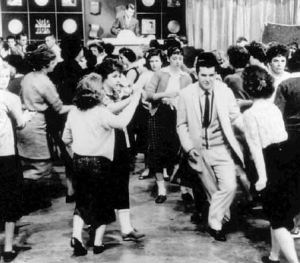
Someone from my high school class posted a video of 50s rock and roll, kids like ourselves dancing to Danny and the Juniors “At The Hop”, and the first thing that struck me was that, just as I remembered, a number of the couples dancing in the video, just as we did at the time (knowing nothing about Lindbergh or the “Lindy Hop”), were girls. None of the couples ever were boys. That was unthought and unthinkable, never occurred to any of us that I was aware of. But it was perfectly common and acceptable, and not even to be noticed or remarked, that two girls would form a dance couple if a boy was not available to dance. For me this experience was from around 1958, when I turned 12 years old.

I recall the term “queer” from perhaps as early as the 6th grade but I don’t…

View original post 460 more words