Anita Hill and Sandra Fluke: Does 20 years really make a difference?

Tonight while I was surfing around looking for updates on the Malaysian jet still missing somewhere between Malaysia and Vietnam – or perhaps somewhere else – I happened upon a long story in the New York Times about the new documentary about Anita Hill.  Sheryl Gay Stolberg’s review of the movie is actually a long profile of Hill.  I’m very happy that Hill allowed the documentary to be made because it means that a whole new generation of young men and women will be introduced to a remarkable person.

Back then there was no social media, no Facebook, no Twitter but the word still spread quickly among women that someone was about to accuse a nominee for the United States Supreme Court of sexual harassment.  No one knew exactly who she was, but we knew this was going to be important.  I was in Washington, D.C. that day at a meeting, but I remember sitting in a bar that afternoon with several other women all of us transfixed by what was happening on the television.  I was astounded that none of the men, and the Judiciary Committee was all white men, had any clue.  Stolberg puts it this way

“I think this event changed the course of her life and gave her a public mission that she took on,” said Fred Lawrence, the Brandeis president and a Yale Law School classmate of Ms. Hill’s. “It’s not a duty that she volunteered for, but I think she understood that the circumstances had put her in a unique role, and gave her a voice.”

The hearings were a surreal spectacle, as senators prodded an obviously uncomfortable Ms. Hill through awkward testimony about penis size, pubic hair and a pornographic film star known as Long Dong Silver — shocking public discourse at the time. When the hearings ended, Ms. Hill returned to teaching commercial law at the University of Oklahoma, trying, as she says in the film, to find “a new normal.” It proved difficult.

Ms. Hill at the hearings.

Ms. Hill at the hearings.

And I think every women who watched the hearings remembers that electric blue suit.

There were thousands of letters of support, but also death threats, threats to her job. Conservative state lawmakers wanted her fired; fortunately, she had tenure. Even years later, she felt “a discomfort,” she said. One dean confided that he had tired of hearing colleagues at other schools remark, “Isn’t that where Anita Hill is?”

In Washington, her testimony reverberated. Sexual harassment claims shot up. “Our phones were ringing off the hook with people willing to come forward who had been suffering in silence,” said Marcia D. Greenberger, founder and co-president of the National Women’s Law Center in Washington, where Ms. Hill serves on its board.

Congress passed a law allowing victims of sex discrimination to sue for damages, just as victims of racial discrimination could. Waves of women began seeking public office. In 1991, there were two female senators. Today there are 20.

Clarence Thomas was confirmed even though, as Hill puts it

“I believe in my heart that he shouldn’t have been confirmed,” she said in a recent interview, acknowledging that it irritates her to see Justice Thomas on the court. “I believe that the information I provided was clear, it was verifiable, it was confirmed by contemporaneous witnesses that I had talked with. And I think what people don’t understand is that it does go to his ability to be a fair and impartial judge.”

And there are still those who believe she made the whole story up. Then I started thinking about a more recent woman’s experience with Congress. This is from a story in the Daily Beast.

Rep. Darrell Issa’s Thursday hearing went off the rails early. “What I want to know,” demanded Rep. Carolyn Maloney, D-NY, as she looked at the all-male panel of clerics before her, “is, where are the women?”

The hearing, titled “Lines Crossed: Separation of Church and State. Has the Obama Administration Trampled on Freedom of Religion and Freedom of Conscience,” was about religious freedom, Issa said, but it took place against the backdrop of a national controversy regarding the White House’s mandate that all employers provide birth control as part of their insurance plans.

As it happens, there was one woman present prepared to testify on the issue of birth control. Sandra Fluke, a 30-year-old Georgetown University Law School student, had been contacted earlier in the week by committee minority leaders after Democrats saw a video of her speaking about the mandate at the National Press Club on February 9.

Sandra Fluke

Sandra Fluke

Congress had a woman to ask the question, but the panel was all men.  Fluke went on to testify at an informal hearing arranged by Democratic women.  The Huffington Post described it this way

This week she received almost rock-star treatment as the lone witness at an unofficial Democratic-sponsored hearing. While the rest of the Capitol was mostly empty, Democratic leader Nancy Pelosi, three other Democrats and dozens of mainly young women supporters crowded into a House office building room to applaud Fluke as she spoke of the importance of reproductive health care to women.

Prominently displayed by Rep. Carolyn Maloney, D-N.Y., was a photo of five religious leaders, all men and all appearing at the invitation of the Republican majority, testifying last week with Fluke visible in the background, sitting in the visitors’ section.

Democrats pounced on that image of a hearing discussing contraceptive rights being dominated by men while the one person Democrats had asked to appear on the witness stand, a woman, was turned away. Pelosi, D-Calif., said they had since heard from 300,000 people urging that women’s voices be heard on the issue.

“We almost ought to thank the chairman for the lack of judgment he had,” in denying a seat to Fluke, Pelosi said.

Committee chairman Darrell Issa, R-Calif., had said at last week’s hearing that the panel’s focus was on whether the administration policy was a violation of religious freedom. He said at the time that Fluke, invited by Democrats in her capacity as former head of Georgetown Law Students for Reproductive Justice, was not qualified to speak on the religious rights question.

“I’m an American woman who uses contraceptives,” Fluke said, when asked Thursday by Rep. Elijah Cummings, D-Md., about her qualifications to speak on the issue.

So maybe we have made progress in the years since Anita Hill.  Some Republican men don’t seemed to have learned much, but there were plenty of woman and men in Congress who wanted to hear Fluke’s testimony.  And we can thank Anita Hill for her part in making change happen.

Photograph of Anita Hill: American Film Foundation

Photograph of Sandra Fluke:  Getty Images

Daily Beast story: Matthew DeLucca

Huffington Post story: Jim Abrams

Women, gun violence, and domestic violence

According to the op-ed by Nicolas Kristof in last Sunday’s New York Times Review,

Sometimes there’s a perception that domestic violence is insoluble, because it’s such a complex, messy problem with women who are culprits as well as victims. Yet, in fact, this is an area where the United States has seen enormous progress.

Based on victimization surveys, it seems that violence by men against their intimate partners has fallen by almost two-thirds since 1993. Attitudes have changed as well. In 1987, only half of Americans said that it was always wrong for a man to beat his wife with a belt or stick; a decade later, 86 percent said that it was always wrong.

A generation ago, police didn’t typically get involved. “We would say, ‘don’t make us come back, or you’re both going to jail,’ ” recalled Capt. Leonard Dreyer of the DeKalb County Sheriff’s Office. In contrast, sheriff’s officers now routinely arrest the aggressor.

I have to admit that I am skeptical, but hope that his numbers are correct.  Even Kristof opens his column with ” [w]hat strikes one American woman in four and claims a life in the United States every six hours?”  A high profile case such as that of Jared Remy who killed his girlfriend, Jennifer Martel in front of their young daughter confirms that at point at which a woman makes an effort to leave a relationship is the point at which she is most likely to be killed.  Kristof himself recounts this story

American women are twice as likely to suffer domestic violence as breast cancer, and the abuse is particularly shattering because it comes from those we have loved.

“He’s the only person I’ve ever loved,” Ta’Farian, 24, said of her husband, whom she met when she was an 18-year-old college student. He gradually became violent, she says, beating her, locking her up in a closet, and destroying property.

“My family was like, ‘He’s your husband. You can’t leave him. How would you support yourself?’ ”

Still, she says, it became too much, and she called 911. Police arrested him. But she says that the day before the trial, her husband called and threatened to kill her if she testified against him, so she says that out of a mix of fear and love she refused to repeat in court what had happened. Her husband was let off, and she was convicted of false reporting of a crime.

I was still thinking about the Kristof column this morning when I read this front page story in this morning’s Boston Globe on women who buy and hold guns for men.

…As law enforcement agencies and the administration of Mayor Martin J. Walsh ponder ways to get guns off the street, they are learning that targeting the men who historically have been the primary actors in violent crimes is not enough.

They must also disrupt networks of women who buy and hold weapons for men to use.

“We are seeing women with weapons who do not have a direct role in the city’s gun violence,’’ said Jake Wark, spokesman for Suffolk County District Attorney Daniel Conley. “But they are turning up with firearms that are used in that violence.”

Debora Seifert, a special agent with the Bureau of Alcohol,  Tobacco, Firearms and Explosives in Boston, said that she has worked on cases in which women bought firearms for boyfriends who are drug dealers.

Police confiscated a shotgun and ammunition from Arianna Talbert’s Dorchester apartment last year.

“These women can go into a gun shop and buy these guns for a violent criminal,’’ said Seifert. “They can use these weapons to victimize someone in their communities.”

Jahmeilla Tresvant is facing gun charges in two cases. In one, police believe she was holding a gun for her brother

Jahmeilla Tresvant is facing gun charges in two cases. In one, police believe she was holding a gun for her brother

These guns are often hidden in apartments rented by the women and their discovery can result in eviction.

While research is scant on women’s involvement in the gun problem, studies have been clear about who is leading violence by firearms, said David Hemenway, a professor of public health at Harvard School of Public Health.

Men and teenage boys drive gun crime either as victims or perpetrators. If a woman buys a gun, Hemenway added, she is more likely to be buying it for someone who cannot legally buy a gun.

“These young females find themselves facing jail time for holding that gun,’’ said Evans [Boston Police Commissioner William Evans] in a statement.

The mindset that let Ta’Farian stay with her abusive husband is the same one that causes the young women to buy and hold guns.

In the war on illegal guns, Ruth Rollins has heard it all. She’s an advocate for women whose own son was shot and killed. Women have long been flying under radar in police sweeps for illegal guns, she said. And women have become easy prey for criminally-minded men, who are becoming savvy in avoiding arrest for gun possession by having female relatives, partners, or juveniles hold firearms for them.

Women have said they hold the guns for a variety of reasons: to get a few extra dollars, to get drugs, or simply to feel needed. The firearms are sometimes used as community guns stored in a central location, and anyone, from a wayward juvenile to a terrified young man, can have easy access to them.

“It’s no different from years ago when a woman would hold drugs for their men. They would do it for money. They would do it for love,’’ said Rollins. “Now they are holding these guns and they are doing it in the name of love.”

Kim Odom, who lost her 13-year-old son to violence, said some women feel a deep sense of commitment to their men, even the ones wrapped up in crime.

“They are of the mind-set that they are ‘ride-or-die chicks,’ ” Odom said. “These are young ladies who are willing to go all out for their boyfriends.”

This is just another kind of domestic violence.  Maybe more psychological than physical, but still domestic violence.  And like incidents of domestic violence which end either in death or injury to the woman or in which the woman ends up killing her abuser. [And yes, I do know that women can also be abuser, but men  still make up the vast majority.]

Over past year and a half Rollins and Odom have been training and educating women about the consequences of buying and stashing weapons. They urge women to make pledges to not hold or buy guns and warn them of the penalties if caught. For instance, a person who makes a straw purchase faces up to 10 years in prison under federal law, US authorities said.

Their effort, called Operation LIPSTICK, is run through Citizens for Safety, which has enlisted the help of local law enforcement and the mayor to press the issue. On Feb. 25, the group kicked off an ad campaign on the MBTA,  with placards on subway trains  declaring, “His Crime, Your Time — Holding His Gun Can Land You in Jail.”

Perhaps if we used some of the new technology that would prevent anyone but the gun purchaser from firing it, we would be able to cut down on some of the urban gun violence and some young women would be able to stay out of prison.  Massachusetts Senator Edward Markey has proposed a Smart Gun bill.  We should support it.

Photograph:  Dina Rudick/Globe Staff

Globe story:  Meghan E. Irons

The perpetual war on women

I’m baffled.  When a political party loses a large, important demographic in an election, I would think that they would change tactics so the same thing doesn’t happen again.  I’m not saying they necessarily need to give up a favored policy position but certainly they could maybe talk about something different.  They could follow the example of Pope Francis.  The Pope is certainly not going to change the Catholic Church position on abortion or ordination of women, but he doesn’t want those kind of issues to be the focus of Church teaching. I refer, of course, to the Republican Party.

I think that all of them need to go back and take Biology 101 again because starting with Todd Akin, they really don’t know how the reproductive system works.  The latest is from Mike Huckabee.  The Nation has provided the full quote via Yahoo! News.

Here are Huckabee’s comments in full, provided by Yahoo! News’s Chris Moody:

I think it’s time for Republicans to no longer accept listening to Democrats talk about a war on women. Because the fact is, the Republicans don’t have a war on women. They have a war for women. For them to be empowered; to be something other than victims of their gender. Women I know are outraged that Democrats think that women are nothing more than helpless and hopeless creatures whose only goal in life is to have a government provide for them birth control medication. Women I know are smart, educated, intelligent, capable of doing anything anyone else can do. Our party stands for the recognition of the equality of women and the capacity of women. That’s not a war on them, it’s a war for them. And if the Democrats want to insult the women of America by making them believe that they are helpless without Uncle Sugar coming in and providing for them a prescription each month for birth control because they cannot control their libido or their reproductive system without the help of the government, then so be it, let’s take that discussion all across America because women are far more than Democrats have made them to be. And women across America have to stand up and say, Enough of that nonsense.

Maybe he should stick to playing the guitar.

Maybe he should stick to playing the guitar.

While his remarks are somewhat muddy and unclear I think the gist is that the Democrats are paternalistic.  Sorry, Mike, but I think that it is the Republicans who are paternalistic.  They assume that women don’t understand about birth control, abortion, and their own bodies.  Otherwise, why would they need to have a doctor do a vaginal ultrasound and explain to them about fetal development.  But I think that Gail Collins had the best response.

Say what? Basically, Huckabee seems to be telling us that the Republican Party will not insult women by suggesting the federal government should require health insurance policies to include birth control pills in the prescription drug coverage.

He appears confident that women will find that an attractive proposition.

Huckabee was at a meeting of the Republican National Committee that was supposed to be pondering ways to close the gender gap. Instead, he laid bare a fact that the party has always tried desperately to hide — that its anti-abortion agenda is also frequently anti-contraception.

Back in 2011, Mississippi voted down a referendum that would define life as beginning at conception.  One reason it failed was because women came to understand that passage might outlaw certain kinds of contraception.  Women, as Collins points out, believe that the right to control their own reproductive schedules was long since established.  Most women find the idea that this might not be so beyond imagination.

Once upon a time, Republicans took the lead when it came to helping women get access to birth control. Now, the whole party is hostage to an anti-abortion movement that harbors a wide-ranging contempt for sex outside of marriage, combined with a strong streak of opposition to any form of artificial birth control, even for married couples.

“What does that make her? It makes her a slut, right?” Rush Limbaugh said of Sandra Fluke, the law student who was lobbying for inclusion of contraceptives in health care plans. However garbled his language, Huckabee’s control-their-libido harks back to the same mind-set.

This is a super political strategy. Let’s target all the voters who waited until they were married and then practiced the rhythm method.

The Republican party continues to be tone deaf when it comes to women’s health.

And there was no backtracking after the “Uncle Sugar” speech. In fact, Huckabee sent an email to his supporters replaying his remarks. Then he asked for a donation.

Photograph from Wikipedia.

The state rep and domestic violence

He was convicted of two counts of domestic violence resulting from a date – or a hook-up – gone very wrong.  State Representative Carlos Henriquez was sentenced to 2 and a half years and has to serve 6 months.  This happened on January 15 and I’ve been thinking about it ever since.  Much of the debate centers around his sentence since in Massachusetts most first time offenders are told to stay away from the victim and go to a batterer’s program.  Henriquez is planning to appeal.  The Boston Globe reported

State Representative Carlos Henriquez will spend six months in prison after a jury convicted him Wednesday of holding down a woman and punching her in the chest after she refused to have sex with him.

Jurors convicted Henriquez of some of the acts of violence he was accused of, but acquitted him of others.  The lawmaker was found guilty of two counts of assault and battery, but he was acquitted of a charge that he had struck the victim in her face. Jurors also found Henriquez not guilty of witness intimidation and larceny.

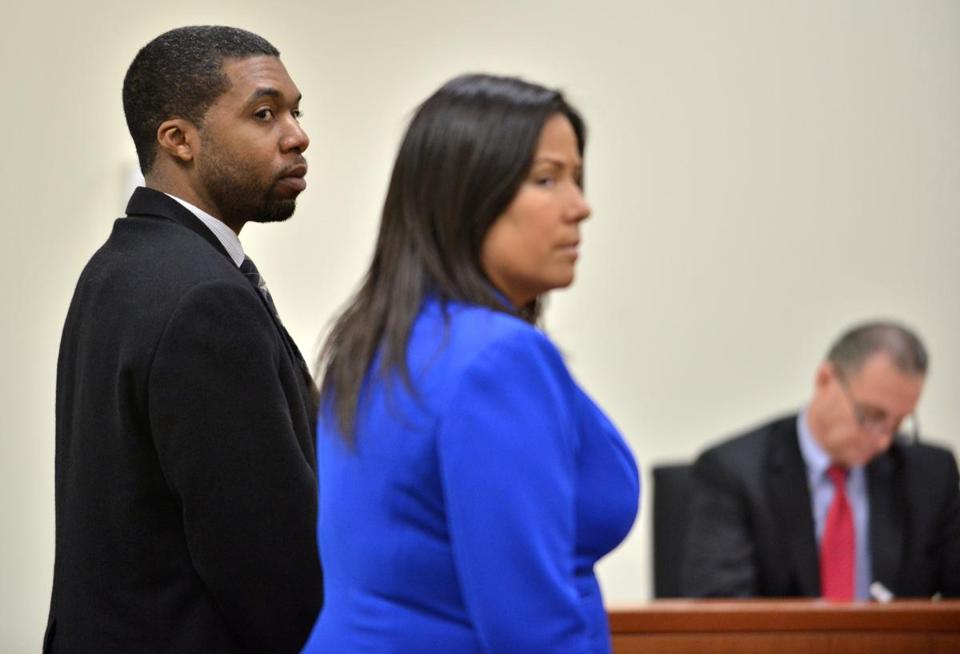
Dressed in a dark suit and tie, Henriquez was without expression as Cambridge District Court Judge Michele Hogan said she was sending him to prison in part because of the serious nature of his crime and because of his refusal to accept responsibility for his actions.

“When a woman tells you she doesn’t want to have sex, that means she does not want to have sex,” Hogan said. “You don’t hit her. You don’t punch her. . . . I’m very concerned that you’re not remorseful.”

State Representative Carlos Henriquez of Dorchester looked toward the jury Wednesday.

State Representative Carlos Henriquez of Dorchester looked toward the jury Wednesday.

I have to interject here that I worked for Carlos’ mother, Sandi, for a number of years and he occasionally stopped by the office.  She is now a high-ranking official at HUD.  His late father was a community activist and very involved in the Dudley Street Neighborhood Initiative not too far from where we live.  Carlos had a promising career ahead of him but something happened.  The incident for which he was convicted occurred not too long after his father’s death and with his mother mostly in Washington, perhaps he felt adrift.  The family always appeared to be close and he lived in an apartment connected to the family house. But this does not excuse what happened.

A few days after his conviction, Farah Stockman wrote a compelling piece published in the Globe opinion section.

You know your political career is on the rocks when the evidence that is produced in your assault trial is a fake fingernail. Bright pink.

What’s the jury going to think when they see that fingernail, found in the Zipcar you drove when you picked up the 23-year-old college student who accuses you of hitting her after she refused to have sex?

Are those jurors thinking: “A Zipcar! What an ecologically conscious elected official?” Probably not.

You know your reputation as an up-and-coming politician is bound to suffer when the most compelling evidence in your favor is a series of racy messages between you and said college student, sent from your VoteforCarlos e-mail. Katherine Gonsalves picks you out of the crowd at a community meeting, and asks to interview you for a class paper. Days later, she’s asking: “Are you still coming out to play tonight?” You’re a 35-year-old man. You’re Carlos Henriquez, representing the 5th Suffolk district. You’re the son of a well-known political family. A man whose endorsements are sought in mayoral campaigns. But you answer: “For Sure. I hope you are ready.” And you spell it F-O-S-H-O. Then you misspell her name in your phone.

Five months later, she’s begging you to come over. “Babe, I miss you,” she texts. You’re too busy, making the kind of neighborhood appearances that got you elected. Late into the night, she’s still trying to get you to pick her up. She describes partying with her sister and her sister’s friends, drinking. Your response: Send the address if you want to have sex.

Monica Lewinsky, anyone?  Anthony Weiner?  Elliot Spitzer?  Or even worse, Chandra Levy who ended up dead in Rock Creek Park.  Even though someone else was convicted of her murder, suspicion ruined the a California Congressman, Gary Condit with whom she had been having an affair.  Sex and politics are a lethal combination.  Elected officials seem never to learn and in the Henriquez case, there is not only political ruin but jail time.

More from Stockman

You pick her up. You both climb into the backseat of the car. What happens next defines both of you, maybe for the rest of your lives. She tells you she can’t go home with you as she had planned because her mother caught her sneaking out of the house. You complain that she dragged you all the way over here. You argue. She pulls out a cell phone and tells you she’s recording you. Do you struggle over the phone? Steal the SIM card? Do you backhand her, punch her, and choke her — and then climb into the driver’s seat and drive into Boston, without ever giving her a chance to get out of the car?

Or did everything happen differently? We don’t know your side of the story because you never take the stand. All we know is that your defense itself is unflattering: Your lawyer says you only wanted sex, but Gonsalves wanted more, and went “Fatal Attraction’’ when she didn’t get it.

I heard the evidence at the trial and I’m still not sure exactly what happened in the car that night. Justice, at its best, is an approximation. In the end, the jury — five women and three men — had an easier time picturing Carlos Henriquez beating a young woman than that young woman making it up, bruises and all.

Carlos Henriquez is clearly guilty: if not of assault, then of really poor judgment. In court, Gonsalves looked miserable in the witness box. Henriquez looked miserable at the defense table. Once, she stole an awkward glance at him. I felt sorry for them both.

So why sentence him to jail time?  On the surface, the only difference between Henriquez and other men who are convicted of domestic violence and get sent to a batterer’s program is that he is an elected official.  Unfortunately for him, the incident comes on the heels of the Jared Remy case.  Jared Remy was in court for beating up his girlfriend and mother of his child the most recent in a series of incidence with increasing violence.  He was released and, the next day, she was dead.  I think the trial is this summer.  The DA has said that releasing him was an error.

My question is this:  why have men been let off the hook so easily in the first place?  If I am right and the Remy case served as a wake-up call to the criminal justice system, the sentence of Henriquez to jail time was fallout.  When other men are also given jail time, we will know that things are finally changing for the better.

And a final word to Carlos:  Please resign.

Photograph:  Josh Reynolds for The Boston Globe

Kittie Knox: Bicycle Racer

Never heard of her?  Me either until this morning when the Boston Globe carried a front page story by Dan Adams about the ceremony putting a headstone on her long forgotten grave at Mount Auburn Cemetery in Cambridge.

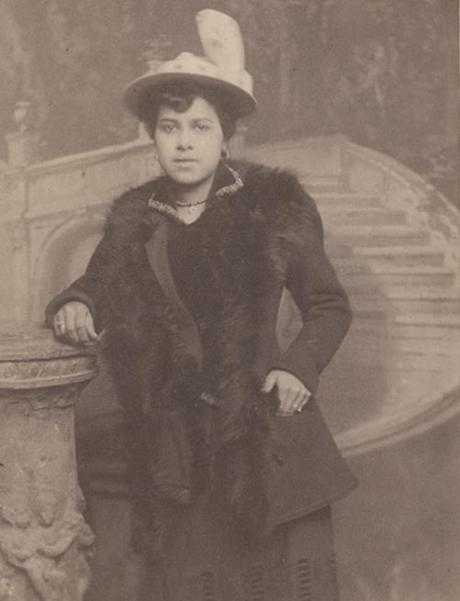
Kittie Knox

Kittie Knox

Knox, a seamstress born in 1874 to a free black father and a white mother, became a prominent and accomplished cyclist by the 1890s in Boston. But her mixed racial heritage raised eyebrows, as did her insistence on riding a man’s bike and wearing pantaloons of her own design instead of the long, heavy skirts prescribed by Hopkins and her ilk.

And if that weren’t enough, she excelled at the sport: Knox completed multiple 100-mile rides and placed 12th out of 50 male and female cyclists in a major national race, “far ahead of her lighter-hued sisters,” one magazine reported.

Knox had seemed doomed to obscurity. But six years ago, author Lorenz Finison stumbled across her name while researching a forthcoming book on Boston’s cycling history. Passing references to Knox in cycling books prompted Finison to search local newspaper archives for more information.

“I found an article saying she won a cycling costume contest in Waltham,” said Finison, a teacher at the Boston University School of Public Health and a cofounder of Cycling Through History, which develops bike routes between African-American heritage sites. “I thought, that’s really amazing. Why, given the racial climate of the time, would she have won a contest out there? I thought I should look into it more.”

Kittie Knox faced not only sexism but also racism.

Finison eventually unearthed a trove of stories about Knox. While many articles were preoccupied with her race and appearance — “a beautiful and buxom black bloomerite” was one reference in Referee Magazine — he learned that Knox had been a member of Boston’s only black cycling group, the Riverside Cycle Club, before joining the Boston-based National League of American Wheelman in 1893.

Knox soon found herself at the epicenter of a fight over whether blacks could join the league, he said. After a Southern faction of league leaders successfully politicked in 1894 to make the group for whites only, Knox’s appearance at the league’s 1895 national meet in Asbury Park, N.J., caused an uproar. Trouble began upon her arrival, when, rather than appease critics, “Miss Knox did a few fancy cuts in front of the clubhouse and was requested to desist,” The New York Times reported.

Then, when Knox went to register for the meet and presented her membership card, the credentials were rejected.

“[Knox’s] entrance today, in the parlor of the Asbury Park wheelmen, caused wild consternation among the ladies gathered there,” wrote a San Francisco paper, according to Finison’s manuscript. “She was politely told that she was in the wrong house. To their utter surprise she produced a league membership card and declared that no exception had ever been taken to her color by wheelmen or wheelwomen. After asserting herself to that extent, Miss Knox walked defiantly out with her wheel.”

Even after members of the Massachusetts delegation intervened to ensure her participation, successfully arguing she had been admitted before the color bar, Finison writes that anger persisted: A group of white women cyclists threatened to quit in protest; dozens walked out of a League dance when Knox partnered with a white man; a Southern paper slammed League leaders for permitting “this murky goddess of Beanville” to ride.

Don’t you love it?  “[M]urky goddess of Beanville”.  A dig at Knox’s race and at Boston.   Good for the Massachusetts delegation for standing up for her.

Much of the Globe’s coverage of early Boston cycling clubs, as cited by Finison, betrays blatantly racist and sexist attitudes common in that era. But one Globe report from  the event in 1895 at Asbury Park trumpeted Knox’s abilities, perhaps to point a finger at Southern papers that had decried her participation.

“The leaders tried to lose Knox during the eighteen mile run but she was game, and when the big crowd entered the town on the return trip she was up with the leaders, sailing with the best of them,” the Globe wrote. “She was not to be consigned to the tribe of ‘also rans,’ and today all the League members are anxious to see her. And when she appears in the street she receives more attention than a half dozen star racing men.”

Kittie Knox died in 1900 at the age of 26, but through Finison’s efforts, her family was found and she was honored on Sunday,

Three generations of Kittie Knox’s relatives attended a ceremony dedicating a new headstone at Mount Auburn Cemetery.

Three generations of Kittie Knox’s relatives attended a ceremony dedicating a new headstone at Mount Auburn Cemetery.

Another remarkable woman has been rediscovered.
Photograph:  Jim Davis/Boston Globe

The burden of domestic violence

The news hit Boston like a bombshell:  Jerry Remy‘s son was arrested for murder.  Jerry Remy is the former Red Sox second baseman and long time Sox television commentator.  He is the President of Red Sox Nation.  We have seen him through cancer, depression and a recent reoccurrence – a minor one he told us.  When he is not broadcasting games, we miss him.  So hearing that Jared Remy had been involved in a domestic violence incident that resulted in the stabbing to death of his girlfriend and mother of his child was shocking.

All the facts are not in, but there was a violent incident two days before that resulted in injury and a court appearance for Jared Remy the next day.  Jennifer Martel, for reasons that we really don’t know, did not appear to ask for a retraining order and, even though Massachusetts law allows for it, the district attorney did not request one.  Jared Remy has a history of violence.  A little over 24 hours later, Martel was dead.  She had been stabbed to death on the patio of their home.  Some neighbors tried to intervene and one of them was also injured.

The DA and the state attorney general are both investigating and looking into changes that might prevent similar incidents in the future.

Everyone is wondering why Martel didn’t just leave, but the question I want to ask is why is it always the woman who has to leave?  I’ve been on task forces, on the board of the Richmond, VA. YWCA, and executive director of a women’s commission.  I have supported shelters and hot line and assisted women to leave home and go to a safe place.  I ran a Clothesline Project.  Everyone in the field knows that the most dangerous time for a woman is when she is getting ready to leave her abuser, but we still expect her to be the one who leaves.  When there are school aged children, they are often put in different schools.  The woman is separated often separated from her friends and support system and so are the children.  She bears the burden, not her abuser.  (And yes, men can also be abused.  Gays and lesbians can abuse their partners and spouses.  But the vast majority of those suffering abuse are women.)  Martel’s family says she was also making plans to leave.

Friends and relatives said Martel, 27, an aspiring teacher who worked at a nearby Market Basket to provide for her daughter, had been trying to extricate herself from what she told them had become an abusive relationship with Remy, the son of famed Boston Red Sox player and broadcaster Jerry Remy.

“I talked to her on Wednesday; she said she was planning her escape,” said Patty Martel, who on Friday was driving from her home in Virginia to Massachusetts. “It started off she was very happy with him, but, as time went on, he showed his true colors, and it got worse and worse.”

Right after the murder of Jennifer Martel, I read a story in the New York Times about a new kind of law.  If someone makes too many calls to 911, the law can require the landlord to evict.

The police had warned Lakisha Briggs: one more altercation at her rented row house here, one more call to 911, and they would force her landlord to evict her.

They could do so under the town’s “nuisance property” ordinance, a law intended to protect neighborhoods from seriously disruptive households. Officials can invoke the measure and pressure landlords to act if the police have been called to a rental home three times within four months.

So she faced a fearful dilemma, Ms. Briggs recalled, when her volatile boyfriend showed up last summer, fresh out of a jail stint for their previous fight, and demanded to move in.

“I had no choice but to let him stay,” said Ms. Briggs, 34, a certified nursing assistant, even though, she said in an interview, she worried about the safety of her 3-year-old daughter as well as her own.

“If I called the police to get him out of my house, I’d get evicted,” she said. “If I physically tried to remove him, somebody would call 911 and I’d be evicted.”

This may be an unintended consequence of a law designed to help landlords with squatter and drug dealers, but the burden often falls on women who are victims of domestic violence.

“These laws threaten citizens’ fundamental right to call on the police for help,” said Matthew Desmond, a sociologist at Harvard.

In a study of citations issued to landlords in Milwaukee, conducted with Nicol Valdez of Columbia University, Mr. Desmond found that domestic violence was involved in nearly one-third of the cases and that rentals in largely black areas were disproportionately singled out.

Legal experts say the laws can give tenants the lasting stain of an eviction record without due process.

In a federal lawsuit being watched by legal aid groups elsewhere, Ms. Briggs has challenged the Norristown ordinance as unconstitutional.

She did so after her fears were realized.

In June 2012, days after her ex-boyfriend, Wilbert Bennett, moved into her house in this struggling town northwest of Philadelphia, he started another drunken, late-night argument. Then came his most violent attack yet: an assault with a broken ashtray that left a gash on her head and a four-inch stab wound in her neck.

Before she passed out, Ms. Briggs begged her neighbor not to call 911 because of the eviction threat, according to the suit, which is being argued by the American Civil Liberties Union.

The neighbor called anyway. Ms. Briggs was taken by helicopter to Philadelphia for emergency treatment. Mr. Bennett is now serving a sentence of one to two years for aggravated assault.

The town says she never got a restraining order.  What if she had gotten one when the boyfriend got out of jail?  In all likelihood he would have come around anyway and she would have had to call 911.

I don’t pretend to know what the answer is, but we need to figure out how to deal with men like Wilbert Bennett and Jared Remy.  Putting them in jail is not the entire answer.  That may well work for a while, but they will get out and often turn up again.   There are a few programs for men, but they are very few.  Some prisons have anger management classes which may work for some.  But as long as we continue to think of ending the abuse as the woman’s responsibility, we will never think of any new solutions.

A death from domestic violence leaves families shattered and children anchorless and what happened with Jennifer Martel and Jared Remy is not an exception.

On the opposite sides of the Civil Rights struggle: Lindy Boggs and Robert Byrd, Jr.

This week has brought notice of the death of two political figures from the past:  Lindy Boggs and Harry Byrd, Jr.  Both in their late 90s and had been out of office and out of the news for a number of years.  But it is notable that although of similar age and from the south, they were opposites when it came to civil rights.

Lindy Boggs was the window of House Speaker Hale Boggs who died in a plane crash in Alaska.  I remember when this happened in 1972,  I was moving out of my student movement phase and beginning to take an interest in electoral politics. Boggs ran to replace him following a tradition of widows taking over for their politician husbands.   Boggs, however, was different.  She went on to serve nine terms in Congress (several of them representing a majority black district) and become a champion of women’s rights and civil rights while representing Louisiana.  The New York Times describes some of her legislative efforts.

Mrs. Boggs during her Congressional campaign in 1973

Mrs. Boggs during her Congressional campaign in 1973

The velvet Southern charm she had absorbed growing up on two Louisiana plantations was her not-so-secret weapon.

She displayed it early in her first term when the House banking committee was composing an amendment to a lending bill banning discrimination on the basis of race, age or veteran status. She added the words “sex or marital status,” ran to a copying machine and made a copy for each member.

In her memoir she recalled saying: “Knowing the members composing this committee as well as I do, I’m sure it was just an oversight that we didn’t have ‘sex’ or ‘marital status’ included. I’ve taken care of that, and I trust it meets with the committee’s approval.”

Thus was sex discrimination prohibited by the Equal Credit Opportunity Act of 1974.

I always loved that story.

Mrs. Boggs used her membership on the Appropriations Committee to push for other women’s economic concerns, like equal pay for government jobs and equal access to government business contracts. She became a champion of historic preservation and port development, flood control and housing in her New Orleans district.

Mrs. Boggs championed racial justice at a time when doing so invited the resentment if not hostility of most Southern whites. She saw the growing civil rights movement as necessary to the political reform movement of the 1940s and ’50s.

“You couldn’t want to reverse the injustices of the political system and not include the blacks and the poor; it was just obvious,” she said in 1990.

While her husband was in office, she supported civil rights legislation as well as Head Start and antipoverty programs. As the president of two organizations of Congressional wives, she saw to it that each group was racially integrated.

She has been honored by the House with the naming, in 1991, of the Lindy Claiborne Boggs Congressional Women’s Reading Room.  She was 97 when she died.

At the other end of the civil rights spectrum is Harry Byrd, Jr., the long time Senator from Virginia, and not to be confused with Robert Byrd of West Virginia.  When I moved to Virginia in 1965, Byrd was my Senator.  He had just been appointed to replace his father who had died.  The Byrd Machine ruled Virginia Democratic State politics at the time and both Byrds worked hard to maintain segregation in Virginia schools.  The New York Times writes

Even as a middle-aged man, Mr. Byrd was often called “Little Harry” or “Young Harry.” By the 1920s, his father, Harry F. Byrd Sr., had built a formidable Democratic political machine in Virginia that eventually elected him governor and then to the Senate, where he served from 1933 until his resignation in 1965. (Like his son, Harry Sr. was initially appointed to the Senate to fill a vacancy, after the resignation of Claude A. Swanson.)

The elder Mr. Byrd was a conservative Democrat who served for 11 years as chairman of the Senate Finance Committee. He also supported “massive resistance,” the name given to Virginia’s opposition to public school desegregation in the late 1950s. The son, who was serving in the State Senate at the time, helped develop the policy, which included closing some schools for several years rather than integrate them.

Harry F. Byrd  in 1965, when he was appointed to his father’s seat

Harry F. Byrd in 1965, when he was appointed to his father’s seat

Moorestown, N.J. where I was living as a teenager was one of the northern towns that hosted African-American high school seniors so they would have a chance to get diplomas and go to college.  I went to a number of social activities that were hosted for them, but never, much to my regret, got to know any of them well enough to stay in touch.

Although the Byrd machine began coming apart amid the fractured politics of the 1960s, it held together long enough to get Gov. Albertis S. Harrison Jr., a longtime supporter of the family, to appoint Harry Jr. to his father’s seat in 1965. The following year Mr. Byrd won a special election to complete his father’s term. By 1970, with blacks voting in larger numbers and urban labor unions supporting more liberal candidates, Mr. Byrd faced a potentially challenging Democratic primary in pursuit of his first full term. That March, saying he was unwilling to sign a party oath to support the Democratic nominee in the 1972 presidential election, particularly since the candidate was not yet known, he announced that he would become an independent.

If the decision seemed striking given his family history, it was also prudent. Taking votes from his Democratic and Republican opponents, he won easily that November. Mr. Byrd had dropped his party affiliation but essentially kept his voters, his politics and much of his power.

I don’t think he could have supported either George McGovern or Hubert Humphrey so he made the correct choice.  Byrd, however,  continued to caucus with the Democrats.  There is one more shameful incident I remember.

In the late 1970s, President Jimmy Carter asked Mr. Byrd to form judicial commissions to name black and female candidates for Virginia’s federal courts. In 1980, after Mr. Byrd’s commissions had named only white men, none of whom were judges, President Carter nominated James E. Sheffield, a black state court judge. Mr. Byrd vowed to fight his Senate confirmation and did so successfully.

I remember Judge Sheffield’s rejection well.  The only reason for his failure to be confirmed was race.

Senator Byrd was a bigot throughout his public life.  He did not run for re-election in 1982 by which time I think he would have lost as new young Democrats were winning office like Charles Robb who became governor in then.  And people like me who were taking over the Virginia Democratic Party.  Byrd’s time was thankfully passing.

He was 98 when he died.

Photographs:  United Press International

Republicans try to attract women

I was getting ready to call it a night as my head is swimming with a half written post about Trayvon Martin when I saw the new Tom Tomorrow cartoon.  It really needs no explanation.

TMW2013-07-17color  Great pick up lines.  I’m sure that women voters will be flocking to them in droves.

The House passes still another restriction on abortion

Nancy Pelosi tweeted this picture with a quote from Representative Dent last night

Embedded image permalink

Clearly the Republican leaders didn’t listen to Dent.  They love to have votes on abortion, birth control and, the favorite – repealing the Affordable Heath Care Act instead of actually passing measures that might also pass in the Senate and get signed into law.
The result of pandering again to their base was passage of a bill that will ban abortions after 22 weeks.  According to the New York Times story

The measure, which would ban abortion after 22 weeks of pregnancy based on the medically disputed theory that fetuses at that stage of development are capable of feeling pain, passed in a 228-to-196 vote that broke down mostly along party lines. Reflecting how little common ground the two parties share these days, just six Republicans voted against the bill; six Democrats voted for it.

“I’m not waging a war on anyone,” said Kristi Noem, Republican of South Dakota, offering a rejoinder to the Democratic assertion that Republicans have waged a war on women, a line of attack that harmed conservative candidates in 2012. “Regardless of your personal beliefs, I would hope that stopping atrocities against little babies is something we can all agree to put an end to.”

How about stopping atrocities like cutting food stamps and voting against bills that would provide health care and jobs for after this child that you have “saved” is born, Representative Noem?
But, remembering the bad press from hearings where all the legislators and all the witnesses were men discussing birth control the leadership did show they can learn something.

The tableau in the House chamber on Tuesday was intentionally far different from the scene last week at a meeting of the House Judiciary Committee at which all 19 of the Republicans arguing for and then voting to approve the bill were men. Republican leaders made sure that their female members were front and center for the debate this time.

Representative Virginia Foxx, a North Carolina conservative and Tea Party favorite, and Representative Marsha Blackburn, a longtime abortion opponent from Tennessee, were assigned to manage the floor debate. Representative Candice S. Miller of Michigan and Representative Ileana Ros-Lehtinen, one of the Republican conference’s more moderate members, controlled the gavel.

But the simple math was difficult to ignore. Only 19 of the 234 Republican House members are women. Nearly all of them spoke on Tuesday. Only three Republican men were allowed to participate in the debate. Notably, Trent Franks of Arizona, the bill’s sponsor who last week caused an uproar after claiming that instances of pregnancy after rape were “very low,” said nothing from the floor.

I think that 22 weeks is getting close to the time of viability which most see as 23 to 26 weeks.  As bills move ever closer to that line,  those of us who agree that women have a right to choose to continue the pregnancy or not will be faced with a difficult question and one that we need to be prepared to answer: where, if anywhere, should the line be drawn?

Even if Democrats believed the political upper hand was theirs as they used the issue of reproductive rights to portray their opponents yet again as hostile and indifferent to the needs of women, it was clear that the question at hand — the termination of pregnancies that are five months or more along — was an uncomfortable one.

At a news conference Tuesday morning led by Democrats who favor abortion rights, the mood quickly turned tense after two journalists tried to press the representatives about their support for late-term abortions. Representative Diana DeGette of Colorado cut off questions after being asked whether she would draw the line at legal abortion later in pregnancy. “The Supreme Court has spoken, and this bill is unconstitutional. Next question,” she said.

As medical science advances, the time limits laid out in Roe v. Wade may no longer hold.  There are medical and social costs to having a child born at 25 weeks.  In a 1997 story, the New York Times reported

”At the time of Roe vs. Wade it was around 26 weeks pregnant,” Dr. Ezra Davidson, past president of the American College of Obstetrics and Gynecology, said. ”It has come down a couple of weeks since that time.”

But many babies who survive birth at that stage have terrible problems.

”You have to temper any discussion about viability because though you may get into a 24-week period, or a 23-week period, a large portion of those infants are going to have serious disabilities,” Dr. Davidson said.

Most experts believe that the current limit of viability is 23 or 24 weeks into the normal 40-week term of pregnancy. Babies born at this stage are known as micropreemies and are extremely fragile. The typical micropreemie weighs 500 to 600 grams — slightly more than a pound — and can fit in the palm of a hand.

According to the American College of Obstetrics and Gynecology, fewer than 40 percent of infants born from 23 to 25 weeks’ gestation survive.

Moreover, Dr. William Taeusch, chief of pediatrics at San Francisco General Hospital, said: ”That’s strictly survival. That’s getting out of the hospital alive, usually at three months, at a cost of hundreds of thousands of dollars. And if you get out of the hospital alive and you haven’t had major problems, then your chances of having a normal brain are 90 percent.”

But according to the obstetrics and gynecology group, nearly 50 percent of surviving children who weigh less than 750 grams at birth experience moderate or severe disability, including blindness and cerebral palsy.

Things haven’t really changed a great deal since 1997.  This is from the Wikipedia article on fetal viability.

Fetal Viability Chart

Fetal Viability Chart

Of course, most women who don’t have late term abortions have a full term baby.  This means the mother and hopefully father need to have jobs and assistance in caring for the baby for the next 18 years – the kind of assistance the Republicans often vote against.  It means available contraception so women aren’t faced with the choice at all.  It means sex ed  beginning in middle schools that includes information on what it is like to care for a baby.  (What happened to those programs where teens had to care for a doll that was life-like and demanded diaper changes and feedings 25/7?)

I personally have problems with late term abortions that are not for medical reasons – either the mother’s or the child’s.  But I also think we should be spending what is needed to make sure those children are fed, educated and not abused.  And I understand why sometimes the decision is so late.

Jessica Valenti has column in the Nation thinking through many of these issues, but it is her conclusion that sticks with me.

Abortion is complicated, as are our lives and health—and the fact that these  choices are so complex and nuanced is precisely why we can’t legislate them.  Wishing otherwise will never 
make it so.