The Next Fed Chair? Not Larry Summers.

Why would the President want to appoint someone who once opined that women were not good at science?  The man who was hired to end the economic crisis, but likely contributed to its making.  I’ve been thinking about how to approach this for a few days now and then I saw two pieces by Shirley Leung in the Boston Globe Business Section.  I think she says exactly what I wanted to say.  In the first, she discusses Larry Summers.

No need to hold back here: Larry Summers as the next Fed chairman?

Worst idea ever.

Summers, by all accounts, is a brilliant economist, one of the best of his generation. He is also someone who is confident, and, in times of crises, may be the adult in the room that he supposedly said the Obama administration didn’t have when the economy collapsed.

But he lacks one critical trait I like in my Fed chairmen: He’s not boring.

Summers is far from bland. He is arrogant and a lightning rod and would carry so much baggage he couldn’t fit it on the shuttle to Washington.

Do we need a Fed Chair that is all about Larry Summers?  I think not.

In his book “Confidence Men,” about the Obama White House’s handling of the economic crisis, former Wall Street Journal reporter Ron Suskind paints Summers as brilliant but overconfident and prone to unnecessary battles. “As he has aged, he has grown less troubled by being uninformed,” Suskind wrote.

That’s not what you want in a Fed chairman. The nation’s top central banker must manage the economy primarily by raising or lowering interest rates and must build consensus to do so. He must work with six other Fed governors and 12 regional Fed bank presidents. Imagine what would have happened if the Fed board was split over what to do with the economy in 2008? What would that have done to the markets?

“I know Larry very well. He is a smart guy,” said Allan Meltzer, a Carnegie Mellon professor who has written the definitive history on the Fed. “But the skills that are required for that job are not just brilliance, they are ability to manage compromise. He doesn’t do that well.”

This is to say nothing about how he ran Harvard.  When he left, they picked Drew Faust, a women who was his opposite in many important ways.

So, who should be the next Fed Chair?  How about a woman?  Senator Elizabeth Warren and Shirley Leung are backing Janet Yellen.

English: Official picture of Janet Yellen from...

English: Official picture of Janet Yellen from FRBSF web site. http://www.frbsf.org/federalreserve/people/officers/yellen.html (Photo credit: Wikipedia)

Just as forcefully as folks are coming out against Summers, there is a campaign mounting to promote Janet Yellen, Ben Bernanke’s number two.

Unlike Summers, Yellen has significant monetary policy experience. She has been the vice chair of the Fed board of governors since 2010, and prior to that she ran the San Francisco Federal Reserve bank for six years. She has been involved in the Fed’s quantitative easing strategy, hatched during the Great Recession to keep money flowing and the US economy alive.

And unlike Summers, she is sufficiently boring, a key trait we want in someone running our central bank.

If Yellen got the nod, she would break the glass ceiling at the Fed, becoming the first woman at the top. She already has some high profile endorsements from New York Times columnist Paul Krugman and former FDIC chair and UMass-Amherst professor Sheila Bair.

Bair, in a blog posted on Fortune earlier this week, argues that Yellen is the most qualified candidate, but the financial world’s old-boy network is trying to derail her candidacy:

“So why isn’t she a shoo-in? The ‘whispering’ campaign against her among industry types has been deafening. ‘Doesn’t understand markets.’ Translation: She may not bail us out if we get into trouble again. ‘Not assertive enough.’ Translation: She won’t stand up for us against the populists who want more regulation. ‘Lacks gravitas.’ Translation: She doesn’t show up very often in the financial media.”

I guess we haven’t come far enough for the Wall Street guys to be comfortable with a woman.

Bair also takes a whack at Summers. “Unlike Larry Summers, Tim Geithner, and other Bob Rubin minions frequently mentioned in the financial press as potential Bernanke successors, she was not part of the deregulatory cabal that got us into the 2008 financial crisis. In fact, she had a solid record as a bank regulator at the San Francisco Fed and was one of the few in the Fed system to sound the alarm on the risks of subprime mortgages in 2007.”

Others are also rallying behind Yellen. Senator Elizabeth Warren of Massachusetts on Friday confirmed that she has signed a letter Senate Democrats are circulating and plan to deliver to President Obama calling on him to nominate Yellen because “she is the best person for this job.” As early as Monday, activists, including women’s advocacy groups NOW and Ultraviolet plan to send a letter to Obama and Senate majority leader Harry Reid to support Yellen’s candidacy and oppose Summers’. When he ran Harvard, Summers set off a firestorm when he suggested women lacked the same “intrinsic aptitude” for science as men.

The President recently said he was not going to make a decision until fall, so we have time to make sure he appoints the best qualified person who, in this case is a woman.  Not Larry Summers.

Fixing FISA

Congress is beginning to have a debate about surveillance, oversight and secrecy – the one good thing to come out of  Edward Snowden’s continuing adventure.  Of course, it is hard to debate when you can’t talk about a lot of things in public or even to your fellow members, so I was very interesting in reading Judge James G. Carr’s op-ed in yesterday’s New York Times.  His suggestion is one that Congress and the Obama Administration should be able to debate and legislate without revealing anything that needs to be kept secret.  Judge Carr is identified as a senior federal judge for the Northern District of Ohio,[who] served on the Foreign Intelligence Surveillance Court from 2002 to 2008.

CONGRESS created the Foreign Intelligence Surveillance Court in 1978 as a check on executive authority. Recent disclosures about vast data-gathering by the government have raised concerns about the legitimacy of the court’s actions. Congress can take a simple step to restore confidence in the court’s impartiality and integrity: authorizing its judges to appoint lawyers to serve the public interest when novel legal issues come before it.

The court is designed to protect individual liberties as the government protects us from foreign dangers. In 1972, the Supreme Court ruled that the Nixon administration had violated the Fourth Amendment by conducting warrantless surveillance on a radical domestic group, the White Panthers, who were suspected of bombing a C.I.A. recruiting office in Ann Arbor, Mich. In 1975 and 1976, the Church Committee, a Senate panel, produced a series of reports about foreign and domestic intelligence operations, including surveillance by the F.B.I. of suspected communists, radicals and other activists — including, notoriously, the Rev. Dr. Martin Luther King Jr.

The Foreign Intelligence Service Act set up the FISA Court in response. To obtain authority to intercept the phone and electronic communications of American citizens and permanent residents, the government must only show probable cause that the target has a connection to a foreign government or entity or a foreign terrorist group. It does not have to show, as with an ordinary search warrant, probable cause that the target is suspected of a crime.

The problem is that the court only hears from one side.  I wrote recently that the real danger to our civil liberties is the FISA Court and I hoped that people will come up with ways to try to fix it.  Judge Carr has one suggestion at which Congress should take a serious look.

Critics note that the court has approved almost all of the government’s surveillance requests. Some say the court is virtually creating a secret new body of law governing privacy, secrecy and surveillance. Others have called for declassified summaries of all of the court’s secret rulings.

James Robertson, a retired federal judge who served with me on the FISA court, recently called for greater transparency of the court’s proceedings. He has proposed the naming of an advocate, with high-level security clearance, to argue against the government’s filings. He suggested that the Privacy and Civil Liberties Oversight Board, which oversees surveillance activities, could also provide a check. I would go even further.

In an ordinary criminal case, the adversarial process assures legal representation of the defendant. Clearly, in top-secret cases involving potential surveillance targets, a lawyer cannot, in the conventional sense, represent the target.

Congress could, however, authorize the FISA judges to appoint, from time to time, independent lawyers with security clearances to serve “pro bono publico” — for the public’s good — to challenge the government when an application for a FISA order raises new legal issues.

Having lawyers challenge novel legal assertions in these secret proceedings would result in better judicial outcomes. Even if the government got its way all or most of the time, the court would have more fully developed its reasons for letting it do so. Of equal importance, the appointed lawyer could appeal a decision in the government’s favor to the Foreign Intelligence Surveillance Court of Review — and then to the Supreme Court. No opportunity for such review exists today, because only the government can appeal a FISA court ruling.

A combination of a people’s advocate and public release of decision summaries would remove some of the mystery and secrecy.

One obvious objection: judges considering whether to issue an ordinary search warrant hear only from the government. Why should this not be the same when the government goes to the Foreign Intelligence Surveillance Court?

My answer: the court is unique among judicial institutions in balancing the right to privacy against the president’s duty to protect the public, and it encounters issues of statutory and constitutional interpretation that no other court does or can.

For an ordinary search warrant, the judge has a large and well-developed body of precedent. When a warrant has been issued and executed, the subject knows immediately. If indicted, he can challenge the warrant. He can also move to have property returned or sue for damages. These protections are not afforded to FISA surveillance targets. Even where a target is indicted, laws like the Classified Information Procedures Act almost always preclude the target from learning about the order or challenging the evidence. This situation puts basic constitutional protections at risk and creates doubts about the legitimacy of the court’s work and the independence and integrity of its judges. To avert these dangers, Congress should amend FISA to give the court’s judges the discretion to appoint lawyers to serve not just the interests of the target and the public — but those of the court as well.

079 Capitol Hill United States Congress 1993

079 Capitol Hill United States Congress 1993 (Photo credit: David Holt London)

We are already deep in uncharted waters and we need to take steps to try to protect ourselves.  It serves no purpose if we lose our civil liberties while protecting them.  I don’t have a great deal of hope that Congress can actually get itself together enough to act, but there has been some glimmer of bipartisanship about this issue.  Let us hope someone writes Judge Carr’s ideas into a bill so it can be introduced.

George W and Barack Obama

Any one else notice that two events seem to be bringing former President George W. Bush and President Barack Obama together?  First, in Africa.

130702_obama_bush_africa_reu1According to Politico

The presidents appeared side-by-side and bowed their heads for a moment of silence at the embassy in Dar es Salaam, Tanzania, according to pool reports. They also shook hands with guests at the ceremony, which included the U.S. ambassador and family members of victims of the truck bombing.

The embassy was struck on Aug. 7, 1998, by Al Qaeda in a coordinated terrorist attack that also hit the embassy in Nairobi, Kenya. In Tanzania, 10 people were killed and more than 85 were injured.

The Clinton quote I found in the Washington Post.

The Clinton quote, from Aug. 13, 1998 at Andrews Air Force Base, reads, “We must honor the memory of those we mourn by pressing the cause of freedom and justice for which they lived. It is the burden of our history and the bright hope of the world’s future.”

The second event bringing them together is immigration reform.  Remember that George W. tried to get a bill passed when he was President.  Now according to new accounts, including Politico, he is going to speak on the importance of reform.

Former President George W. Bush is expected to make a speech next week on how  immigration reform is good for the country, the Dallas Morning News reports.

Bush will speak after a citizenship ceremony at the George W. Bush Presidential  Center in Dallas on Wednesday followed by a panel discussion titled “What  Immigrants Contribute.”

While no one knows if he will inject himself into the current Congressional debate by supporting either the Senate or House bills, his talking about it may just help push some House Republicans into supporting the Senate bill which President Obama supports.

I think that Presidents are an exclusive club and no matter the politics there are always shared experience.  In Tanzania, we had the convergence of three: Clinton, Bush, and Obama.

Photograph:  Reuters

The Secretaries Kerry

No.  That isn’t a typo.  I’m sure that you know about John Kerry.  He’s the still pretty new Secretary of State.  But you probably don’t know about Cameron Kerry.  Cameron is your acting Secretary of Commerce and John’s younger brother.  This is the first time that brothers have been in the cabinet at the same time.  It won’t last long:  Penny Pritzker will be confirmed one day and Cameron will go back to being General Counsel at Commerce.

The Boston Globe notes

The history-making move is also proving that, well, having two Secretary Kerrys can get quite confusing.

In the Commerce Department, where officialdom prohibits first name usage, staffers have started referring to John Kerry as “the other Secretary Kerry.” When appointments are made at the White House Mess, they now have to specify which Secretary Kerry the reservation is for – and, when paying, Cameron Kerry has been tempted to simply say, “Just put it on his tab.”

Last week, Cameron and John Kerry both signed off on a diplomatic cable to be sent to missions overseas that house employees of both the Commerce and State Departments. The cable said, in all caps, it was from “Secretary Kerry and Acting Secretary of Commerce Kerry.”

“Which is going to confuse the hell out of some people in missions abroad,” Cameron Kerry said.

But as Joe Biden says “Two Kerrys are better than one.”

Cameron Kerry

Cameron Kerry

Photograph: Drew Angerer for the Boston Globe

What’s on your money?

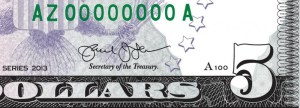
Back in January I wrote about the new Treasury Secretary nominee’s signature.  Today, the Treasury unveiled Jack Lew’s new Hancock.

Here it is thanks to the Wonkblog on the Washington Post.

Lew sig on bill

Remember his original signature looked like this.

lew-sig old

He did promise President Obama that at least one letter would be legible and the “J” for Jacob is readable so he kept his promise.  I can’t wait until the money starts being issued.

Syria? Really?

The President, probably never believing that Assad would use chemical weapons, drew a red line.  He’s been stalling around saying he needs verification, but now he has it.  The question is what should we do now.  I think Obama is stuck.

130612_barack_obama_ap_605

The United States has a long history of failed interventions.  Vietnam was basically a civil war.  We armed the Taliban when they were our “friends”.  We actually started a civil war in Iraq by stupidly dismissing all the Baathists saying they can’t be part of any new Iraqi government.  Now we are again taking sides against the Baathist who currently rule Syria.  My big fear is that the region will explode into a Sunni v. Shia conflict and we will be seen as taking sides.

Andrew Sullivan wrote this morning

My strong view, vented last night as I absorbed this stunning collapse of nerve, is that we shouldn’t fight at all. We are damn lucky to have gotten every GI out of Iraq, and the notion of being sucked back into that region again – and to join sides in a sectarian conflict – is a betrayal of everything this president has said and stood for. It’s a slap in the face for everyone who backed him because he said he wouldn’t be another Bush or McCain or Clinton. If he intervenes in Syria, he will have no credibility left with those of us who have supported his largely sane and prudent foreign policy so far. Libya was bad enough – and look at the consequences. But Syria? And the entire Middle East? Is he out of his mind?

And can you think of a dumber war than this one?

The man who said he would never engage in a dumb war is apparently preparing to join the dumbest war since … well, Iraq.

My only hope right now is that we can somehow use our threat of intervention to maneuver some type of international peace keeping force while we try to bring both sides to a negotiating table.  And let us hope that President Obama knows to get Congress involved, gets a UN resolution and the Arab League to agree before we take any action.

Sullivan concludes

One reason I supported Obama so passionately in 2008 and 2012 was because I thought he understood this and had the spine to stand up to drama queens like McCain and armchair generals like William Jefferson Clinton. But it is beginning to appear that this president isn’t actually that strong. We voted for him … and he’s giving us Clinton’s and McCain’s foreign policy. If Cameron and Hollande want to pull another Suez, for Pete’s sake be Eisenhower – not Kennedy.

My cri de coeur is here. Don’t do it, Mr President. And don’t you dare involve us in another war without a full Congressional vote and national debate. That wouldn’t just be a mistake; it would be a betrayal.

Photograph:  AP

Surveillance and President Obama

I look forward to my weekly email from my Congressman, Mike Capuano.  Of course, I once worked for him when he was mayor of the City of Somerville (a near Boston city) so I am used to Mike’s saying what he means and I almost always agree with him.  I am copying the entire first part of his email into this post.

mike_225x315

“U.S. Rep. Michael Capuano (D-Somerville), who voted against the Patriot Act, rallied protesters by calling the law the worst attack on freedom since the 1798 Alien and Sedition Acts.”

                                                                                                                Boston Herald

                                                                                                                September 10, 2003


The Patriot Act and Verizon


I am sure you are aware that Verizon has reportedly been ordered by the top-secret Foreign Intelligence Surveillance Court (FISA court) to turn over, “on an ongoing daily basis”, information about every customer telephone number, including landline, cell and business numbers. That information reportedly includes all numbers dialed and all calls received within the United States as well as between the United States and other countries.

As I write this newsletter, the news is filled with reports that a similar program called PRISM is in place for every major internet and email provider. The government claims they have not accessed the content of phone calls, but it seems they ARE accessing the content of emails such as videos, websites visited and more. According to reports, the PRISM program is not at this time being used on U.S. citizens.

Even if you can accept the government collecting the number and length of every call you make, are you really comfortable with them having the ability to catalogue all the YouTube videos you watch, the Netflix movies you download, or the web pages you visit? It seems that our own government has access to every phone call, email and internet search for all Americans at every minute of every day.

Like most Americans, I am absolutely outraged. But, if you’re a long time subscriber to these newsletters, you probably already knew that. You also probably know that I voted against passage of the so-called “Patriot Act” and every reauthorization since it first passed in 2001.

Before I go any further, I feel compelled to remind you that I was an early and strong supporter of President Obama.  I am still amongst the strongest Obama supporters in the House of Representatives.  Nonetheless, I cannot remain silent out of some sort of misplaced loyalty to President or party when I believe that basic American rights have been intentionally trampled.

I know we live in a dangerous world and there is work to do to prevent terrorists from harming us. But we must find a balance between giving law enforcement the tools they need to track and identify terrorists and protecting the very liberties upon which our great country was founded.

This data collection has reportedly been going on for 7 years. The length of time that this has been going on and the staggering amount of data collected on every Verizon customer amounts to an incredible overreach. Even if you’re not a Verizon customer, there is clearly reason for concern. Who really believes that Verizon is the only telecommunications company required to turn over this data?

I have always believed that we must give law enforcement the tools they need to pursue criminals. However, we can do that and still protect civil liberties.

It is time for those of us who support President Obama to speak up.  I believe he is a good man and has been a good President.  However, I think his Administration has allowed their concern for our safety to lead them down the wrong path.  If we remain silent, those who have always wished him to fail on every point stand a better chance of winning the hearts and minds of America and we will all be worse off for it.  It is possible to support President Obama and yet disagree with him on certain issues – this is one of those times.

The President has said he is glad this is out in the open and he welcomes discussion.  Instead of reacting in horror – or wishing more information would be collected, we need to talk.   I’m not sure I know where the balance is, but one thing that I learned at St. John’s College (Annapolis) is that dialog can lead to greater clarity and understanding.  So let’s talk:  To each other and to the President and your member of Congress.

Photograph from Capuano website.

Putting the minimum wage in persective

Dan Wasserman of the Boston Globe explains why we need an increase in the minimum wage.

Wasserman 6-5

This needs to be a national increase.  Yes, I know.  When businesses have to pay more, they won’t hire.  But there is another side to their objection.  If they pay people more, then there will be more spending and more business and they can hire.  Plus there will be more payroll taxes paid on the larger salaries.  And more state and local taxes.  Conservatives would be happy because some folks wouldn’t need food stamps as a lot of working people do now.  Seems like a winner.

I know that some economists argue that increases always lead to higher unemployment, but a large number of small businesses already pay wages higher than the legal minimum.

Put simply, small businesses are our economy. Given that it’s still recovering, the economy needs all the help it can get to make it over the proverbial hump and flourish. Small businesses will play a key part in that journey.

Given their importance, politicians should stand up and take notice when small business owners say they strongly support a policy that has and will continue to elicit political fights of the knockdown drag-out variety, such as increasing the minimum wage. The minimum wage is a business issue that impacts a wide swath of small firms, and according to scientific opinion polling Small Business Majority released this week, two-thirds of them support increasing it and adjusting it annually to keep up with the cost of inflation.

Some have claimed that raising the minimum wage would put small firms out of business because they won’t be able to afford to pay their workers more. Our polling found a whopping 85 percent of small businesses across the country already pay their workers more than the minimum wage, though.

“You need to pay workers enough to survive. It’s in your best interest as a company because if you don’t there is nothing tying them to you.” That’s Clifton Broumand, the president of Man and Machine, a specialty computer product business in Landover, Md., who pays his workers more than the minimum wage and supports increasing it. “I want my employees to have the chance to grow and improve here. I want them to want to stay so we don’t have a lot of turnover. And I pay over minimum wage because it’s the right thing to do.”

The President proposed an increase to $9 in his State of the Union Address:  Let’s just do it.

“No Drama Obama”

If I am not mistaken, that phrase first surfaced during the 2008 campaign to describe the lack of panic when Hillary Clinton won a string of smaller state primary elections.  People were panicking; the press was touting their new story about Clinton overcoming the Obama lead to take the nomination.  And Obama and his team just kept trucking along the planned path.  “No Drama Obama”.

President Obama during a news conference in the Rose Garden at the White House, May 16, 2013, in Washington, D.C.

President Obama during a news conference in the Rose Garden at the White House, May 16, 2013, in Washington, D.C.

So here are three things to ponder in light of the recent “scandals”.  The first is from an Andrew Sullivan post on the Dish.

Former Obama speechwriter Jon Favreau describes how Obama handles scandals:

The handwringers and bed wetters in the D.C. punditocracy should know that Barack Obama will never be on their timeline. He does not value being first over being right. He will not spend his presidency chasing news cycles. He will not shake up his White House staff just because of some offhand advice offered to Politico by a longtime Washingtonian or a nameless Democrat who’s desperately trying to stay relevant. And if that means Dana Milbank thinks he’s too passive; if it means that Jim VandeHei will keep calling him arrogant and petulant; if it means that Chris Matthews will whine about him not enjoying the presidency, then so be it. He’ll live.

Favreau knows him as well as anyone – and that rings true. It’s also a deep political strength. Most mortals cannot manage that no-drama glide – I sure can’t. Hillary is more easily provoked into hunkering down rather than sailing through. What troubles me, though, is not that the IRS clusterfuck and the VA backlog are signs of malevolence, but rather that they are indications of a government that doesn’t work right. And no president should glide past that.

The real issue, the one people, particularly the Republicans, may be missing is that President Obama, unlike Bill Clinton, is not all that interested in the nuts and bolts of governing.  If this is true, than Sullivan is correct:  Obama either needs to get interested or he needs to find some staffers that are interested.  I think that federal agency responsibilities have just gotten too big.  I’m not saying that we don’t need government and services, but that it may be time for a real review of whether we can cut some of the older programs or change them to be incorporated as part of newer ones.  Maybe we need another Al Gore waste in government study.  Or the President needs to step up his search for duplicate programs and add reoranizing for great efficiency.

The second is the fact the the President’s approval ratings don’t seem to be going down despite the best efforts of Darrell Issa and his friends.  Nate Silver summarizes

Political coverage over the last week has focused on a series of stories that reflect negatively on the executive branch — but President Obama’s approval ratings have held steady. As of Monday, Mr. Obama’s Gallup approval rating was 49 percent — the same as it was, on average, in April. Mr. Obama’s Rasmussen Reports approval rating was 48 percent, not much changed from an average of 50 percent in April. Mr. Obama’s approval rating in a CNN poll published on Sunday was 53 percent, little different from 51 percent in their April survey. And in a Washington Post-ABC News poll, Mr. Obama’s approval rating was 51 percent, essentially unchanged from 50 percent in April.

There are a lot of theories as to why Mr. Obama’s approval ratings have been unchanged in the wake of these controversies, which some news accounts and many of Mr. Obama’s opponents are describing as scandals. But these analyses may proceed from the wrong premise if they assume that the stories have had no impact. It could be that the controversies are, in fact, putting some downward pressure on Mr. Obama’s approval ratings — but that the losses are offset by improved voter attitudes about the economy.

Silver includes this graph.

If Silver is correct then the Republicans have to hope that one of their darts hit home or that the economy really tanks.  I’m one who is cautiously optimistic that we will have an actual budget come October making the sequester cuts go away.  If I am right, then the economy should remain in decent shape and maybe people will start hiring with the uncertainty removed.

I close with a bit of humor from Andy Borowitz who questions the ability of the no drama approach to any real scandal.

President Obama’s handling of controversies about the I.R.S., the Justice Department, and Benghazi has raised “grave doubts” about his ability to cope if he ever became involved in an actual scandal, prominent Republicans said today.

“If this is how he handles this stuff, Lord have mercy on him if he ever has to deal with a real scandal,” said newly elected Rep. Mark Sanford (R-S. Carolina). “Quite frankly, I don’t think he has what it takes.”

“The true test of a leader is this,” Rep. Sanford added. “When he gets in a fix, does he have the presence of mind to lie about his whereabouts? Sadly, I don’t think President Obama passes that test.”

No one can say that Mark Sanford’s life has been without drama!

It is fine for the President to continue without drama as long as his plan includes a hard look at the bureaucracy.

Photograph of the President: Mark Wilson/Getty Images

Taxes, taxes, taxes

Who was it that said, “Nothing is certain but death and taxes”?  They should have added tax loopholes and exemptions to that list.

Here in Massachusetts we have a Senate candidate who took at $281,000 tax credit for agreeing not to made changes to the facade of his home located in a historic district.  I don’t know how this works in other states but here local city and town councils can pass by-laws regulating historic districts.  Cohasset, the town where Gabriel Gomez lives, has a by-law on the books that says owners of homes in the historic district may not change the facades of their homes.  So Mr. Gomez basically took a tax credit for something he was prohibited from doing anyway.  Adrian Walker wrote this in the Globe this morning.

Challenged to explain, a testy Gomez set a new standard for chutzpah. He claimed that his tax break is really the fault of his opponent, Ed Markey — because in 1981, Markey voted for the law that established tax breaks for historical preservation.

OK.  So maybe taking the tax break was not illegal, but there is something about it that makes me – and it appears – other voters wonder if this is the guy we want representing us.  Plus there is the fact that most of us don’t make $281K over many years much less get to take that much off our taxes.

Walker continues

Andy Hiller of WHDH-TV cornered Gomez and asked a few questions about it, or tried to. What he got back from Gomez was this: “I don’t apologize for any success I’ve had. Absolutely not. I’m proud of everything I’ve done. I’ve worked for everything I’ve done. I’ve earned everything I’ve done.”

Gomez is an accomplished military veteran who has earned many things in his life, but he certainly didn’t earn this. Even the Internal Revenue Service has decried the historical-preservation deduction he took as a farce.

The questions about Gomez’s taxes probably haven’t ended, either.

On a financial disclosure form filed in March, Gomez said that under his separation agreement from the private equity firm Advent International, he received something called “carried interests.”

Carried interests are fees paid to equity firms and hedge funds to manage portfolios. They are taxed as capital gains, at a rate of 20 percent, rather than the top income rate of 39.5 percent.

Carried interests are fees paid to equity firms and hedge funds to manage portfolios. They are taxed as capital gains, at a rate of 20 percent, rather than the top income rate of 39.5 percent.

The carried interest rate — which costs taxpayers an estimated $1.3 billion a year — has long been the subject of dispute, with some critics arguing that this is one of the first tax loopholes lawmakers should close.

How much of Gomez’s income falls under the “carried interest” loophole is unclear from the disclosure form.

Gabriel Gomez is running as a reformer, as an outsider but as Walker points out, he already knows all the tricks.  Maybe we need someone like him to help reform the tax code – not!

Internal Revenue Service Building

Internal Revenue Service Building

Taxes are also at the heart of what the Republicans hope will be the scandal that brings down the Obama Administration if Benghazi doesn’t work out for them.  According to the New York Times this is what we know.

The Internal Revenue Service’s special scrutiny of small-government groups applying for tax-exempt status went beyond keyword hunts for organizations with “Tea Party” or “Patriot” in their names, to a more overtly ideological search for applicants seeking to “make America a better place to live” or “criticize how the country is being run,” according to part of a draft audit by the inspector general that has been given to Capitol Hill.

The head of the division on tax-exempt organizations, Lois Lerner, was briefed on the effort in June 2011, seemingly contradicting her assertion on Friday that she learned of the effort from news reports. But the audit shows that she seemed to work hard to rein in the focus on conservatives and change it to a look at any political advocacy group of any stripe.

Since last year’s elections, Republicans in Congress have struggled for traction on their legislative efforts, torn between conservatives who drove the agenda after their 2010 landslide and new voices counseling a shift in course to reflect President Obama’s re-election and the loss of Republican seats in the House and the Senate.

But the accusations of I.R.S. abuse are sure to fuel an effort that appears to be uniting dispirited Republicans and their conservative political base: investigating Mr. Obama and his administration. Republicans are pushing a portrayal of an administration overreaching its authority and punishing its enemies.

“The bottom line is they used keywords to go after conservatives,” Representative Darrell Issa of California, the chairman of the House Oversight and Government Reform Committee, said Sunday on the NBC News program “Meet the Press.” He requested the inspector general’s audit along with another Republican, Representative Jim Jordan of Ohio. As an audit, it will not find blame or refer anyone for criminal prosecution.

This all goes back to the Citizens United decision by the Supreme Count and the flood of organization, most it seems on the right to register as 501(c)4 social welfare groups.  This leaves me puzzled.  How can a group which supports political lobbying be tax exempt?  I give money to Planned Parenthood to support clinics.  I also give money for the political operations.  The first is tax exempt, the second is not.  So maybe the problem is, once again, with the tax code.  Ezra Klein explains.

Let’s try to keep two things in mind simultaneously: The IRS does need some kind of test that helps them weed out political organizations attempting to register as tax-exempt 501(c)4 social welfare groups. But that test has to be studiously, unquestionably neutral.

The story thus far seems both chilling and cheering. Employees at the agency’s Cincinnati branch did employ a test that, in effect, targeted tea party groups. Whether they meant it to be discriminatory or they simply created one that was discriminatory is in contention, but ultimately immaterial. The IRS, more so than almost any other agency, must act in ways above  reproach.

But when the Cincinnati group explained their test to IRS exempt organizations division chief Lois G. Lerner, she objected to it and it was changed. A few months later, the IRS would release new guidance that suggested scrutinizing “political action type organizations involved in limiting/expanding Government, educating on the Constitution and Bill of Rights, social economic reform movement,” and after that, “organizations with indicators of significant amounts of political  campaign intervention (raising questions as to exempt purpose and/or excess private benefit.)”

The context for all this is that after Citizens United and some related decisions, the number of groups registering as 501(c)4s doubled. Because the timing of that doubling coincided with a rise in political activism on the right rather than the left, a lot of the politicized groups attempting to register as 501(c)4s were describing their purpose in tea party terms. A popular conceit, for  instance, was that they existed to educate on the Constitution — even if the particular pedagogical method meant participating in Republican Party primaries and pressuring incumbent politicians.

In looking for that kind of language in 2010, the Cincinnati employees were attempting to create a usable shortcut. Like Willie Sutton robbing banks, they were going where the action was. But they needed a clearer test that also identified the language of the left, even if left-leaning  groups weren’t exhibiting the same surge in activism. And, frankly, it shouldn’t have been left to career employees in Cincinnati. The IRS needed clearer rules coming from the top. But the top didn’t know what to do with these 501(c)4s, in part because it feared a situation precisely like this one.

It is worth remembering an important fact here: The IRS is supposed to reject groups that are primarily political from registering as 501(c)4s. If they’re going to do  that, then they need some kind of test that helps them flag problematic applicants. And that test will have to be a bit impressionistic. It will mean taking the political rhetoric of the moment and watching for it in applications. It will require digging into the finances and activities of groups on the left and the right that seem to be political even as they’re promising their activities are primarily non-political.

If we’re not comfortable with that, then we need to either  loosen the definition of 501(c)4s or create a new designation that gives explicitly political groups the benefits of the 501(c)4s (namely, they don’t have to pay taxes and they can keep their donors anonymous). But either way, as I wrote on Friday, the only way to make sure this doesn’t keep happening is for the IRS — or the Congress and White House that control it — to make some tough decisions about 501(c)4s.

To make things look even more suspicious, Ms. Lerner appears to have been confused about the order in which events unfolded.  But, is there a scandal here?   It does not appear that any group, on the right or left has been denied 501(c)4 status.  I believe that to get 501(c)3 status which most community development groups and organizations like the Girl Scouts and the Boys and Girls clubs have one must provide a lot of information including board membership and by-laws.  The problem here is that many these new groups appear to be political organizations regardless of whether or not they claim to be educational.  I question whether any of these groups, right or left, should be tax exempt.

“Tax-exempt social-welfare groups organized under section 501(c)(4) of the Internal Revenue Code are allowed to engage in some political activity, but the primary focus of their efforts must remain promoting social welfare. That social-welfare activity can include lobbying and advocating for issues and legislation, but not outright political-campaign activity. But some of the rules leave room for IRS officials to make judgment calls and probe individual groups for further information. Organizing as such a group is desirable, not just because such entities typically don’t have to pay taxes, but also because they generally don’t have to identify their donors.” John D. McKinnon and Siobhan Hughes in The Wall Street Journal.

The odds are against Mr. Gomez being elected to the Senate and they are likely to be against the Republicans making a credible argument about the IRS, but taxes and tax exemptions are clearly land mines for anyone in politics today.  But if the Republicans are right, that is a place where the Obama Administration and I will part company.  As my Congressman Mike Capuano said today, “There’s no way in the world, I’m going to defend that. [if the accounts are true] Hell, I spent my youth vilifying the Nixon administration for doing the same thing.”

Photograph:  Reuters