The Donald

I sorta promised myself that I wouldn’t write about Donald Trump.  Why give him even the tiny bit of attention my post would give him?  But then I read Timothy Egan’s op-ed in today’s New York Times and I had to share it.

The adults patrolling the playpen of Republican politics are appalled that we’ve become a society where it’s O.K. to make fun of veterans, to call anyone who isn’t rich a loser, to cast an entire group of newly arrived strivers as rapists and shiftless criminals.

Somewhere, we crossed a line — from our mothers’ modesty to strutting braggadocio, from dutiful decorum to smashing all the china in the room, from respecting a base set of facts to a trumpeting of willful ignorance.

And the really bad news for the Republicans?

And now that the party can’t control him, Trump threatens to destroy its chances if he doesn’t get his way, running as an independent with unlimited wealth — a political suicide bomb.

The real problem is that Trumpism has been a latent virus in the party for a long time.  Egan reminds us

Trump is a byproduct of all the toxic elements Republicans have thrown into their brew over the last decade or so — from birtherism to race-based hatred of immigrants, from nihilists who shut down government to elected officials who shout “You lie!” at their commander in chief.

It was fine when all this crossing-of-the-line was directed at President Obama or other Democrats. But now that the ugliness is intramural, Trump has forced party leaders to decry something they have not only tolerated, but encouraged.

The Republicans might be unhappy about The Donald’s remarks about John McCain not being a war hero, but they encouraged the trashing of John Kerry when he ran for President in 2004 with lies about his service in Vietnam.  Remember Swift Boat?

I believe that the Republicans haven’t tackled immigration because at the bottom line they agree with him.

The racism toward Mexicans that Trump has stirred up has been swooshing around the basement of the Republican Party for some time. Representative Steve King of Iowa did Trump one better in 2013 when he said undocumented immigrants had “calves the size of cantaloupes because they’re hauling 75 pounds of marijuana across the desert.”

donald-trump

 Interesting that it is “Oops” Rick Perry who can see the ultimate result.

This week Perry called Trumpism “a toxic mix of demagogy, meanspiritedness and nonsense that will lead the Republican Party to perdition if followed.”

Using the X-ray vision of his new glasses, Perry has correctly diagnosed the problem, and forecast the outcome. But that toxic mix has been just the tonic for his party for years, including Perry’s suggestion that Texas might have to secede. President Obama was barely into his first months in office when Representative Joe Wilson of South Carolina shouted “You lie!” at him in a joint session of Congress. For hurling that insult, Wilson was widely praised in conservative media circles.

I wonder if The Donald will ask Ted Cruz for his birth certificate.  We remember he was a leading birther against President Obama.

Trump also stoked the humiliating lie about President Obama’s citizenship. He began that crusade, he claimed, because so many Republicans still believe it, and have encouraged him to keep it alive.

If you are on the other side you have to love the infighting in the Republican Party.

I don’t think The Donald will be folding his tent and going away as he has in the past.  One way or another, the other candidates will have to deal with him.  And if he gets the nomination or runs as an independent, we Democrats will have to deal with him also.

Photograph:  from stopabuse.com

Remembering the past

I visited Civil War battle sites on my honeymoon:  Antietam, Harper’s Ferry, Gettysburg.  It was early May and they were beautiful places.  Lush fields, trees, wild flowers – and graves.  Hundreds and hundreds of men had died there fighting for both sides.  I doubt that many were particularly political.  They were recruited into adventure or a sense of honor.  Perhaps someone they admired was building a company from the small town where they lived.  Most New England towns have a Civil War monument.  I’ve seen them in Ohio and Pennsylvania, West Virginia and Virginia.  Oh, certainly the politicians and some of the men at the top – the generals – believed in the cause.  That is their job.  But the ordinary soldiers went because someone asked them or because all their friends were going or they got paid to enlist and the family needed the money.

The current desire in a lot of places, Richmond and New Orleans to name two of them, is to remove the statues of the generals and politicians.  I lived for many years just blocks from Monument Avenue in Richmond.  The large monuments stand in circles that can be difficult to get to depending on the traffic:  Jeb Stuart, Robert E. Lee, Jefferson Davis, Stonewall Jackson.  Plus the explorer Matthew Maury and tennis great and local hero, Arthur Ashe.  (Ashe was added after a great deal of controversy.)  Most Richmonders probably couldn’t name all the statues and likely don’t know who any of these men are.

The Boston Globe had a feature story on July 4th.

Ana Edwards stood on Monument Avenue, one of America’s most elegant boulevards, and stared with disbelief at the inscription on the 67-foot-tall memorial to Jefferson Davis, president of the Confederate government that was based here during the Civil War.

“Exponent of Constitutional Principles,” the inscription said about Davis. “Defender of the Rights of States.” There were no words explaining Davis’s role in the enslavement of hundreds of thousands, no hint that much of the nation’s slave trade was conducted here in Richmond, at a time when black lives plainly didn’t matter to many, except as human chattel to be exploited or sold.

Instead, emblazoned in stone, was Davis’s assertion that he acted “not in hostility to others.”

Edwards had never read the description and I hadn’t either.  And neither had the Mayor of Richmond, Dwight Jones.  But unlike many in Richmond and other places across the South, I don’t think the statues should be moved or put in museums or crowded together in a kind of Confederate History Park.  I believe they need to be used as teaching tools.

Earlier this spring, my husband and I were in Annapolis where there is a prominent statue of Roger Taney on the grounds of the State House.  Taney was the Chief Justice of the United State Supreme Court and wrote the infamous decision in the Dred Scott case declaring slaves were not citizens and couldn’t sue in federal court.  Instead of removing the statue, there are signs that explain who Taney was, who Dred Scott was, and why the decision mattered.  I like this approach much more than taking down the statues and putting someplace where most people will not see them.  Annapolis also has a new memorial to Kunte Kinte (subject of Alex Haley’s Roots) on the City Docks where he landed as a slave.

The controversy over Monument Avenue comes at a time when there is a fight to prevent development in Shockoe Bottom where there were a number of slave jails and auctions.  I wrote about the preservation effort back in April.

dividedrichmond1

Slavery is an ugly part of our past and the men who believed in it, the Jefferson Davis’ and Roger Taneys need to be remembered.  We can’t forget who they were and what they did, any more than we should forget the slave auctions.  Richmond, and other parts of the south have a prime opportunity to educate.  Put up some markers, publish some informational materials.  Make sure that all those bicyclists and spectators at the big race in Richmond in the fall know who Jefferson Davis was and what he did, but leave the statue.  Leave the statue as a reminder of our dark past.  Leave the statue so we don’t forget.  And make sure they, and other visitors to the City know about Shockoe Bottom.

We can’t always be proud of our history, but we do need to remember it.


Keeping things too cold

Reading the Sunday Review section of the New York Times I was reminded that I always kept a sweater on the back of my chair in the summer time.  I also pretty much kept the blower in the cube off.  We were always playing with the blowers in the ceiling because it was just too cold.  So Kate Murphy’s “Enduring Summer’s Deep Freeze” definitely resonated with me.

IT’S summertime. The season when you can write your name in the condensation on the windows at Starbucks, people pull on parkas to go to the movies and judges have been known to pause proceedings so bailiffs can escort jurors outside the courthouse to warm up.

On these, the hottest days of the year, office workers huddle under fleece blankets in their cubicles. Cold complaints trend on Twitter with posts like, “I could preserve dead bodies in the office it’s so cold in here.” And fashion and style bloggers offer advice for layered looks for coming in and out of the cold.

Why is America so over air-conditioned? It seems absurd, if not unconscionable, when you consider the money and energy wasted — not to mention the negative impact on the environment from the associated greenhouse-gas emissions. Architects, engineers, building owners and energy experts sigh with exasperation when asked for an explanation. They tick off a number of reasons — probably the most vexing is cultural.

“Being able to make people feel cold in the summer is a sign of power and prestige,” said Richard de Dear, director of the Indoor Environmental Quality Laboratory at University of Sydney, Australia, where excessive air-conditioning is as prevalent as it is in much of the United States. He said the problem is even worse in parts of the Middle East and Asia.

What a waste of energy and resources!  Back in 2005, the Japanese government decided to bump up the thermostats in government buildings.  It took a while for what they called “Super Cool Biz” to spread.  The first year, men still wore long sleeved shirts and carried jackets so they wouldn’t feel weird meeting with private sector people.  A blog, GaijinPot explains what it all means.

Cool biz has been a summer buzzword since the Cool Biz Campaign was launched by the Japanese government in 2005. The Cool Biz Campaign aims to help reduce energy consumption in part by having government offices and cooperating private companies set the air-conditioner to 28˚C. In addition, the campaign encouraged workers to wear cooler clothing to work, which in effect meant a more casual dress code for summer.

28C is around 82F.

The suggested dress code Japanese government workers in the summer?

Not required to wear:
Necktie
Jacket

Allowed to wear:
Half-sleeve dress shirts
Kariyushi shirt (Okinawan shirt)
Polo shirts
Hawaiian shirts/Aloha shirts
Chino pants
Sneakers

Not allowed to wear:
Exercise shirts
Shorts
T-shirts
Jeans

Notice this is for men. I assume women can wear shirts or dresses with sandals.

Summer attire in Japan

Summer attire in Japan

We already do casual Fridays many places and a lot of tech companies are casual every day so why not raise the temperature, maybe not to 82 but to, say, 78.

As Kate Murphy wrote

Extreme temperature changes like entering a freezing lobby on a sweltering summer day may feel good at first, but it makes the hypothalamus go nuts, intensifying physical and psychological discomfort when the initial pleasure wears off — as if to say: “A blizzard is on its way! Do something!”

The problem is compounded by building managers who, surveys indicate, typically don’t adjust the temperature set point higher in summertime when people wear lighter and more revealing clothes than they do in wintertime. Since thermoreceptors (nerve cells that sense temperature changes) are on your skin, the more of it you have exposed, the colder you are going to feel. Sixty-eight degrees feels a lot different if you are wearing a wool turtleneck, slacks and boots versus a poplin sundress and sandals.

However, you can understand managers’ bias toward keeping the lower, wintertime setting when many are men and might wear ties and jackets no matter the season. They may be even less inclined to bump up the thermostat if they are heavyset, as body fat is the ultimate heat insulator.

So, men, take off those jackets and ties in the summer.

A couple of computer scientists have developed a smartphone app that proposes to solve that problem by making people the thermostats. Users can tell the app, called Comfy, whether they are hot, cold or just right. Over time, it learns trends and preferences and tells the air-conditioning system when and where to throttle up or throttle back the cooling. So far it’s used in a dozen buildings, including some of Google’s offices and some government-owned buildings, for a total of three million square feet. The developers claim Comfy-equipped buildings realize savings of up to 25 percent in cooling costs.

“We have a lot of data that people are most comfortable if they have some measure of control,” said Gwelen Paliaga, a building systems engineer in Arcata, Calif., and chairman of a committee that develops standards for human thermal comfort for the American Society of Heating, Refrigerating and Air Conditioning Engineers, or Ashrae.

Of course, for fresh air and comfort, engineers and architects tend to agree the most effective control is being able to open and close the windows. No app required.

Maybe one day we can stop dressing one way outside and another inside during the summer.

Can there be too many candidates?

I was hoping to avoid the 2016 Presidential race for a while longer, but it is becoming too much fun.

Quick.  Can you name all the Republicans?  J. Bush, Rubio, Jindal, Cruz, R. Paul, Christie, Carson, Fiorina, Huckabee.  That’s as far as I got without looking them up.  The rest are: Santorum, Graham, Pataki, Trump (How could I have forgotten him?!), and Perry.  Walker and Kasich will be joining them soon.

Naming the Democrats is pretty easy:  H. Clinton, Sanders, O’Malley, Chafee, and Webb.  That’s two biggies, one in the middle and two also rans – in that order.  In the interest of full disclosure, I am a Sanders supporter and I’m sure I will be writing about that and him as the race proceeds.  I can’t wait for the debates to begin.  I know Bernie wanted them to start earlier, but he seems to be gaining some momentum without them.

The Republicans have to figure out either how to get everyone on stage at once, how to limit the debate field, or bag debates altogether.  The Fox method of the top 10% in the polls will, unfortunately, probably mean no Christie/Trump match-up.  That would be worthy of pay-for-view.  And I’m unclear on how they will handle the Iowa caucuses.  Are there places in the precincts with enough places for each candidate to have a place to stand and caucus?  But then there will be New Hampshire.

The Sunday New York Times had an interesting story about New Hampshire today.

The likely field of 16 Republican candidates is stirring frustration, particularly among voters who say they feel more overwhelmed, even ambivalent, than ever before about their long-cherished responsibilities in holding the nation’s first primary. Some voters said they were already dreading the weeks of political fliers stuffed in their mailboxes, of campaign volunteers at their doors during the day and of television ads and automated phone calls all through the night. Others said they already had candidate fatigue.

For decades, New Hampshire has fought to keep its place at the front of the presidential nominating contests, and party leaders talk with almost religious fervor about the state’s duty to “screen” and “weed out” second-tier wannabes to save most other Americans the trouble. The state’s news outlets, political consultants, and hotel and hospitality industries also make tens of millions of dollars from the campaign operations. Politics is pastime here, but the 2016 race creates a challenge that is the opposite of a leisure pursuit: Is there such a thing for New Hampshire voters as too many presidential candidates?

“I can’t keep track of all of them. It’s ridiculous,” Laura Major, an independent voter from Milford, said as she collected candidate stickers and free candy from volunteers for Mr. Bush and other campaigns along the parade route here.

Former Gov. Jeb Bush of Florida at an Independence Day parade in Amherst, N.H., on Saturday. He was among the nine presidential candidates campaigning in the state over the holiday weekend. Credit

Former Gov. Jeb Bush of Florida at an Independence Day parade in Amherst, N.H., on Saturday. He was among the nine presidential candidates campaigning in the state over the holiday weekend.

Still another reason to be happy to be away from Boston where the local TV stations will be saturated with advertising since they also broadcast into southern NH.  Not having been through a Presidential election season in Vermont, I’m not sure what happens here, but I don’t think we will get a lot of advertising.  We will have to see.

State Senator Jeb Bradley, the Republican majority leader, said the complications of 2016 went beyond the sheer number of candidates: Voters are also struggling because there is no clear front-runner, as there was in 2012 (Mitt Romney), 2008 (John McCain), 2004 (George W. Bush) and 2000 (Mr. McCain).

“This is the first time since 1996 when we have a wide-open contest, and there are now twice as many major candidates compared to back then,” Mr. Bradley said. As for his own preferences, they are increasing — Mr. Bush, Mr. Rubio, Gov. Scott Walker of Wisconsin, Mr. Christie, Senator Rand Paul of Kentucky, Carly Fiorina, Gov. Bobby Jindal of Louisiana — rather than shrinking.

“But look, by the time our primary rolls around in February, I just can’t imagine there will be 16 people on the Republican ballot,” Mr. Bradley said.

Others are not so sure. The emergence of “super PACs” could allow just a few wealthy supporters to finance advertising and other activities for their preferred candidates, giving many of the 2016 contenders the resources to survive poor showings in the first few nominating contests.

I love this quote.

“Every day there are two more Republicans jumping into the race, but hopefully the debates will help us sort all of this out,” said Okie Howe, a 98-year-old Democrat and Army veteran living at the Tilton retirement home. She said she wanted to find a Republican to support because she was “sick of Hillary Clinton,” but thought she would probably vote for Mrs. Clinton in the end because the Republican field “was too big to make sense out of.” (As for the 73-year-old Mr. Sanders, Ms. Howe said, “He’s a bit too old, isn’t he?” She then chided herself for “being the pot calling the kettle black.”)

Vote for Bernie, Ms. Howe.

Photograph:  Sean Proctor for The New York Times

Spring in Vermont

I’ve been gardening like crazy.  My husband and I have taken out 90% of what the previous owners had planted including the trees and have replaced them with lilacs, blueberry bushes, forsythia, and a serviceberry bush.  We also replaced two maples with a stewartia tree. (I put in a link because you probably never heard of one before. We hadn’t.)  Plus annuals and lots of perennials.  I figure that you can always take stuff out next year that doesn’t work.  All of this has helped take my mind off the mostly bad news that seems to keep coming.

Our young Stewartia tree with flowers.

Our young Stewartia tree with flowers.

Last week we caught a little break.  The Supreme Court made two decisions that, contrary to the dissenters, I think will be positive in the long run.  The first upheld the subsidies for the Affordable Care Act; the second, legalized marriage for everyone in all states.

Marriage equality began here in New England as all the local media have proudly told us.  Vermont legalized civil unions and Massachusetts was the first to sanction marriage.  As one news reader noted, “Today’s decision doesn’t really effect New England as same-sex marriage in already legal in all six states.”  That is a paraphrase, but a fact of which most New Englanders are very proud and contrasts to the defiant words from some of the Republican Presidential candidates.  Reminds me of the governors who wanted to stand in front of the school house door to prevent school integration.  Conservatives are always arguing that marriage leads to more stability so I can’t really understand why they aren’t pleased that more people will be getting married.

On the ACA, I wonder if some of the New England states like Vermont that are struggling with the necessary automation and connections to the federal exchange will just move to the federal exchange all together.  And I also wonder if states that never expanded Medicare will do so now.  But with Congressional leaders and most of the Republican Presidential candidates still hoping to repeal “Obamacare”, that is probably not likely.  In the meanwhile, more people are getting insurance and as they begin to get preventative care, costs should continue to drop.  Insurance companies, like most of us, like stability something the pro-repeal Republican should remember.

As spring slowly turns to summer here in Vermont, I’ve been thinking a lot about race.  As with many things we seem to be taking one step forward and two back.  Who would have predicted in 1964 that in 2015 we would need a new voting rights act?    Or that the unspoken racism of one of the major political parties would lead to a mass shooting in a black church?  Yes, I mean the Republican party with opposition to everything proposed by President Obama.  You can’t convince me that if the current Democratic president were someone like Jerry Brown or Tim Kaine opposition would be as virulent.  Race is at the core.  All those Senate Republicans who want to be president could prove me wrong by supporting the new voting rights legislation.  As the Washington Post pointed out, they once did so.

The Sunday after Charleston my husband and I drove down to Boston to attend church.  We wanted to attend his home church, an historically black church of which he became the first white member over twenty years ago.  The service is still traditionally African-American, but the worshippers are black, white, and Asian.  It was comforting to sit with people I have known for so many years as well as with the newcomers.  The young pastor spoke first about being “sick and tired of being sick and tired” and went on to talk about faith.  We were all given little packets of mustard seed by the children to remind us to keep the faith.  I’m finding that gardening is another way to find a measure of peace and faith that things change.  In the garden one can see the entire cycle:  planting, growth, blooms, death.  And then it begins again next spring.  We just need to keep the faith.

Photograph:  Bob Wyckoff

The Race

I was working in Somerville when Bob Curley’s son was kidnapped and murdered and I remember how very angry he was. If I recall correctly, the Mass State Legislature even considered reinstating the death penalty, but didn’t do so. People CAN change. Thank you, Kim, for reminding us.

Kim McLarin's avatarKim McLarin

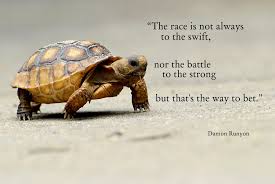
turtle

All week I have been walking around muttering to myself, “The assholes usually win.” There are personal reasons for this rumination (you know who you are) but all it takes is a clear-eyed looked at the world to see that it is true. I mean: Dick Cheney? Vladimir Putin? Kanye West? The logical corollary to “Nice guys finish last” is that assholes finish first, and all the magical thinking and candy platitudes in the world will not alter that fact. The innocent suffer and the wicked prosper and how one deals with this reality shapes one’s life but to pretend it is not true is simply beyond my abilities. Uncle Jimmy said, “One can be—indeed, one must strive to become—tough and philosophical concerning destruction and death, for this is what most of mankind has been best at since we have heard of war; remember, I said most of mankind…”

Most…

View original post 271 more words

The start of the Presidential election season

First, I guess it really isn’t a season in the meteorological sense if it ever was but more like a year.

I’m not sure which of the Republican candidates I would want the Democratic nominee to run against since I find most of them pretty scary in the horror movie sense.  As far as I can tell none believe in climate change (even Bush and Rubio from Florida which is sinking fast); they don’t (even Rand Paul the doctor) believe in science; and they certainly don’t believe in what used to be called “the little people.”  They want the United States to be a “Christian Nation.”  I guess they just carry copies of the United States Constitution around in their suit coat pockets, but don’t read it.  It says something about “establishment of religion.”  My assumption that we long ago resolved to be a diverse society – including religious belief – must be incorrect.  At times they seem almost to be a Christian version of those fundamentalist Muslims they so oppose.  But most frightening of all is that all of them seem to want to control women and our bodies.  They appear to be opposed to regulation except of women.  So there really isn’t much to choose from on that side.  It should be fun to watch when they begin to squabble.

My problem is Hillary Clinton.  I’m not exactly sure why I am not enthusiastic about her.  I always liked her when she was First Lady, thought she represented New York well in the Senate, and she was a good Secretary of State.  But President?  I just can’t get excited.

Hillary

I took the Gail Collins quiz, “Take Your Hillary Temperature” the other week and my score was “ready for a primary.”  But who could be in the primary?

I like Elizabeth Warren and worked hard to get her elected to the Senate when I live in Massachusetts, but I think we should take her at her word that she doesn’t want to run.  If she stays in the Senate and things break for the Democrats she could be the first woman Majority Leader.  So leave Elizabeth alone, please.

There is my current Senator, Bernie Sanders.  Bernie might make a fine candidate, I think he would be a good debater, but I just can’t see him as President.  He was the mayor of Burlington, VT which in the scheme of things is not a very big town.  Bernie is like the opposite of Ted Cruz ideologically.  I think he’s going to run.

There are three governors who would be possible.  Deval Patrick (who has already said no), Tim Kaine (who is already supporting Hillary) and Martin O’Malley who appears to be running.  I also like Senator Amy Klobachar but I don’t think she has any thoughts about running.

So why can’t I just jump on the Hillary bandwagon?  I get many email from various people telling me to do just that.  I think, however, I am suffering from Clinton fatigue.  We know too much about her and Bill not all of which I like.  I’m also not sure she can attract the young, white, male voters who may well decide this election.  And maybe it is none of those reasons, but something I can’t yet put my finger on.  All I know is that I think a primary would be good for the Democratic Party whether Hillary gets the nomination or not.

Photograph: Justin Sullivan / Getty

Some thoughts about product and corporate boycotts

A few days ago the ice cream maker, Ben and Jerry’s, offered free ice cream in exchange for a donation to whatever local charity the particular store had chosen.  I posted the information on Facebook knowing that I had friends who ate Ben and Jerry’s with some regularity.  A good friend (so good my wedding reception was at her house) posted a comment asking that we boycott Ben and Jerry’s because they sold ice cream to the Jewish settlements in the Palestinian Territory.  I’ve been thinking about boycotts since then and this post is my attempt to think “aloud”.

Looking back I can remember two successful boycotts I’ve participated in.  First was the Woolworth’s boycott in sympathy to the student sit-ins.  Second was the Delano Farmworkers Grape Strike.

David Richmond (from left), Franklin McCain, Ezell Blair Jr., and Joseph McNeil leave the Woolworth in Greensboro, N.C., where they initiated a lunch-counter sit-in to protest segregation, Feb. 1, 1960. (No photographers were allowed into the store on the first day of protest.)

David Richmond (from left), Franklin McCain, Ezell Blair Jr., and Joseph McNeil leave the Woolworth in Greensboro, N.C., where they initiated a lunch-counter sit-in to protest segregation, Feb. 1, 1960. (No photographers were allowed into the store on the first day of protest.)

The student sit-ins of lunch counters began in 1960 in Greensboro, North Carolina.  I found this NPR story about Franklin McCain and the sit-ins.

On Feb. 1, 1960, four students from all-black North Carolina Agricultural and Technical College walked into a Woolworth five-and-dime with the intention of ordering lunch.

But the manager of the Greensboro Woolworth had intentions of his own — to maintain the lunch counter’s strict whites-only policy.

Franklin McCain was one of the four young men who shoved history forward by refusing to budge.

McCain remembers the anxiety he felt when he went to the store that Monday afternoon, the plan he and his friends had devised to launch their protest and how he felt when he sat down on that stool.

“Fifteen seconds after … I had the most wonderful feeling. I had a feeling of liberation, restored manhood. I had a natural high. And I truly felt almost invincible. Mind you, [I was] just sitting on a dumb stool and not having asked for service yet,” McCain says.

They were not served, but returned day after day with more and more reinforcements.  Sit-ins at Woolworth’s lunch counters spread across the South.  In New Jersey where I grew up, there was a boycott of the local Woolworth’s in solidarity with the students.  Even after the lunch counters were integrated, it was years before I had lunch at one.  The first time I was in my early thirties.  I still remember I had tomato soup and grilled cheese – the special.

The grape boycott lasted 5 years from 1965 to 1970.  Millions of Americans came to identify with the farmworkers who wanted to unionize so they could improve working conditions and wages.  The United Farm Workers has a history of the strike.

Hundreds of grape strikers traveled across the U.S. and Canada, telling their stories and organizing mass support for the grape boycott. The strikers were joined by thousands of supporters who helped tirelessly organize the boycott.

Cesar [Chavez] and the farm workers believed if consumers in communities throughout North America knew about the suffering of field laborers—and saw the grape strikers struggling nonviolently—they would respond. For Cesar, nonviolence couldn’t be understood in the abstract. It could only be seen in action. He said, “the whole essence of nonviolent action is getting a lot of people involved, vast numbers doing little things.”

He knew most people couldn’t drop what they were doing and dedicate themselves completely to the movement like the grape strikers, most of whom lost their homes, cars and worldly possessions. But Cesar and the farm workers showed ordinary people that by making little sacrifices every day—by not eating grapes—they could directly help the poorest of the poor.

The boycott connected middle-class families in big cities with poor farm worker families in the California vineyards. Millions stopped eating grapes. At dinner tables across the country, parents gave children a simple, powerful lesson in social justice.

In my family we didn’t eat grapes for many years.  My mother had been a California farmer worker and later an organizer on the east coast for the Food, Tobacco, and Agricultural Workers Union.  We started boycotting very early in the strike if my memory is correct.

The Woolworth’s and Farm Worker’s boycotts were successful because they were narrowly focused and concerned an issue with which the average person could identify:  Segregated lunch counters and farm working conditions.  The boycotts that I have been asked to join recently include Monsanto, Nestles, and Ben and Jerry’s.

The first two have, in my opinion, little chance of success not because the cause isn’t clear, but because they lack focus.  I couldn’t even begin to get through the list of Nestles’ products I wasn’t supposed to purchase.  Organizers of the Monsanto boycott should just urge us not to purchase Monsanto’s “Round-Up”.  And as for Nestles and their draining of the California (and other aquifers), people should not be buying water in bottles anyway.  Better to ask people to stop buying bottled water where they can safely do so.  As for the request to boycott Ben and Jerry’s, I am afraid that the issue of Israeli settlements in Palestinian territory, although of concern to me, is too obscure and not of immediate interest to most Americans who will weigh that against the other good that the company does.

To succeed, corporate boycotts need to be focused in what we are asked not to purchase and concern a cause to which a critical mass of consumers can relate.


Photograph:  Jack Moebes/Corbis

19 Innings

Last night I came home from a wonderful concert to find the Boston Red Sox up 1 on the Yankees.  I watched for an hour or so  as the Sox held on to the 3-2 lead.  The Boston Globe reports

The Sox took a 3-2 lead into the bottom of the ninth inning. Edward Mujica, filling in as closer in place of Koji Uehara, got two outs before falling behind Chase Headley. Mujica left a 90-mph fastball up and over the plate, and Headley lined it into the second deck in right field.

It was a terrible pitch in any situation, but especially with the game on the line.

It was the first earned run allowed by a Red Sox reliever this season, the streak ending at 10 innings. Uehara could be activated off the disabled list as soon as Monday and his return will be welcomed.

The New York Times reported it this way

Three times the Yankees scored in their last at-bats to keep the game alive, beginning with Chase Headley’s two-out home run in the bottom of the ninth, but they could not do it a fourth time when Red Sox shortstop Xander Bogaerts scooped up Garrett Jones’s smash up the middle and started a game-ending double play.

The game dragged on so long that Mark Teixeira, who was 34 when it began, had turned 35 by the time it was over. By the end, there were only several thousand hearty souls in the stadium, which was so quiet that when a few fans broke out “Let’s go, Yankees” chants, they carried far enough for the players to hear.

Soon after the Chase Headley homer, I retreated to bed and to the radio.  At some point I dozed off and woke up to a report of a conference of the umpires that no one could explain.  I thought maybe someone had discovered some long forgotten curfew rule.  But no, it was the lights.  Because they went out first behind the broadcasting booth, the radio guys couldn’t tell.  The Times writes

As if the game were not already long enough, it was delayed in the 12th inning when nine banks of lights went out at the stadium, leaving the field dimly lit. It took 16 minutes for the lights to regenerate and for play to resume. The Yankees said the outage had been caused by a power surge through the stadium.

In inning 16, David Ortiz hit a homer breaking the tie and putting the Sox up.  But then as the Globe reported

Switch hitter Mark Teixeira [the Birthday Boy], batting righthanded against the righthanded Wright and his knuckleball, homered to left field in the bottom of the inning to tie the game.

I turned the radio off after the Teixerira’s homer.  The game, however, continued.

The Sox went up, 5-4, in the 18th inning on an RBI single by Pablo Sandoval. The Yankees tied it on a double by Carlos Beltran that Hanley Ramirez misplayed in left field.

Luckily, the Sox have some young guys.

Two young players had enough energy to win the game for the Sox. Xander Bogaerts, 22, singled with one out in the 19th inning. After Ryan Hanigan walked and Esmil Rogers threw a wild pitch, 22-year-old Mookie Betts delivered a sacrifice fly to center field.

Bogaerts, who was 4 for 4 in extra innings, easily beat a weak throw by Jacoby Ellsbury.

“I’m glad I was able to do something,” said Betts, who was 1 for 8 and had struck out four times. “I’m just glad we won. That was the best thing that could have happened.”

Bogaerts also helped end the game in the bottom of the inning. With Ellsbury on first and one out, he made a smooth pickup of a ball hit by Garrett Jones to start a double play.

Xander scores the winning run in the 19th.

Xander scores the winning run in the 19th.

Alex Speier from the Globe collected some stats from the 19 innings.  Here are a few.

The 6-hour, 49-minute affair was the longest in Red Sox history and the longest home game in Yankees history. That duration doesn’t include a 16-minute delay for a brief light outage.

■ Xander Bogaerts entered the game with a robust .364/.462/.545 line. Through the first nine innings, he dropped that line to .267/.353/.400. He then reached base in five straight plate appearances — all in extra innings — with a walk and four straight singles in extra innings, boosting his line back up to .421/.500/.526.

■ Per Elias, Bogaerts is the first Red Sox player since at least 1947 with four or more hits in extra innings. Alex Rios, in 2013, was the last big league player to do it.

Betts and Pedroia each had 10 plate appearances, tied for the most by any team member since at least 1914. They joined Jim Rice, Jerry Remy, and Dwight Evans as the only Sox players to hit double-digit plate appearances in a game in that 102-season expanse, with the trio of Rice, Remy, and Evans having done it in a 20-inning, 8-7 home loss to the Mariners on Sept. 3, 1981.

Starters Wade Miley (90) and Nathan Eovaldi (94) combined to throw 184 pitches. Each bullpen then threw more pitches than the two starters combined. Yankees relievers logged 238 pitches. Members of the Red Sox bullpen combined to accumulate 206 pitches. “That’s crazy. That’s insane,” said Miley. Wright got to 78 pitches in his five innings of work for the win. Rogers tallied 81 pitches in 4 2/3 innings.

■ The Yankees bullpen pitched a mid-game shutout, working nine consecutive scoreless innings from the seventh through the 15th inning.

■ The Red Sox left 20 men on base, tied for the fourth-most in a single game since 1945.

I suppose a true fan would have made it to the very end, but I was happy just to wake up this morning and find out the Sox had won.

Photograph:  BILL KOSTROUN/ASSOCIATED PRESS

The Maya Angelou stamp quote

The U. S. Post Office has just issued a stamp commemorating Maya Angelou.  It is a very nice stamp with her picture and a quote.  The only problem is that the quote is not from her.  Josh Hicks wrote about the problem in his column in the Washington Post yesterday.

The U.S. Postal Service on Tuesday released a new Maya Angelou stamp featuring a quote from a different author’s book, propagating a popular misconception about the original source of the line.

“A bird doesn’t sing because it has an answer, it sings because it has a song,” the stamp reads.

Angelou, the late African-American author who wrote the famous 1969 autobiography “I Know Why the Caged Bird Sings,” used the same line in media interviews, and President Obama attributed it to her during the 2013 presentation of the National Medal of Arts and National Humanities Medal.

But the sentence never appeared in Angelou’s autobiography. The words came from Joan Walsh Anglund’s collection of poems, “A Cup of Sun,” published two years before the release of Angelou’s autobiography. (One difference: The pronoun “it” from the stamp quote appears as “he” in the poem).

A Maya Angelou stamp that was issued Tuesday features a quote attributed to her. But children’s book author named Joan Walsh Anglund says she wrote it first.

A Maya Angelou stamp that was issued Tuesday features a quote attributed to her. But children’s book author named Joan Walsh Anglund says she wrote it first.

Hicks goes on to compare the Angelou mistake with another:  The inscription on the statue of Martin Luther King, Jr.

The release of the stamp comes less than four years after another fumbled attempt to honor an historic African-American figure. Controversy erupted in 2011 over an abbreviated quote on the Martin Luther King Jr. Memorialthat critics thought would make the civil-rights leader appear immodest.

One of the inscriptions on the memorial read: “I was a drum major for justice, peace and righteousness.” But King actually said, “Yes, if you want to say that I was a drum major, say that I was a drum major for justice. Say that I was a drum major for peace. I was a drum major for righteousness. And all of the other shallow things will not matter.”

I was one of those who thought the editing completely missed Dr. King’s point.  But I think the Angelou stamp quote is different.  Lonnae O’Neal interviewed Joan Walsh Anglund about the use of the quote.

Joan Walsh Anglund also was hearing about the Angelou stamp for the first time Monday night. “I haven’t read all of her things, and I love her things, of course,” she said of the poet and cultural icon. “But I think it easily happens sometimes that people hear something, and it’s kind of going into your subconscious and you don’t realize it,” she said.

“It’s an interesting connection, and interesting it would happen and already be printed and on her stamp,” Anglund said. “I love her and all she’s done, and I also love my own private thinking that also comes to the public because it comes from what I’ve been thinking and how I’ve been feeling.

“I don’t know about the stamp and I hope that it’s successful,” she added.

We can wonder if Angelou even remembered where she first heard the words that have come to be associated with her but the real lesson here is that we have to work harder at using words.  We need to be careful about how we edit other people’s words lest we change their meaning.  And we can all wonder at the human mind and how we associate certain phrases with specific people – so much so that even the person may come to believe it is theirs.

(Thanks to my friend Gary Bailey for bringing the story to my attention.)

Photograph:  USPS