Taxes, taxes, taxes

Who was it that said, “Nothing is certain but death and taxes”?  They should have added tax loopholes and exemptions to that list.

Here in Massachusetts we have a Senate candidate who took at $281,000 tax credit for agreeing not to made changes to the facade of his home located in a historic district.  I don’t know how this works in other states but here local city and town councils can pass by-laws regulating historic districts.  Cohasset, the town where Gabriel Gomez lives, has a by-law on the books that says owners of homes in the historic district may not change the facades of their homes.  So Mr. Gomez basically took a tax credit for something he was prohibited from doing anyway.  Adrian Walker wrote this in the Globe this morning.

Challenged to explain, a testy Gomez set a new standard for chutzpah. He claimed that his tax break is really the fault of his opponent, Ed Markey — because in 1981, Markey voted for the law that established tax breaks for historical preservation.

OK.  So maybe taking the tax break was not illegal, but there is something about it that makes me – and it appears – other voters wonder if this is the guy we want representing us.  Plus there is the fact that most of us don’t make $281K over many years much less get to take that much off our taxes.

Walker continues

Andy Hiller of WHDH-TV cornered Gomez and asked a few questions about it, or tried to. What he got back from Gomez was this: “I don’t apologize for any success I’ve had. Absolutely not. I’m proud of everything I’ve done. I’ve worked for everything I’ve done. I’ve earned everything I’ve done.”

Gomez is an accomplished military veteran who has earned many things in his life, but he certainly didn’t earn this. Even the Internal Revenue Service has decried the historical-preservation deduction he took as a farce.

The questions about Gomez’s taxes probably haven’t ended, either.

On a financial disclosure form filed in March, Gomez said that under his separation agreement from the private equity firm Advent International, he received something called “carried interests.”

Carried interests are fees paid to equity firms and hedge funds to manage portfolios. They are taxed as capital gains, at a rate of 20 percent, rather than the top income rate of 39.5 percent.

Carried interests are fees paid to equity firms and hedge funds to manage portfolios. They are taxed as capital gains, at a rate of 20 percent, rather than the top income rate of 39.5 percent.

The carried interest rate — which costs taxpayers an estimated $1.3 billion a year — has long been the subject of dispute, with some critics arguing that this is one of the first tax loopholes lawmakers should close.

How much of Gomez’s income falls under the “carried interest” loophole is unclear from the disclosure form.

Gabriel Gomez is running as a reformer, as an outsider but as Walker points out, he already knows all the tricks.  Maybe we need someone like him to help reform the tax code – not!

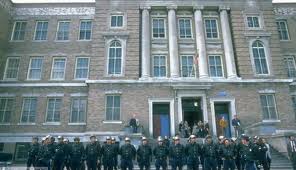
Internal Revenue Service Building

Internal Revenue Service Building

Taxes are also at the heart of what the Republicans hope will be the scandal that brings down the Obama Administration if Benghazi doesn’t work out for them.  According to the New York Times this is what we know.

The Internal Revenue Service’s special scrutiny of small-government groups applying for tax-exempt status went beyond keyword hunts for organizations with “Tea Party” or “Patriot” in their names, to a more overtly ideological search for applicants seeking to “make America a better place to live” or “criticize how the country is being run,” according to part of a draft audit by the inspector general that has been given to Capitol Hill.

The head of the division on tax-exempt organizations, Lois Lerner, was briefed on the effort in June 2011, seemingly contradicting her assertion on Friday that she learned of the effort from news reports. But the audit shows that she seemed to work hard to rein in the focus on conservatives and change it to a look at any political advocacy group of any stripe.

Since last year’s elections, Republicans in Congress have struggled for traction on their legislative efforts, torn between conservatives who drove the agenda after their 2010 landslide and new voices counseling a shift in course to reflect President Obama’s re-election and the loss of Republican seats in the House and the Senate.

But the accusations of I.R.S. abuse are sure to fuel an effort that appears to be uniting dispirited Republicans and their conservative political base: investigating Mr. Obama and his administration. Republicans are pushing a portrayal of an administration overreaching its authority and punishing its enemies.

“The bottom line is they used keywords to go after conservatives,” Representative Darrell Issa of California, the chairman of the House Oversight and Government Reform Committee, said Sunday on the NBC News program “Meet the Press.” He requested the inspector general’s audit along with another Republican, Representative Jim Jordan of Ohio. As an audit, it will not find blame or refer anyone for criminal prosecution.

This all goes back to the Citizens United decision by the Supreme Count and the flood of organization, most it seems on the right to register as 501(c)4 social welfare groups.  This leaves me puzzled.  How can a group which supports political lobbying be tax exempt?  I give money to Planned Parenthood to support clinics.  I also give money for the political operations.  The first is tax exempt, the second is not.  So maybe the problem is, once again, with the tax code.  Ezra Klein explains.

Let’s try to keep two things in mind simultaneously: The IRS does need some kind of test that helps them weed out political organizations attempting to register as tax-exempt 501(c)4 social welfare groups. But that test has to be studiously, unquestionably neutral.

The story thus far seems both chilling and cheering. Employees at the agency’s Cincinnati branch did employ a test that, in effect, targeted tea party groups. Whether they meant it to be discriminatory or they simply created one that was discriminatory is in contention, but ultimately immaterial. The IRS, more so than almost any other agency, must act in ways above  reproach.

But when the Cincinnati group explained their test to IRS exempt organizations division chief Lois G. Lerner, she objected to it and it was changed. A few months later, the IRS would release new guidance that suggested scrutinizing “political action type organizations involved in limiting/expanding Government, educating on the Constitution and Bill of Rights, social economic reform movement,” and after that, “organizations with indicators of significant amounts of political  campaign intervention (raising questions as to exempt purpose and/or excess private benefit.)”

The context for all this is that after Citizens United and some related decisions, the number of groups registering as 501(c)4s doubled. Because the timing of that doubling coincided with a rise in political activism on the right rather than the left, a lot of the politicized groups attempting to register as 501(c)4s were describing their purpose in tea party terms. A popular conceit, for  instance, was that they existed to educate on the Constitution — even if the particular pedagogical method meant participating in Republican Party primaries and pressuring incumbent politicians.

In looking for that kind of language in 2010, the Cincinnati employees were attempting to create a usable shortcut. Like Willie Sutton robbing banks, they were going where the action was. But they needed a clearer test that also identified the language of the left, even if left-leaning  groups weren’t exhibiting the same surge in activism. And, frankly, it shouldn’t have been left to career employees in Cincinnati. The IRS needed clearer rules coming from the top. But the top didn’t know what to do with these 501(c)4s, in part because it feared a situation precisely like this one.

It is worth remembering an important fact here: The IRS is supposed to reject groups that are primarily political from registering as 501(c)4s. If they’re going to do  that, then they need some kind of test that helps them flag problematic applicants. And that test will have to be a bit impressionistic. It will mean taking the political rhetoric of the moment and watching for it in applications. It will require digging into the finances and activities of groups on the left and the right that seem to be political even as they’re promising their activities are primarily non-political.

If we’re not comfortable with that, then we need to either  loosen the definition of 501(c)4s or create a new designation that gives explicitly political groups the benefits of the 501(c)4s (namely, they don’t have to pay taxes and they can keep their donors anonymous). But either way, as I wrote on Friday, the only way to make sure this doesn’t keep happening is for the IRS — or the Congress and White House that control it — to make some tough decisions about 501(c)4s.

To make things look even more suspicious, Ms. Lerner appears to have been confused about the order in which events unfolded.  But, is there a scandal here?   It does not appear that any group, on the right or left has been denied 501(c)4 status.  I believe that to get 501(c)3 status which most community development groups and organizations like the Girl Scouts and the Boys and Girls clubs have one must provide a lot of information including board membership and by-laws.  The problem here is that many these new groups appear to be political organizations regardless of whether or not they claim to be educational.  I question whether any of these groups, right or left, should be tax exempt.

“Tax-exempt social-welfare groups organized under section 501(c)(4) of the Internal Revenue Code are allowed to engage in some political activity, but the primary focus of their efforts must remain promoting social welfare. That social-welfare activity can include lobbying and advocating for issues and legislation, but not outright political-campaign activity. But some of the rules leave room for IRS officials to make judgment calls and probe individual groups for further information. Organizing as such a group is desirable, not just because such entities typically don’t have to pay taxes, but also because they generally don’t have to identify their donors.” John D. McKinnon and Siobhan Hughes in The Wall Street Journal.

The odds are against Mr. Gomez being elected to the Senate and they are likely to be against the Republicans making a credible argument about the IRS, but taxes and tax exemptions are clearly land mines for anyone in politics today.  But if the Republicans are right, that is a place where the Obama Administration and I will part company.  As my Congressman Mike Capuano said today, “There’s no way in the world, I’m going to defend that. [if the accounts are true] Hell, I spent my youth vilifying the Nixon administration for doing the same thing.”

Photograph:  Reuters

Burying the dead

Tamerlan Tsarnaev hijacked a car and kidnapped the owner but did not kill him.  He died in a shootout with police – maybe from gunshots, maybe from his younger brother running over him.  These are facts.  It is likely he set off at least two explosive devices near the finish line of the Boston Marathon.  Either he or his brother shot a MIT police officer in cold blood.  Does this mean he does not deserve to be buried in his adopted hometown of Cambridge?  Or barring that, somewhere in the Boston area.

We have a long history of abusing the bodies of our enemies.  Antigone wants to bury of the body of her brother, Polyneices.  At the beginning of the play named for her, she tells her sister

…they say he [Creon] has proclaimed to the whole town

that none may bury him and none bewail,

but leave him unwept, untombed, a rich sweet sight

for the hungry birds’ beholding.

Antigone is trying to persuade her sister they should commit what we would call civil disobedience and bury Polyneices anyway.

Achilles dragged the body of Hector behind his chariot for days after the Trojan had killed his best friend, Patroclus.  Achilles finally relents to Hector’s father.  We are told that the gods had kept the body from showing signs of abuse.

Adam Lanza, the Newtown shooter, and Albert DeSalvo perhaps the Boston Strangler, were both buried in private cemeteries.  So was Lee Harvey Oswald.

Massachusetts law gives a cemetery the right to refuse burial, but I haven’t seen any stories that discuss how often this right is invoked.  A number of funeral home directors have spoken out saying that the protests outside the funeral home are not right.  The most interesting comment came from a North Carolina Republican who sponsored legislation to limit protests by groups like Westboro Church.

“The family can have peace and say goodbye to their loved ones without hearing screaming and noise,” says North Carolina Republican state Rep. John Szoka, who sponsored a bill this year to strengthen that state’s ban.

Most Americans find the Westboro protests outrageous because they believe deeply in the right of a family to bury their dead and not be challenged about it, Sloane [David C. Sloane, author of The Last Great Necessity: Cemeteries in American History] says.

That’s what makes the protests in Worcester unusual. Tradition dictates that bodies of even the most heinous criminals be given over to the families to deal with in their private grief.

Regardless of his actions, though, a funeral home is not the appropriate place for such public expression of anger, says Szoka, the North Carolina legislator.

“I’m not really in favor of protesting outside funeral homes, no matter how disgusting the individual or whatever he did,” Szoka says. “There are other venues for that.”

Cemeteries in Massachusetts may have the legal right to refuse, but they should think more about why they exist and what their mission is.  The problem they are thinking of is future vandalism.  Another act that most of those protesting would normally find outrageous.

Protesters outside the funeral home.

Protesters outside the funeral home.

As I understand it, Muslim dead, like Jewish dead need to be buried as soon as possible.  They cannot be cremated.  Quite honestly, I think the statements of all the Massachusetts politicians who have spoken including Representative and Senate candidate Ed Markey, Senate candidate Gabriel Gomez, Mayor Thomas Menino and Governor Deval Patrick have been less than worthy of them.  They are behaving like so many Creons.  The Worcester funeral home director, Peter A. Stefan and the Worcester Police Chief Gary Gemme seem to be the only ones actively and constuctively working toward a solution.

Whether Tamerlan Tsarnaev’s body is buried in another state or sent back to Russia, what is going on is not worthy of Massachusetts.  It is not worthy of “OneBoston.”  We are better than this.

Photograph:  AP

Translation of Antigone: Richmond Lattimore

Change comes to South Boston

If you know anything about South Boston it is probably from the busing crisis of the 1970s when images flashed across the country and no one could believe they were from Boston and not Mississippi or Georgia.  Images like these.

sb1sb2sb4

Or maybe it is from reading “Common Ground”, the Pulizer Prize winner by J. Anthony Lukas which followed families through the crisis.  If this is what you remember, it has all just changed.

Yesterday, May 1, 2013, we all woke up to the reality that the next state senator from the district that includes South Boston will be Linda Dorcena Forry.  The “Southie Seat” has moved into a new era.  Boston has changed.

Linda Dorcena Forry held her daughter Madeline Forry, 2, as she celebrated a possible close victory at Phillips Freeport Tavern in Dorchester. (taken before Nick Collins conceded.)

Linda Dorcena Forry held her daughter Madeline Forry, 2, as she celebrated a possible close victory at Phillips Freeport Tavern in Dorchester. (taken before Nick Collins conceded.)

Linda is Haitian-American married to Bill Forry the Irish American publisher of the Dorchester (MA) Reporter.  South Boston, like it or not, is represented by a woman of color from a mixed marriage.  My fearless prediction: they will come to love her.  I have yet to meet anyone who can resist her enthusiasm and energy – or any of her four children.  I first met her nine years ago, before she ran for office, and have followed her career ever since.  She will win over those Collins (and Dahill) voters from Southie.  The Globe story this morning points out

The race was no easy win for Forry. The Wednesday morning hugs and handshakes among her, Collins, and Dahill came as the candidates were processing an Election Day fraught with mishaps. Voting day began with incorrect ballots distributed at some South Boston polling locations. Then, as votes were being counted that evening, the Associated Press erroneously ­declared Collins the winner, ­only for the final tally to show Forry with a 378-vote lead.

Forry’s path to victory was carved in Dorchester, Hyde Park, and Mattapan, and despite her poor showing in South Boston.

She will have the support of Collins (no word on Dahill) and of former Mayor, Ray Flynn.

For decades, men from South Boston have held the First Suffolk seat, which also includes Mattapan and a portion of Hyde Park.

Jack Hart Jr., who resigned the seat in January to take a job with a law firm, has held it since 2002, when he was elected to replace US Representative Stephen Lynch, a native of South boston. Before Lynch, the seat was held for 25 years by William Bulger.

“I never refer to it as the Southie seat,” Hart said in an interview Wednesday. “The reason South Boston has historically held that seat is because they’ve had higher turnout.”

Now, Hart and other members of South Boston’s political old guard insist that residents will unite behind any leader, from any part of the district, who listens to their needs. That includes Forry, a Haitian-
American, who finished a distant third among South Boston voter.

I know Linda and she will be out there with her family and the South Boston residents she meets will fall in love the way the rest of us who know her have.  Times have changed.

“I thought Collins should have won it,” said Bill Barrett, a 65-year-old South Boston resident, as he sat on the park benches on Castle ­Island, where people gather to catch a sea breeze and gossip. “It’s been a long time since that seat has left South Boston, but [Forry] seems like a nice lady.”

Barrett said that the neighborhood and district are different from those he remembers as a young man, but that change is not always bad.

“Change can be good,” said ­Barrett, who is retired. “There are a lot of young people moving into South Boston, but I think ­Dorchester also wanted a voice, too.”

She still has to win the special general election but her opponent, Dorchester native Joseph Anthony Ureneck, has already all but conceded.  It will be fun to see Linda inject some life into the annual St. Patrick’s Day breakfast next year.

Photograph of Forry Jessica Rinaldi for The Boston Globe

Photographs of busing from democratandchronicle.com, civilrights.wikispaces and busingproject.blogspot.com

The Boston Marathon bombing

I was checking into a hotel in Philadelphia minutes after the bombs went off near the finish line of the Boston Marathon and learned what had happened from the desk clerk.  For the next week, we followed the story mostly by reading the paper in the morning and sometimes catching a few snippets on television.  I had made the decision not to do email or any social media while I was gone.  I did have my cell phone on, mostly in case of a cat emergency at home or a Philly friend calling.  It was strange to be away from home and hearing about familiar places.

Things got particularly weird  for me late Thursday afternoon.  The authorities had just released the video of the suspects and in the tape was a person walking who resembled me.  I started getting text messages and calls from friends in Boston who wondered if it was me and if I were OK.  It wasn’t, but when we turned on the TV and watched the endless loop, the other “me” was easy to spot.  Blue jacket, ball cap, grey purse strap across the back.  A short woman, a little stocky.  As one of my friends said even after being reassured, “It really does look like you.”

I got home to a pile of papers and more information on the incident.  It was interesting to see what people got wrong in the early days and it should get more interesting as the investigation continues.  My husband and I were thinking that bombing like this are regular occurrences in other countries and in many ways we are lucky that our law enforcement can actually track the two kids who planted the bombs.  We will bring the survivor to trial eventually, but as someone, I think it was Senator Elizabeth Warren, said these are the early days of the investigation and this is not NCIS where crimes get solved in an hour.

James Carroll wrote this morning in the Boston Globe about the Boston Marathon, the votes in Washington against any regulation of guns, and democracy.  Here is some of what he said.

In 490 BC, the legendary runner brought urgent news to Athens of the Greek victory in Marathon over the armies of the Persian Empire. The Battle of Marathon secured a peace that ushered in the Athenian Golden Age, during which a vibrant democracy finally found the balance between the exercise of force and the fulfillment of human needs. Last week, as an American commemoration of the Battle of Marathon unfolded in Boston, that same democratic balance was dangerously stretched amid the Doric columns of Washington, where the Senate cast a tragic vote for violence.

Yet even our definition of “tragic” goes back to Athens, to the spacious imagination that flourished there — especially in the plays of Sophocles, who lived from about 497 to 406 BC. He taught us that every choice has its consequence, that character is destiny, that the exercise of power must always be measured by the health of the whole community. He also taught us that tragedy, when faced directly and bravely, leaves humans not diminished, but ennobled.

The traumas of Boston last week, culminating in the killing and pursuit of the men suspected of planting the bombs, were heartbreaking and repugnant, but they left the city whole. With all citizens commanded to “shelter in place” Friday while responsible officials conducted the manhunt, Boston was itself a character in the extraordinary drama. A vast ad hoc web of Internet users to whom law enforcement had appealed gave new meaning to the term “community policing.” The fugitives knew that an entire commonwealth had become their antagonist. This surely forced the drama’s denouement. There were no bystanders in Boston.

From Homer on, Greek culture honored competition (“agon” in Greek, which gives us the word “agony”). But in Athens, the philosopher Alasdair MacIntyre has explained, this spirit of contest was balanced by the politics of cooperation. The virtues of the first (discipline, bravery, self-actualization) meshed with the virtues of the second (empathy, humility, selflessness). Athenian democracy was the reconciliation of these opposites. Strength was joined to tenderness.

The Boston Marathon wonderfully embodies this balanced moral order, too: Every year the fiercely determined runners strive to be best (or for their personal best), while surrounded by multitudes whose cooperation makes the race so radically inclusive.

But death changes everything — a jolting transformation to which Greek tragedy itself gave first expression. “In the face of death,” as MacIntyre puts it, “winning and losing no longer divide.” Instead, competition drops away, and cooperation becomes the absolute mandate. That is precisely what happened in Boston, as the city held Martin Richard, Krystle Campbell, Lu Lingzi, and later Sean Collier in its heart.

Last week, a separate drama unfolded in Washington. “It’s almost like you can see the finish line, but you just can’t get there.” These words could have been spoken by thousands of Boston runners, but were said by the father of a shooting victim who witnessed the Senate vote on gun control.

We will, once again, show the world that we can have an investigation and fair trial.  And we will one day enact some sensible gun safety measures.  Watching the events unfold from a distance, I was proud of my fellow Bostonians, law enforcement and  public officials particularly Mayor Menino and Governor Patrick.

Candles for the victims.

Candles for the victims.

The Mayor retires

He is 70 years old and has had health problems, but the big reason he is leaving is because he can’t get out and meet people the way he always has.  The New York Times put it this way

At an emotional announcement Thursday inside Faneuil Hall, Mr. Menino slowly navigated his way up the center aisle with his wife, Angela, to the thunderous applause from official Boston as well as city workers and admirers from the neighborhoods. Over the loudspeaker, Frank Sinatra crooned his defiant anthem, “My Way.”

“I am here with the people I love, to tell the city I love, that I will leave the job that I love,” Mr. Menino, 70, the city’s longest-serving mayor, told the standing-room-only crowd of well-wishers. He said essentially that he was not up to the job, at least not the way he wanted to do it. After illnesses last year that left him hospitalized for two months, he said he could not keep up his schedule of attending every ribbon-cutting, every dinner for a new homeowner, every school play — the small events that filled his days and threaded him to the city’s residents.

Thomas M. Menino says has met over 50% of the residents in Boston, a city of over 625,000 at last census.  No one will argue with that.  He’s been Mayor for 20 years.  Kevin Cullen has a slightly different take on this in today’s Boston Globe.

He talked about how he’s met half the people who live in Boston. That’s a great line, too, but it is misleading if you’re trying to figure out Tom Menino’s ability to hang onto a job for 20 years in a tough, unforgiving game. He may have met half the people who live in the city, but he’s met all the people who vote.

Eveyone has their favorite Menino moment.  I worked for the City of Boston for about 14 years.  I wrote talking points for him, letters for his signature, served on committees years before I started working for the city.  We would get the word that TMM needed something and knew it was the signal to drop everything else.  But my favorite Menino moment has little to do with my work.  Oh, I was at the event because of work, yes, but that isn’t the important part.

Thomas M. Menino spoke some comforting words to a Mattapan’s Edrei Olivero during a neighborhood walkthough.

Thomas M. Menino spoke some comforting words to a Mattapan’s Edrei Olivero during a neighborhood walkthough.

I was working at the Boston Housing Authority and everyone on executive staff had to attend some communities days.  Community days were when the residents of a public housing complex got together to socialize, picnic, and have fun.  They began as part of the push to make integration go more smoothly and to ease racial tension.  I did my share.  At one, I was helping a little girl of about 4 get an ice cream cone.  After standing in line, she got her cone.  We we walking back to where her mother was waiting and the ice cream plopped out of her cone onto the ground.  We were right in front of the Mayor.  Of course, the little girl started to cry.  Mayor Menino bent down and took her by the hand saying, “Don’t worry.  I’ll get you another one.”  And being the Mayor, he got right in front of the line and got her another cone.  We then walked  her back to her mother.  Maybe that little girl remembers the man who got her an ice cream but even if she doesn’t, I remember.  It remains my favorite Menino moment.

Kevin Cullen again

About 10 years ago, the mayor walked into a seminar at the Kennedy School of Government at Harvard. He searched for familiar faces, and he settled on mine and we laughed at the odds of a couple of knuckleheads like us being in the same room at Hahvahd.

An earnest young graduate student sheepishly interrupted our conversation and asked the mayor to explain his political success.

“I’m a Boston guy,” Tommy Menino told the kid, shrugging. “I’m just a Boston guy.”

His genius is making everyone feel they are from Boston, no matter where they came from.

Photograph Yoon S. Byun/Globe Staff/file 2010

Why Mitt Romney will never be Tom Menino

Yesterday Joanna Weiss wrote a column in the Boston Globe in which she asked her readers to imagine Mitt Romney as Mayor of Boston.  After I stopped laughing, I began to think of all the reasons why this was not only a bad idea, but why Mittens would never make as good a mayor as Thomas M. Menino.

Weiss said

The beauty of a mayorship, as far as Romney goes, is that it’s less an ideological job than a technocratic one. Without the desire to use his office as a stepping stone, Romney would be free to problem-solve, to do the kind of work that made him an appealing public servant in the first place.

She goes on to cite several examples like the new flyover to Cape Cod which fixed the Sagamore Bridge problem and Massachusetts Health Reform (which was a largely Democratic idea) of examples of his technocratic skill at work when he pretended to be governor of Massachusetts.  Weiss seems to be under the impression that Mitt could be another Michael Bloomburg.  Somehow I don’t think so.  Can you see Mittens taking the Orange Line to work from his new mansion in Jamaica Plain?  Or the Red Line from Savin Hill?

So what if he never did well with the little folks? Mayor Mitt wouldn’t have to go to every ribbon-cutting or community meeting. That’s Menino’s thing. Mitt could be the fixer, the big-picture guy, ensuring that Boston keeps wielding an outsized influence on American life.

Right, Joanna.  A large part of what makes TMM a success is that everyone who lives in Boston has met him.  At least it seems that way.  And he cares about the 47%, a large number of whom make up the Boston population.  This is why a new idea was unveiled today.

Starting Wednesday, residents can pay parking tickets and tax bills, get a library card and dog license, even register to vote, at a van dubbed “City Hall To Go.” A newly refurbished bomb squad van, the vehicle was made to resemble a food truck, but is essentially a rolling office, outfitted with laptop computers, wireless access, and the necessary paperwork from a host of city departments.

City officials say the program is the first of its kind nationally, and they hope it proves a convenient alternative for residents who do not use the Internet or rarely get downtown.

The interior of the City Hall To Go truck has laptop computers and wireless Internet access.

The interior of the City Hall To Go truck has laptop computers and wireless Internet access.

Staff in the mayor’s office say the rolling City Hall provides “one-stop shopping, where residents can take care of several tasks at once.” Workers can provide information from school registration forms and summer camp guides for parents to tax exemption forms for the elderly.

The idea for the moving service sprang from meetings in City Hall this summer and was later proposed by several residents as a suggestion for The Mayors Challenge, a national competition designed to spur ideas to improve cities.

Menino, known for his atten­tion to neighborhood concerns and quality-of-life issues, quickly lent his support.

In a statement, Menino said the pilot program will show that “government can change” to become more flexible and convenient.

“City Hall To Go builds on our mission to shake up the status quo in municipal services and offer a new way for Boston residents to get information and engage with the city on a whole host of services we offer,” he said.

I do hope that Weiss was trying for humor in her promotion of Mitt for Mayor, because somehow I doubt that at idea like City Hall to Go would have been either solicited as an idea or implement by him.

Given his age and health, it may be time for Mayor Menino to retire gracefully from the picture, but there are many homegrown candidates who could be mayor.  Men and women who know where Hyde Park and Mattapan are and care about our neighborhoods.