Burying the dead

Tamerlan Tsarnaev hijacked a car and kidnapped the owner but did not kill him.  He died in a shootout with police – maybe from gunshots, maybe from his younger brother running over him.  These are facts.  It is likely he set off at least two explosive devices near the finish line of the Boston Marathon.  Either he or his brother shot a MIT police officer in cold blood.  Does this mean he does not deserve to be buried in his adopted hometown of Cambridge?  Or barring that, somewhere in the Boston area.

We have a long history of abusing the bodies of our enemies.  Antigone wants to bury of the body of her brother, Polyneices.  At the beginning of the play named for her, she tells her sister

…they say he [Creon] has proclaimed to the whole town

that none may bury him and none bewail,

but leave him unwept, untombed, a rich sweet sight

for the hungry birds’ beholding.

Antigone is trying to persuade her sister they should commit what we would call civil disobedience and bury Polyneices anyway.

Achilles dragged the body of Hector behind his chariot for days after the Trojan had killed his best friend, Patroclus.  Achilles finally relents to Hector’s father.  We are told that the gods had kept the body from showing signs of abuse.

Adam Lanza, the Newtown shooter, and Albert DeSalvo perhaps the Boston Strangler, were both buried in private cemeteries.  So was Lee Harvey Oswald.

Massachusetts law gives a cemetery the right to refuse burial, but I haven’t seen any stories that discuss how often this right is invoked.  A number of funeral home directors have spoken out saying that the protests outside the funeral home are not right.  The most interesting comment came from a North Carolina Republican who sponsored legislation to limit protests by groups like Westboro Church.

“The family can have peace and say goodbye to their loved ones without hearing screaming and noise,” says North Carolina Republican state Rep. John Szoka, who sponsored a bill this year to strengthen that state’s ban.

Most Americans find the Westboro protests outrageous because they believe deeply in the right of a family to bury their dead and not be challenged about it, Sloane [David C. Sloane, author of The Last Great Necessity: Cemeteries in American History] says.

That’s what makes the protests in Worcester unusual. Tradition dictates that bodies of even the most heinous criminals be given over to the families to deal with in their private grief.

Regardless of his actions, though, a funeral home is not the appropriate place for such public expression of anger, says Szoka, the North Carolina legislator.

“I’m not really in favor of protesting outside funeral homes, no matter how disgusting the individual or whatever he did,” Szoka says. “There are other venues for that.”

Cemeteries in Massachusetts may have the legal right to refuse, but they should think more about why they exist and what their mission is.  The problem they are thinking of is future vandalism.  Another act that most of those protesting would normally find outrageous.

Protesters outside the funeral home.

Protesters outside the funeral home.

As I understand it, Muslim dead, like Jewish dead need to be buried as soon as possible.  They cannot be cremated.  Quite honestly, I think the statements of all the Massachusetts politicians who have spoken including Representative and Senate candidate Ed Markey, Senate candidate Gabriel Gomez, Mayor Thomas Menino and Governor Deval Patrick have been less than worthy of them.  They are behaving like so many Creons.  The Worcester funeral home director, Peter A. Stefan and the Worcester Police Chief Gary Gemme seem to be the only ones actively and constuctively working toward a solution.

Whether Tamerlan Tsarnaev’s body is buried in another state or sent back to Russia, what is going on is not worthy of Massachusetts.  It is not worthy of “OneBoston.”  We are better than this.

Photograph:  AP

Translation of Antigone: Richmond Lattimore

Voting for MVP

As Gary Washburn put it in his Boston Globe column this morning

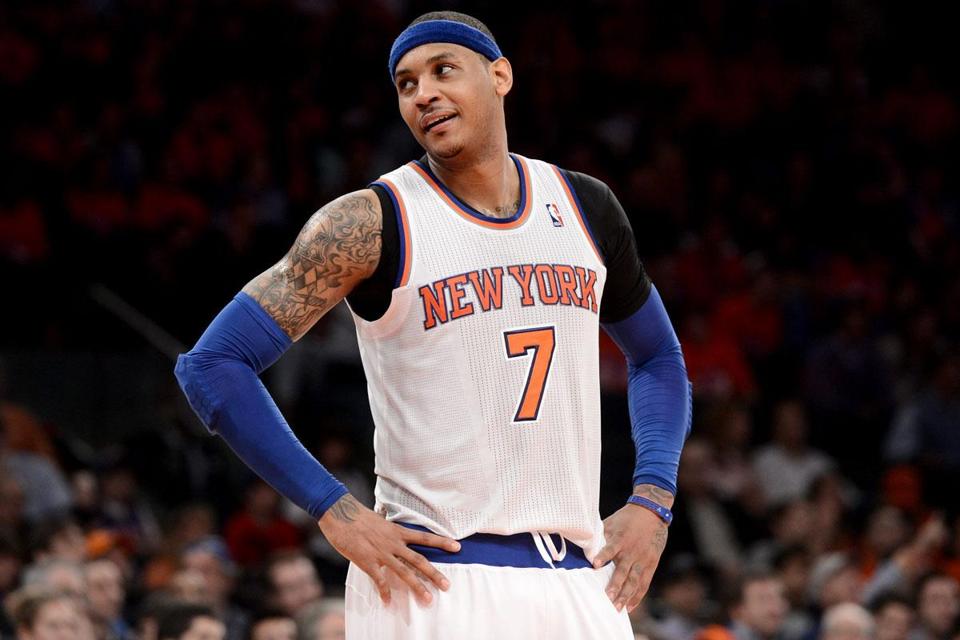
…this isn’t the Best Player in the Game award, it’s the Most Valuable Player award, and I think what [Carmelo]Anthony accomplished this season was worthy of my vote. He led the Knicks to their first division title in 19 years.

That’s a long time ago.

I have to admit that for some reason I didn’t follow basketball – college or pro – much this past season so I don’t know much about the teams in the playoffs although I know that the Knicks beat the Celtics in the first round.  I also know that I think LeBron James may be a great basketball player, but he has yet to win me over as a human being.  I’m with Cleveland here.

121 votes cast and only one not for LeBron James.   Last night I was listening to the BBC news and even they wanted to know who the voter who didn’t pick James was.  And now we know:  Gary Washburn from the Boston Globe.

Gary Washburn voted for Carmelo Anthony based on his importance to the New York Knicks

Gary Washburn voted for Carmelo Anthony based on his importance to the New York Knicks

Washburn continued

Anthony led the league in scoring average and basically carried an old Knicks team to the No. 2 seed in the Eastern Conference. Amar’e Stoudemire missed most of the season with knee issues, Raymond Felton missed six weeks, and Tyson Chandler dealt with nagging injuries, leaving Anthony, J.R. Smith, and a bunch of lottery picks from the mid-1990s to win 54 games and beat the Miami Heat three times.

LeBron can win the MVP award every year. He is that good. And it’s to the point where I put him on a Michael Jordan scale. Jordan won five MVP awards but could have earned 10. In the 1992-93 season, Jordan averaged 32.6 points, 6.7 rebounds, 5.5 assists, and 2.8 steals and shot 49.5 percent from the field.

And the MVP award went to Charles Barkley.

So my vote had more to do with Anthony and less to do with the dominance of LeBron. If you were to take Anthony off the Knicks, they are a lottery team. James plays with two other All-Stars, the league’s all-time 3-point leader, a defensive stalwart, and a fearless point guard. The Heat are loaded.

If LeBron was taken away from the Heat, they still would be a fifth or sixth seed. He is the best player of this generation, a multifaceted superstar with the physical prowess of Adonis, but I chose to reward a player who has lifted his team to new heights.

Does James have the other writers so snowed they forgot the meaning of MVP?  Bravo to Gary Washburn!

Photograph:  EPA

If you have a gun…

If you decided to own a gun, you may be certain that you are someone who will store and use it safely, that it will not be used except for (hunting, self-defense, target shooting).  But we are realizing what has probably always been true:  If you own a gun, you really don’t have control over how or when it is used.

We can begin with Columbine.  The weapons used were in a locked gun cabinet broken into by the two teenaged shooters.  I’m sure that the grandfather thought they were safe.  I haven’t seen any stories yet about the Newtown shooter and how he and his mother stored their many guns.  I imagine that she thought they were safe until she was shot with one of them.  Reading the column in the New York Times yesterday by Joe Nocera and listening to the speeches at the NRA convention made me realize that there are parallel worlds here and maybe they will never meet.

Nocera writes about two incidents.  The first happened last year.

On the afternoon of Aug. 7, 2012, Greg Imhoff — a big, friendly 61-year-old construction superintendent from Madison, Wis., who had moved to Florida with his partner, Shari Telvick — went to check on the home of a neighbor.

The neighbor, Richard Detlor, was a friend, someone Imhoff had known back in Madison, where the Detlors still lived for part of the year. Whenever the Detlors went back to Wisconsin, Imhoff would look in on their house, something he did for many of his neighbors.

It is impossible to know whether, on that August afternoon, Imhoff ever saw the stranger in the house with the .22 caliber revolver; all we know for sure is that Imhoff was shot in the head. When Telvick and a friend found him that evening, he was lying in a pool of blood, dead.

The killer turned out to be a man named Billy Ray Retherford, who was on the lam after killing a woman two weeks earlier and was hiding in the Detlors’ empty home. The next day, Retherford was killed in a shootout with the police. He was using the same .22 handgun.

The gun, however, was not his. It belonged to Richard Detlor, who, according to the police report, had left it, loaded, in the nightstand by his bed before departing for Wisconsin several months earlier.

Gregory Imhoff (Photograph from online obituary)

Gregory Imhoff
(Photograph from online obituary)

OK.  So Detlor probably thought the gun was safe even though he didn’t unload it and lock it up.  I know the argument:  If the gun isn’t loaded then it really isn’t any good for self-defense in the case of a home invasion.  Same with trigger locks.  But what about the various technologies that could prevent anyone by Detlor from firing it?  How can one be opposed to that?  Want your wife to be able to use it if you aren’t around?  I don’t know for sure, but I imagine there is technology to allow that, too.  In Florida, safe storage laws apply only when there is a minor in the household so leaving a loaded, unsecured weapon in an empty house is not illegal.  But it is stupid.

And you have the two year old killed by her five year old brother.

Just the other day, in Burkesville, Ky., a 5-year-old boy shot and killed his 2-year-old sister with a small rifle that had been given to him as a present. Who gives a 5-year-old a gun? (The rifle is called a Crickett; incredibly, it is marketed specifically to children.) Who leaves the room where their children are playing without checking whether the rifle in the corner is loaded? For that matter, who puts a shotgun within such easy reach of a child?

Gary White, the county coroner, was quick to say that no charges would be brought because it was an accident — and, after all, “accidents happen.” But it was a completely preventable accident. When a passenger dies in a car accident that is the result of negligence, there are usually serious legal consequences for the driver. If we really want to reduce gun violence, there must be consequences for negligent gun owners, too. The entire culture of gun ownership has to begin emphasizing safety in a way it doesn’t now. It is as important as universal background checks, or limits on magazine rounds.

And her family says that it was an accident and that she is with God.  Gun deaths and hunting accidents may be part of rural life, but does that mean things can never be different?

We are clearly living in a parallel universe and I’m not sure what we can do to make the lines meet.  Perhaps beginning with changes in the laws relating to negligence would be a place to start.

And the question is…

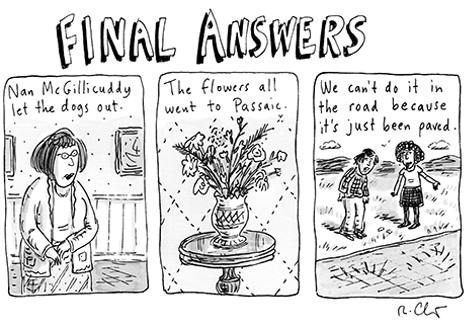
I’m sure that Roz Chast had Jeopardy in mind when she did this cartoon for the April 29, 2013 issue of the New Yorker magazine.

How many can you get?  The answer must be in the form of a question, remember.  The category is Music.

R. Chast, April 29, 2013

R. Chast, April 29, 2013

Bonus points if you get the writer of the song.

Change comes to South Boston

If you know anything about South Boston it is probably from the busing crisis of the 1970s when images flashed across the country and no one could believe they were from Boston and not Mississippi or Georgia.  Images like these.

sb1sb2sb4

Or maybe it is from reading “Common Ground”, the Pulizer Prize winner by J. Anthony Lukas which followed families through the crisis.  If this is what you remember, it has all just changed.

Yesterday, May 1, 2013, we all woke up to the reality that the next state senator from the district that includes South Boston will be Linda Dorcena Forry.  The “Southie Seat” has moved into a new era.  Boston has changed.

Linda Dorcena Forry held her daughter Madeline Forry, 2, as she celebrated a possible close victory at Phillips Freeport Tavern in Dorchester. (taken before Nick Collins conceded.)

Linda Dorcena Forry held her daughter Madeline Forry, 2, as she celebrated a possible close victory at Phillips Freeport Tavern in Dorchester. (taken before Nick Collins conceded.)

Linda is Haitian-American married to Bill Forry the Irish American publisher of the Dorchester (MA) Reporter.  South Boston, like it or not, is represented by a woman of color from a mixed marriage.  My fearless prediction: they will come to love her.  I have yet to meet anyone who can resist her enthusiasm and energy – or any of her four children.  I first met her nine years ago, before she ran for office, and have followed her career ever since.  She will win over those Collins (and Dahill) voters from Southie.  The Globe story this morning points out

The race was no easy win for Forry. The Wednesday morning hugs and handshakes among her, Collins, and Dahill came as the candidates were processing an Election Day fraught with mishaps. Voting day began with incorrect ballots distributed at some South Boston polling locations. Then, as votes were being counted that evening, the Associated Press erroneously ­declared Collins the winner, ­only for the final tally to show Forry with a 378-vote lead.

Forry’s path to victory was carved in Dorchester, Hyde Park, and Mattapan, and despite her poor showing in South Boston.

She will have the support of Collins (no word on Dahill) and of former Mayor, Ray Flynn.

For decades, men from South Boston have held the First Suffolk seat, which also includes Mattapan and a portion of Hyde Park.

Jack Hart Jr., who resigned the seat in January to take a job with a law firm, has held it since 2002, when he was elected to replace US Representative Stephen Lynch, a native of South boston. Before Lynch, the seat was held for 25 years by William Bulger.

“I never refer to it as the Southie seat,” Hart said in an interview Wednesday. “The reason South Boston has historically held that seat is because they’ve had higher turnout.”

Now, Hart and other members of South Boston’s political old guard insist that residents will unite behind any leader, from any part of the district, who listens to their needs. That includes Forry, a Haitian-
American, who finished a distant third among South Boston voter.

I know Linda and she will be out there with her family and the South Boston residents she meets will fall in love the way the rest of us who know her have.  Times have changed.

“I thought Collins should have won it,” said Bill Barrett, a 65-year-old South Boston resident, as he sat on the park benches on Castle ­Island, where people gather to catch a sea breeze and gossip. “It’s been a long time since that seat has left South Boston, but [Forry] seems like a nice lady.”

Barrett said that the neighborhood and district are different from those he remembers as a young man, but that change is not always bad.

“Change can be good,” said ­Barrett, who is retired. “There are a lot of young people moving into South Boston, but I think ­Dorchester also wanted a voice, too.”

She still has to win the special general election but her opponent, Dorchester native Joseph Anthony Ureneck, has already all but conceded.  It will be fun to see Linda inject some life into the annual St. Patrick’s Day breakfast next year.

Photograph of Forry Jessica Rinaldi for The Boston Globe

Photographs of busing from democratandchronicle.com, civilrights.wikispaces and busingproject.blogspot.com