The State of the Obama Presidency

All of our expectations were so high when Barack Obama took office 18 months ago.  He was going to fix the economy, end the wars in Iraq and Afganistan, give us health care reform, fix the schools, walk on water….

After 8 years of George W. and after the wasted Clinton years, we progressives were ready.  So where are we now?  This Doonesbury cartoon says its all.

We are like his kids and think he can do anything.  Unfortunately, there is the Senate to deal with and the fall elections which still look difficult for the Democrats.  I’m hoping they can just hang on to enough seats to keep control and Obama’s agenda has a fighting chance.

The Supreme Court, Baseball and Elena Kagan

Back in April in one of my last posts, I wrote about the Supreme Court.  Today, nominee Elena Kagan responded to questions about Chief Justice John Roberts’ metaphor that being judges is like being umpires.

According to Political.com

Supreme Court nominee Elena Kagan on Wednesday gently criticized Chief Justice John Roberts’s hotly debated assertion that a Supreme Court justice’s job is “to call balls and strikes” like an umpire, suggesting the description may have misled the public about the work judges do.

 “The metaphor might suggest to some people that law is a kind of robotic enterprise, that there’s a kind of automatic quality to it, that it’s easy, that we just sort of stand there and, you know, we go ball and strike, and everything is clear-cut, and that there is no judgment in the process. And I do think that that’s not right,” Kagan said in response to a question from Sen. Amy Klobuchar (D-Minn.) “It’s especially not right at the Supreme Court level where the hardest cases go and the cases that have been the subject of most dispute go.”

 Kagan went on to imply that Roberts may have downplayed the degree to which judging requires perspective.

 “Judges do, in many of these cases, have to exercise judgment. They’re not easy calls. That doesn’t mean that they’re doing anything other than applying law,” Kagan said. “But we do know that not every case is decided 9-0, and that’s not because anybody’s acting in bad faith. It’s because those legal judgments are ones in which reasonable people can reasonably disagree sometimes. And so in that sense, law — law does require a kind of judgment, a kind of wisdom.”

 Her mild criticism of Roberts was a notable departure for Kagan, who has studiously declined senators’ repeated invitations to discuss her opinions on previous Supreme Court’s decisions or to cast aspersions on the motivations or analytical techniques of the justices.

The hearings have turned into a discussion about what an activist judge looks like.  Is it Justice Thurgood Marshall as some Republicans tried to say an activist judge?  And if he is Elana Kagan will be the same because she clerked for him and will somehow channel him.

Supreme Court nominee Elena Kagan has come under an unusual line of attack from Republicans on the Senate Judiciary Committee. The Senators are going after Kagan’s 1988 clerkship for former Supreme Court Justice Thurgood Marshall, the first-ever African American justice, who retired in 1991 after helping to bring the court through some of the biggest civil-rights cases in its history. Some Republicans are taking this as an opportunity not only to put Marshall on trial but also make Kagan the chief witness. Here’s what’s happening, why, and what it means.

  • Going After Thurgood Marshall The Washington Post’s Dana Milbank reports, “‘Justice Marshall’s judicial philosophy,’ said Sen. Jon Kyl (Ariz.), the No. 2 Republican in the Senate, ‘is not what I would consider to be mainstream.’ Kyl — the lone member of the panel in shirtsleeves for the big event — was ready for a scrap. Marshall ‘might be the epitome of a results-oriented judge,’ he said. Sen. Jeff Sessions (Ala.), the ranking Republican on the panel, branded Marshall a ‘well-known activist.’ Sen. Chuck Grassley (R-Iowa) said Marshall’s legal view ‘does not comport with the proper role of a judge or judicial method.’ Sen. John Cornyn (R-Tex.) pronounced Marshall ‘a judicial activist’ with a ‘judicial philosophy that concerns me.'”
  • Making Everything About Marshall Talking Points Memo’s Christina Bellantoni reports, “Ranking member Sen. Jeff Sessions (R-AL) criticized Kagan for having ‘associated herself with well-known activist judges who have used their power to redefine the meaning of our constitution and have the result of advancing that judge’s preferred social policies,’ citing Marshall as his son, Thurgood Marshall Jr., sat in the audience of the Judiciary Committee hearings. In an example of how much the GOP focused on Marshall, his name came up 35 times.”

Of course, I think, along with Senators Al Franken,  Patrick Leahy and many others that actually the Roberts’ Court is the activist court.

When Judiciary Committee Chairman Patrick Leahy called on Franken, Minnesota’s junior Senator got right to his criticism that the current Supreme Court has been favoring powerful corporate interests over the rights of individuals.

Franken talked about how he believes that mandatory arbitration clauses strip Americans of the right to have grievances heard in a neutral court.

“Do you still agree … that one of the glorious things about courts is that they provide a level playing field in all circumstances?” he asked Kagan.

She replied that she agreed “very strongly” with Franken.

Democrats have accused the court — led by Chief Justice John Roberts — of overstepping its role by establishing policy rather than interpreting the law. Franken has been outspoken on the issue. In his time with Kagan, Franken was sharply critical of Chief Justice Roberts.

He accused Roberts and other justices of judicial activism that contradicted their own stated tenets. Franken cited the campaign finance case “Citizens United” as an example of the Robert’s court going beyond specific questions before it.

The landmark ruling this year determined that corporate funding of political broadcasts cannot be limited. It stemmed from a case of a non-profit corporation airing a film critical of Hillary Clinton.

The New York Times reported

Indeed, Ms. Kagan was unusually expansive when talking about matters in which she is already on record. She volunteered that she is not morally opposed to the death penalty, a position she took when she was confirmed as solicitor general. And she spoke freely about this year’s ruling in Citizens United v. Federal Election Commission, in which the conservative bloc on the court ruled against her, striking down legal limits on corporate spending to influence elections.

Democrats have portrayed that ruling as “conservative judicial activism.” Ms. Kagan — who as solicitor general argued in defense of the campaign finance rules — said she convinced herself in preparing that “we had extremely strong arguments.”

Ms. Kagan also displayed a bit of her law professor side, talking more extensively about abstract issues like how constitutional law develops over time. In a mild challenge to the conservative view that the Constitution can be interpreted based only on the original meaning of its text, she said there were also instances in which the Supreme Court had applied a principle embedded in the Constitution in a new way.

She cited the 1954 case of Brown v. Board of Education, which struck down segregation in schools. The case relied upon the 14th Amendment’s guarantee of equal protection of the laws, yet Ms. Kagan noted that the amendment’s drafters thought it “perfectly consistent with segregated schools.”

Justice Thurgood Marshall, who as a lawyer argued the Brown case, has emerged as a dominant figure in the hearings. Ms. Kagan clerked for him, and Republicans, led by Senator Jon Kyl of Arizona, have attacked Justice Marshall as a liberal “activist” and expressed concerns about Ms. Kagan’s association with him.

On Tuesday, Ms. Kagan told Mr. Kyl that she was not her former boss. “I love Justice Marshall,” she said. “He did an enormous amount for me, but if you confirm me to this position, you’ll get Justice Kagan, you won’t get Justice Marshall. And that’s an important thing.”

I think that Elena Kagan is doing her best to criticize the Republicans and the current conservatives on the Supreme Court as she can without antagonizing her future colleagues.  She isn’t a “progressive activist” (whatever that is), but I think she is smart enough and diplomatic enough to get Justice Kennedy’s vote and maybe even Justice Alito’s vote.


Thinking about the Supreme Court

I’m not going to speculate (at least in this post) on who President Obama will nominate in a few weeks, but I am going to talk about  two pieces discussing the Court itself and how decisions are made. The first by Geoffrey R. Stone in the New York Times, the second posted by William Forbath  this weekend on Politico’s Arena in response to Stone.
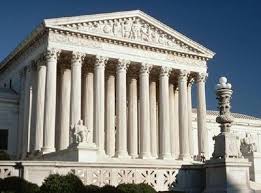
Stone begins

AS the Senate awaits the nomination of a new Supreme Court justice, a frank discussion is needed on the proper role of judges in our constitutional system. For 30 years, conservative commentators have persuaded the public that conservative judges apply the law, whereas liberal judges make up the law. According to Chief Justice John Roberts, his job is just to “call balls and strikes.” According to Justice Antonin Scalia, conservative jurists merely carry out the “original meaning” of the framers. These are appealing but wholly disingenuous descriptions of what judges — liberal or conservative — actually do.

As both Stone and Forbath remind us, the Constitution is an 18th Century document.  I believe that the vague yet sweeping language is why the Constitution is still a living and useful document.  The question addressed by Stone and Forbath is how one interprets it to meet the modern age. Neither thinks much of the way the current conservative majority uses the constitution.

Stone

Rulings by conservative justices in the past decade make it perfectly clear that they do not “apply the law” in a neutral and detached manner. Consider, for example, their decisions holding that corporations have the same right of free speech as individuals, that commercial advertising receives robust protection under the First Amendment, that the Second Amendment prohibits the regulation of guns, that affirmative action is unconstitutional, that the equal protection clause mandated the election of George W. Bush and that the Boy Scouts have a First Amendment right to exclude gay scoutmasters.

Whatever one thinks of these decisions, it should be apparent that conservative judges do not disinterestedly call balls and strikes. Rather, fueled by their own political and ideological convictions, they make value judgments, often in an aggressively activist manner that goes well beyond anything the framers themselves envisioned. There is nothing simple, neutral, objective or restrained about such decisions. For too long, conservatives have set the terms of the debate about judges, and they have done so in a highly misleading way. Americans should see conservative constitutional jurisprudence for what it really is. And liberals must stand up for their vision of the judiciary.

Forbath

… Conservative judges use history to claim that when they strike down a law, they are merely applying the “original understanding” or “intentions” of the framers of the Constitution. This is bunk. But it is reassuring. It enables conservatives on and off the Court to claim that what liberal judges do is something different and illegitimate. Liberals are “judicial activists.” When liberal judges strike down a law, they are “making up” new law. They are “betraying” the Founding Fathers. This is also bunk. Conservative and liberal judges alike bring their own present-day values and convictions to bear on interpreting and applying the Constitution. Conservatives are wrong to deny it. But they are right that appealing to history and “keeping faith with the past” is an indispensable part of our constitutional tradition – and one that helps mobilize popular support behind the constitutional commitments a judge, lawmaker, or citizen may prize. So, liberals need to get a better handle on the way to use history.

So what should the role of history be?  And how can liberal justices use it more to their advantage?  Stone points out that

So, how should judges interpret the Constitution? To answer that question, we need to consider why we give courts the power of judicial review — the power to hold laws unconstitutional — in the first place. Although the framers thought democracy to be the best system of government, they recognized that it was imperfect. One flaw that troubled them was the risk that prejudice or intolerance on the part of the majority might threaten the liberties of a minority. As James Madison observed, in a democratic society “the real power lies in the majority of the community, and the invasion of private rights is chiefly to be apprehended … from acts in which the government is the mere instrument of the major number of the constituents.” It was therefore essential, Madison concluded, for judges, whose life tenure insulates them from the demands of the majority, to serve as the guardians of our liberties and as “an impenetrable bulwark” against every encroachment upon our most cherished freedoms.

Conservative judges often stand this idea on its head. As the list of rulings above shows, they tend to exercise the power of judicial review to invalidate laws that disadvantage corporations, business interests, the wealthy and other powerful interests in society. They employ judicial review to protect the powerful rather than the powerless.

Liberal judges, on the other hand, have tended to exercise the power of judicial review to invalidate laws that disadvantage racial and religious minorities, political dissenters, people accused of crimes and others who are unlikely to have their interests fully and fairly considered by the majority. Liberal judges have ended racial segregation, recognized the principle of “one person, one vote,” prohibited censorship of the Pentagon Papers and upheld the right to due process, even at Guantanamo Bay. This approach to judicial review fits much more naturally with the concerns and intentions of people like Madison who forged the American constitutional system.

Where Forbath disagrees is with Stone’s reliance on James Madison and original intent.  He points out

So, judges today must attend to the text the framers gave us, the general principles it enshrines, the Amendments Americans have added, and the meaning and range of applications generations of judges, lawmakers and citizens have poured into them. And judges must consult their own conscience and experience as they sift through these materials that history provides and decide how best to keep faith with the past.

As long as they hew to this honest approach to history, liberals often draw compelling lessons from it. But lately, liberals are being drawn into the fictions and falsities of the “framers’ intentions” in order to sound just as “true” to the Founding Fathers as our conservative foes. When we liberals play the “framers’ intentions” game, however, we end up sounding silly and disingenuous.

Take for example constitutional scholar Geoffrey Stone’s important op-ed piece in last Wednesday’s New York Times. Looking ahead to President Obama’s soon-to-be-announced nomination of a new Supreme Court Justice, Stone urges “a frank discussion .on the proper role of judges in our constitutional system.” He laments that for thirty years or so, conservatives have dominated the national conversation about the Constitution and the Court, and he rightly points out that they have done so “in a highly misleading way” by claiming that conservative judges just “apply” the Constitution by enforcing the “framers’ intentions.” Stone goes on to contrast the kinds of laws that liberal judges strike down – laws that burden racial minorities, the poor and the powerless, with laws that conservative judges strike down – laws that “disadvantage corporations, business interests, the wealthy and other powerful interests in society.” And he suggests that liberal judges surely have a wiser vision of the role of judges in a constitutional democracy, since they wield the power of judicial review to safeguard people most at risk of being shortchanged in the ordinary political process, while the conservative judges conjure up new safeguards for those who already enjoy ample sway in the political arena.

So far so good. But along the way, Stone proves unable to resist the siren song of “framers’ intentions.” He tries to turn the table on the conservatives. He goes to some lengths trying to cloak liberal constitutional values and commitments in the mantle of James Madison’s “intentions.” Stone has dressed up James Madison as a Great Society liberal. Says Stone, the “intentions of people like Madison who forged the American constitutional system” was to safeguard minorities like African-Americans, undocumented immigrants and the Guantanamo detainees against the tyranny of the majority. That is what liberal judges do. Conservatives, Stone declares, stand Madison’s “idea on its head.” They wield judicial review to overturn affirmative action, gun control, and restrictions on corporate speech; they “tend to exercise. judicial review to invalidate laws that disadvantage corporations, business interests, the wealthy and other powerful interests in society.”

Stone’s James Madison is bunk too. The real James Madison was largely hostile to any kind of judicial review. More important: while Madison did craft the Constitution to safeguard minority rights against the tyranny of the majority, and while Madison, the wealthy slaveholder, was concerned about protecting religious minorities, he had no concern for the rights of “racial minorities,” and it was mainly the rights of the wealthy over against the majority of Americans of modest means that Madison hoped to protect! Thus, the conservatives on today’s Court have about as good a claim to Madison’s mantle as we liberals do.

I think Forbath is right about history and original intent.  As long as we argue about which view of original intent is correct, liberals will never prevail.  We need to move on to take into about all the history since 1787.  Forbath writes

History is on our side; but that has much less to do with James Madison and much more to do with the bloodshed of the Civil War and the Civil War and Reconstruction Amendments that made the Constitution a charter of equal rights for all Americans, including the former slaves. It was the Republicans of the Reconstruction Era, the New Dealers, the Civil Rights Movement, and the twentieth-century Court who gradually enlarged Madison’s original conception of minority rights and majority tyranny to make it a safeguard for the poor and vulnerable.

We do need “a frank discussion” on the Constitution and the proper role of judges, and we can’t be half-frank about it. There are good arguments why the liberals’ account is better. Stone offers a few. But wrapping ourselves in the mantle of the 18th century framers’ intentions as he tries to do is not one. Our constitutional commitments have emerged over two centuries of tumultuous change. The arc of constitutional history generally has bent toward a more inclusive and generous vision of rights-bearing membership in We, the People. Conservatives are bending it back. The 18th century framers might have agreed with them; but the Civil War, the Reconstruction Amendments, and much else have intervened in the mean time; and, in any case, the choice – about how to keep faith with our constitutional past – is ours.

We need a Supreme Court with Justices that are willing to grow, to learn and to change with the times.  President Obama could do worse that nominate someone in the Earl Warren or Justice Powell or Justice Brennan mold.  Those were men who learned to consider cases on their merits, who understood the need to connect decisions to real ordinary people.  They were men with empathy.

Tea Party on Boston Common

Yesterday the Tea Party came to Boston.  About 5000 gathered to hear Sarah Palin give her talking points.  As I was going to work, I saw the booths being set up and the motorcycle police gathering.  The few black faces at that early point were Boston Police officers. We heard the helicopters circling all morning.  When I went for a walk at lunch the rally had ended and I saw a tea partier too busy trying to hang on to his sign to notice he was crossing a busy intersection against the walk light and in front of a bus pulling out from a stop.  The driver did see him and the man finally noticed, but to me it was emblematic of the tea party movement: oblivious to the reality of the world around them.

Yvonne Abraham had a great column in the Boston Globe this morning.

I was standing in the crowd at the tea party rally on the Common yesterday, enjoying Sarah Palin’s applause lines (Do you love your freedom? We’re not going to stand for it any more! Oh no ya don’t! Drill, baby, drill!), when a friendly woman asked me a question.

“We don’t look insane, do we, really?’’

Well, no, I had to allow. They didn’t. In fact, most in the excited crowd seemed pretty normal — unless you count Doug Bennett, the Boston City Council candidate whose giant grin and jolly handshake show up so often around town it’s kind of creepy.

In fact, most of the people I spoke to treated me as if I were the one who was soft in the head, unable to comprehend elementary concepts. They patiently dedicated themselves to my enlightenment.

“Here, have a copy of the Constitution, so you know what we’re talking about,’’ one kind man offered. They even engaged in civil debate with some counterprotesters.

Donna Tripp was thrilled with this development. Holding a sign that read “No Matter What I Write, I Will Still Be Called a ‘Racist, Nazi, Tea-bagger . . . ,’ ’’ the Avon resident had just been interviewed on camera by a young man who works for Palin.

“It gives me the willies!’’ she told her friend. “He’s shooting for Sarah!’’

She loves Palin because “the Constitution is her mantra, and that’s what I’m all about,’’ Tripp said. “She’s done what all those women wanted to do in the ’60s. She earned everything she has, all on her own.’’

Like everybody else at the rally yesterday, Tripp hates, hates, hates the health care overhaul recently signed into law.

“This country is taking a hard right turn for socialism,’’ she said. “I don’t want to be told to buy a service I don’t want. America is about freedom of choice.’’

Tripp, 55, already lives in a state that requires everybody to buy health insurance, but she refuses to do it.

“I’m healthy,’’ she said. When her husband went to Canada for prostate cancer treatment five years ago, they paid $25,000 out of pocket.

But what if she got really sick — if she needed, say, heart bypass surgery, which could cost more than $100,000?

“I’d mortgage my house,’’ she said. And if that wasn’t enough?

“I guess I’d die,’’ she said. “But under our Constitution, I should be able to take that risk.’’

More likely, Tripp would get her treatment, and if she couldn’t afford to pay for it, the rest of us would pick up the tab.

That’s how this country is set up: According to the preamble in the little Constitution the kind man gave me, we are all about promoting “the general Welfare.’’

Scott Brown, our new Senator, didn’t show up.  Neither did Charlie Baker who is running for Governor as a Republican.  Wonder why?

Today the New York Times and CBS released a new poll about the Tea Party.

Tea Party supporters are wealthier and more well-educated than the general public, and are no more or less afraid of falling into a lower socioeconomic class, according to the latest New York Times/CBS News poll.

The 18 percent of Americans who identify themselves as Tea Party supporters tend to be Republican, white, male, married and older than 45.

They hold more conservative views on a range of issues than Republicans generally. They are also more likely to describe themselves as “very conservative” and President Obama as “very liberal.”

And while most Republicans say they are “dissatisfied” with Washington, Tea Party supporters are more likely to classify themselves as “angry.”

And I hate to burst Donna Tripp’s bubble, but the reason why she is perceived as racist is because many of her fellow tea partiers appear to be racist.  According to the poll, “Supporters of the Tea Party movement are more likely to be men, over the age of 45, white, married, and either employed or retired. Few are unemployed. They are more affluent and more educated than most Americans. Almost all said they are registered to vote, and most are Republicans.”

Tea Party supporters’ fierce animosity toward Washington, and the president in particular, is rooted in deep pessimism about the direction of the country and the conviction that the policies of the Obama administration are disproportionately directed at helping the poor rather than the middle class or the rich.

The overwhelming majority of supporters say Mr. Obama does not share the values most Americans live by and that he does not understand the problems of people like themselves. More than half say the policies of the administration favor the poor, and 25 percent think that the administration favors blacks over whites — compared with 11 percent of the general public.

So this well educated, overwhelmingly white group obviously feels threatened by the way the world is changing and afraid they will lose theirs.

When talking about the Tea Party movement, the largest number of respondents said that the movement’s goal should be reducing the size of government, more than cutting the budget deficit or lowering taxes.

And nearly three-quarters of those who favor smaller government said they would prefer it even if it meant spending on domestic programs would be cut.

But in follow-up interviews, Tea Party supporters said they did not want to cut Medicare or Social Security — the biggest domestic programs, suggesting instead a focus on “waste.”

Some defended being on Social Security while fighting big government by saying that since they had paid into the system, they deserved the benefits.

Others could not explain the contradiction.

“That’s a conundrum, isn’t it?” asked Jodine White, 62, of Rocklin, Calif. “I don’t know what to say. Maybe I don’t want smaller government. I guess I want smaller government and my Social Security.” She added, “I didn’t look at it from the perspective of losing things I need. I think I’ve changed my mind.”

It looks like the Tea Party is really the party of “I’ve got mine and I don’t want to share with anyone who is not like me.”

Nuclear Security

I grew up going to protests and vigils to urge President Kennedy to ban open air testing so I am thrilled that President Obama has taken the first steps to get the world talking about securing bomb-making materials from terrorists and other rogues.  And if you click this link, you will see him “dance” as he greets all the leaders.  Watch it full screen.

The New York Times reports

The meeting that Mr. Obama convened, and to a great degree stage-managed, was unlike any negotiations over arms control with the Soviets during the cold war or, more recently, the so-far fruitless talks to get North Korea to disarm. This was a far broader effort to persuade African, Latin American, Asian and European nations to agree on steps to deny terrorist groups the two materials necessary to make a bomb: plutonium and highly enriched uranium.

Mr. Obama began the session arguing that while superpower confrontation was far more remote, the risk of nuclear terrorism had never been greater, and he quoted the warning of Albert Einstein soon after the beginning of the nuclear age: “We are drifting towards a catastrophe beyond comparison.”

Critics contended that this session was all for show.

“The summit’s purported accomplishment is a nonbinding communiqué that largely restates current policy, and makes no meaningful progress in dealing with nuclear terrorism threats or the ticking clock represented by Iran’s nuclear weapons program,” said Senator Jon Kyl, the Arizona Republican who has vowed to oppose nuclear treaties Mr. Obama regards as essential.

Mr. Obama acknowledged that the commitments were voluntary, but he said the situation was nothing new. “If you are asking, ‘Do we have an international, one-world law enforcement,’ we don’t, and we never have,” he said.

Isn’t getting someone to do something voluntarily better than forcing them to do it? 

At the end of two days of meetings, Mr. Obama could claim two major accomplishments: The summit meeting forced countries that had failed to clean up their nuclear surpluses to formulate detailed plans to deal with them, and it kicked into action nations that had failed to move on previous commitments.

A second summit meeting will be held in two years in South Korea, Mr. Obama said, to make sure countries are on track.

Some countries arrived with what Gary Samore, Mr. Obama’s nuclear adviser, called “house gifts” that the United States had encouraged as signs of sincerity. For example, Canada, Mexico and Ukraine committed to eliminating their surplus weapons-grade materials or giving them to the United States.

This week, Russia closed a plutonium reactor it had used to make weapons-grade fuel. Other nations agreed to convert research reactors to fuel that could not be used for weapons.


Outside experts were optimistic. Sam Nunn, the former senator who tutored Mr. Obama on proliferation issues, said he thought “we are now closer to cooperation than catastrophe.” Graham Allison, a Harvard expert on nuclear terrorism, made the case that if countries “lock down all nuclear weapons and bomb-usable material as securely as gold in Fort Knox, they can reduce the likelihood of a nuclear 9/11 to nearly zero.”

As I said at the beginning, baby steps are better than taking no steps at all.  We have made a start.

Still fighting the Civil War

I’ve heard people chuckle in amazement at factions in other countries who still feud over “ancient” injuries, but we have our own on-going civil war.  It appears that for many, the Confederacy was never defeated and the South can rise again.  Two smart women, Melissa Harris-Lacewell and Gail Collins have written about this phenomenon each using the Virginia Confederate History Month as a starting point.

Harris-Lacewell writes of the “Two Virginias” in the Nation

Governor Robert McDonnell declared April Confederate History Month in Virginia. In his declaration Governor McDonnell called for Virginians to “understand the sacrifices of the Confederate leaders, soldiers and citizens during the period of the Civil War.”

In his original declaration, McDonnell made no mention of slavery as a root cause for the Civil War. His insistence on remembering only “leaders, soldiers, and citizens” refuses to acknowledge the existence of black people in the South. There were some black soldiers who fought in the Confederate army, but the vast majority of African Americans contributed to the Confederate effort through the violently coerced, unpaid labor that was part and parcel of the their dehumanizing, totalizing, intergenerational, chattel bondage. McDonnell seems to believe that this reality is unworthy of remembrance.

It’s taken me nearly two days to respond to the Governor’s declaration of Confederate History Month and his flip erasure of black life, suffering, and struggle because this particular news story is profoundly personal.

On my father’s side we traced our family tree as far as we could follow it and discovered we are descended from an African woman sold into slavery on a corner in Richmond, Virginia.

Harris-Lacewell continues

My father and his siblings grew up in the Church Hill neighborhood in Richmond. They attended racially segregated schools. Despite being nearly starved for school resources by the state, my father and his twin brother became the first in the family to attend college. Both became college professors. My uncle had a distinguished career as a student at the University of Virginia. My father went on to become the first Dean of African American Affairs at the University of Virginia in 1976.I grew up in Virginia. I had social studies teachers who referred to the Civil War as “the war between the states” or “the war of Northern aggression.” My interracial family experienced harassment and abuse during the two decades we made our home in the Commonwealth. But Virginia is also the place where I made lifelong friends, found spiritual communities and was educated by many tough and loving teachers. I came to political consciousness in Virginia and distinctly remember listening to every word of Douglass Wilder’s inauguration address as the first black governor. I cheered on election night 2008 when Virginia turned blue just moments before Barack Obama’s presidential win was announced.

I share this personal history because it is not exceptional. Black Americans are, by and large, Southerners. Our roots, our stories, our lives, our struggles, our joys have a distinctly Southern flavor. Slavery and Jim Crow are part of our experience, but so are church picnics, HBCU football games and jazz music. There is no Black American history that is not deeply intertwined with Southern history. It is extraordinarily painful to watch an elected official in the 21st century engage in an act of willful and racist historical erasure of our very selves.

I also lived in Virginia for many years.  My first job with the Commonwealth of Virginia was enforcing Executive Order Number One issued by a former segregationist governor, Mills E. Godwin.  E.O. 1 which was issued by every governor until Bob McDonnell forbids discrimination in state employment.  I had the day off for Lee-Jackson Day every January.  (That’s Robert E. and Stonewall.)  When Martin Luther King’s birthday was made a national holiday, the day became Lee-Jackson-King Day.  Virginia has always been different, but McDonnell seems determined to really turn back time.

Harris-Lacewell concludes

Without a hint of irony McDonnell suggested that he hopes to profit from Confederate inspired tourism. Clearly he hopes that the racial anxieties brewing in America will serve as a tourist boon for the former Confederate capital. Having profited for centuries from the forced labor of enslaved black Americans, Virginia seeks to further commodify black suffering in the 21st century. McDonnell is welcoming Rebel flag waving whites from rural Pennsylvania, downstate Illinois, and Southern California to come spend their money and steep themselves in Virginia past when white citizens, determined to keep black people as non-humans, fought back against the federal government.

Virginia has other histories that we can use to resist this false and frightening narrative. We must insist on remembering Jefferson’s Virginia that called us to be better than ourselves, to defend freedom, and to hold together our union. We must remember the histories of all the black families like my own whose struggle and strength cannot be erased from Southern history.

I have visited all the Civil War battle sites in Virginia.  I spent my honeymoon visiting the Shenandoah sites, Harper’s Ferry and Gettysburg and most of the national parks try to recognize the role of blacks, free and slave, mostly on the side of the Union.  If the Governor really wants to promote tourism there are a lot better ways to do so.

Gail Collins writes in her New York Times column

April is the cruelest month. Or, if you live in Virginia, Confederate History Month.

The state is buzzing over Gov. Bob McDonnell’s proclamation urging citizens to spend the month recalling Virginia’s days as a member of the Confederate States of America. Although since McDonnell had previously turned April over to child abuse prevention, organ donation and financial literacy, perhaps it was O.K. to just pick your favorite.

The original Confederate History proclamation was a miracle of obfuscation. It did not even mention slavery. On Wednesday, the governor apologized for that and said that slavery “has left a stain on the soul of this state and nation.”

People, what’s our bottom line here. The governor of Virginia has decided to bring slavery into his overview of the history of the Confederacy. Good news, or is this setting the bar a wee bit too low?

The love affair with all things Confederate is way more worrisome. Once again, it’s in to talk secession. The Republican attorneys general are lining up to try to nullify the health care bill.

“Many issues of the Civil War are still being debated today,” said Brag Bowling of the Sons of Confederate Veterans, which led the push to get that proclamation in Virginia. That seems extremely depressing, as if we were Serbs stewing about what the Turks did at the Plain of Blackbirds in 1389.

Actually, a national discussion of Civil War history sounds fine — as long as we could start by agreeing that the whole leaving-the-union thing was a terrible idea. In the proclamations, it generally sounds as if everything went swimmingly until the part where the South lost and grudgingly rejoined the country.

I have been accused by at least one commentator on this blog of seeing everything in racial terms.  I think just the opposite is true.  People like Governor McDonnell and Representative Joe Wilson and, in fact, the entire “just say no” to anything proposed by President Obama is based on the President’s race.  We need to have a serious discussion about race.  I don’t know how that can happen as President Clinton tried to initiate one and failed and President Obama can’t initiate it.  Maybe Clinton tries again.  Maybe Clinton and President Carter together.  But no matter how much the McDonnell and Republicans want to go backward, the fact remains:  We have elected a black man as President and the population of the United States will soon have a majority population of people of color and there isn’t much they can do about those two things.

Massachusetts Politics and Health Care or Mitt, Scott and Rachel

This Luckovich cartoon is a good picture of Massachusetts politics after health care reform.  You could swap Romney for Scott Brown is it would almost be the same.

Joan Vennochi’s column in the Boston Globe last week provides a good summary of the dilemma faced by Romney and Brown.

WHEN YOU dance to the right with the one who brung you, you can end up with two left feet.

Two Massachusetts Republicans — US Senator Scott Brown and former Governor Mitt Romney — are in that awkward state.

Brown won election as an independent who happened to belong to the Republican Party. He’s quickly learning that in Washington, the “R’’ next to your name means your soul belongs to the GOP.

Brown paused for an instant before promising to vote against the Democrats’ historic health care package. That slight hesitation was enough to enrage conservatives who are already suspicious about his core beliefs.

No wonder he has to raise money by raising the specter of Rachel Maddow! (more on that later)

Brown’s campaign rallying cry — that he would be the 41st vote against health care reform — never made much sense. As a Massachusetts lawmaker, Brown voted for the health care reform package that was spearheaded by Romney and became the model for the federal law that President Obama just signed.

Brown never really explained how he could rail against a measure he once supported. Then, again, neither did Romney. He now sounds slightly unhinged as he attacks Obamacare, which is, after all, based on Romneycare. Right after the House vote, Romney condemned Obama as having “betrayed his oath to the nation.’’ Yesterday, his political action committee announced a new program, dubbed “Prescription for Repeal’’ to support conservative candidates who will repeal “the worst aspects of Obamacare.’’

The Republican problem is they wanted President Obama to fail so badly (and were conviced he would never pass any type of health care reform) they dug themselves into a corner. 

Brown and especially Romney should have known better. But they seized the path to the right as the best route to political victory. In the end, it could be the road to political defeat.

Brown will have to decide whether he belongs to the people of Massachusetts or to Senate Minority Leader Mitch McConnell and assorted Tea Party activists. He was attacked from the right when he joined the Democratic majority and backed a Senate jobs bill, and the attacks will continue.

To win reelection, he must be the independent he promised to be. Yet, conservatives will become incensed each time he strays from the party line, and even when he doesn’t. Some blame Brown for the passage of health care reform on the grounds that his election forced Democrats to go for it even without 60 Senate votes. That’s unfair, but that’s raw, partisan politics.

As for Romney, when he ran for president in 2008, he twisted and turned into a flip-flopper to a degree that severely undercut his credibility on the national stage. Still, based on past history, he was well-positioned to become his party’s nominee in 2012. The Republican nomination generally goes to a loser from the previous election cycle. Despite myriad weaknesses, that’s what happened with John McCain.

Now, to play in the Republican primary world, Romney has to do the mother of all flip-flops on health care reform. It’s hard to imagine how he does it, but if he succeeds, where does that leave him in a general election? Forget about two left feet. With his clumsy dance, he will have waltzed himself off the cliff.

If memory serves me, we just finished electing Scott Brown to 3 years in the Senate, but he is already trying to raise funds from his friends on the right by raising the specter of that scary Rachel Maddow running against him.  And Rachel is trying to use this to raise her profile and ratings.  It was good theater for a while.  And even though a number of commentors in the Boston Globe seem disposed to a Maddow run (according to a Tweet I glimpsed on Boston.com), I think is was just theater for her.  Brown, however is in a different position.  Even Newsweek is weighing in.  Liz White posted last week.

The fake 2012 Massachusetts senatorial race between newly elected Sen. Scott Brown and MSNBC host Rachel Maddow is really heating up—er, sort of.

Earlier this week Brown sent a fundraising letter to supporters all over the country claiming the “political machine” in Massachusetts was vetting “liberal MSNBC anchor Rachel Maddow” to oppose him in the state’s election in 2012. Maddow quickly fired back, announcing that she had no plan to run for office while denouncing Brown for making up the story just to raise money. On Friday, Maddow approved a full-page ad in The Boston Globe to make her plans known to Brown’s constituents.

It really says something that two years in advance and a few months after what GOP supporters called his “Massachusetts Miracle” election, Brown is already worried about competition, even if it is just to bring in more money. As the first Republican to be elected for Senate in Massachusetts in 40 years and a with no vote on the health-care-reform bill—not to mention his more moderate tendencies could turn off the far right—he could face a tough reelection campaign. The rumor of Maddow’s run might be false, but it’s clear Brown’s fear of the next election isn’t.

Hey Scott, why don’t you take Rachel up on her offer to come on her show?  I don’t think she will ask you any thing too hard – just why you were for health care reform before you were against it.  And what exactly is the difference between the Massachusetts bill and the National one?  Easy stuff like that.

Bipartisan book buyer?

After his speech on health care in Iowa, President Obama stopped at a bookstore.  – an independent bookstore, Prairie Lights to browse and pick on some books for the kids.

I love this picture of the President holding books by Karl Rove and Mitt Romney taken by Doug Mills of the New York Times.

President Obama with books by Mitt Romney and Karl Rove.

The accompanying story in the Times by Sheryl Gay Stolberg reports some very amusing dialogue between Robert Gibbs and the President.  Here are some exerpts.  (This is based in part on reporting by the pool reporter.)

A few minutes later POTUS stepped up to the cash register with two books in his hands: “Journey to the River Sea” by Eva Ibbotson and “The Secret of Zoom” by Lynne Jonell for his daughters.

Obama pulled out five $20 bills to pay for the two books. Your pooler couldn’t hear the exact price but the two books didn’t cost that much.

Obama also bought a book for Gibbs, who was holding a large Star Wars pop-up book for his six-year-old son, Ethan.

“It’s a little expensive, sir,” Gibbs said to his boss as he handed it over.

POTUS showed the book to pool as the cashier rang it up for $37.44.

“I can handle it,” Obama said as Gibbs suggested he pay. “It’s for keeping his dad away for too many hours a day.”

“I need more books than that, sir,” Gibbs remarked.

Then after he left Prairie Lights

Nothing for Mrs. Obama?” Bloomberg’s Ed Chen asked.Obama paused to think for a second. “Thanks for getting me in trouble,” he replied.

We know that Obama used to visit a neighborhood bookstore in Chicago often.  I’m glad to see he still likes bookstores as they are among my favorite places.  And I never heard of another President who carried cash.  Obama buys shave ice in Hawaii, burgers in D.C. and now books in Iowa.  I also wonder how many copies of the books he bought will now be sold.  I know I will look into them for the grands.  Can we get the Obama girls to write some reviews?

After Health Care Reform Passage – Threats of Violence

Before the House even completed its work on passage of the Senate Bill and then the Reconciliation Bill, the ugliness had begun to escalate.

OK, so VP Biden kinda embarrassed the President with an F-bomb, but that was small potatoes compared with the racial remarks aimed at black Congressmen, the anti-gay shouts at Barney Frank, and a Congressman shouting “baby killer” at Bart Stupak (one of the most anti-abortion members of Congress) over the weekend. And it is certainly insignificant compared to what has happened since.

Bob Herbert titled his New York Times column “An Absence of Class.”  I think he was being too kind.  But what he says rings very true.

A group of lowlifes at a Tea Party rally in Columbus, Ohio, last week taunted and humiliated a man who was sitting on the ground with a sign that said he had Parkinson’s disease. The disgusting behavior was captured on a widely circulated videotape. One of the Tea Party protesters leaned over the man and sneered: “If you’re looking for a handout, you’re in the wrong end of town.”

Another threw money at the man, first one bill and then another, and said contemptuously, “I’ll pay for this guy. Here you go. Start a pot.”

In Washington on Saturday, opponents of the health care legislation spit on a black congressman and shouted racial slurs at two others, including John Lewis, one of the great heroes of the civil rights movement. Barney Frank, a Massachusetts Democrat who is chairman of the House Financial Services Committee, was taunted because he is gay.

At some point, we have to decide as a country that we just can’t have this: We can’t allow ourselves to remain silent as foaming-at-the-mouth protesters scream the vilest of epithets at members of Congress — epithets that The Times will not allow me to repeat here.

It is 2010, which means it is way past time for decent Americans to rise up against this kind of garbage, to fight it aggressively wherever it appears. And it is time for every American of good will to hold the Republican Party accountable for its role in tolerating, shielding and encouraging foul, mean-spirited and bigoted behavior in its ranks and among its strongest supporters.

The G.O.P. poisons the political atmosphere and then has the gall to complain about an absence of bipartisanship.

The toxic clouds that are the inevitable result of the fear and the bitter conflicts so relentlessly stoked by the Republican Party — think blacks against whites, gays versus straights, and a whole range of folks against immigrants — tend to obscure the tremendous damage that the party’s policies have inflicted on the country. If people are arguing over immigrants or abortion or whether gays should be allowed to marry, they’re not calling the G.O.P. to account for (to take just one example) the horribly destructive policy of cutting taxes while the nation was fighting two wars.

If you’re all fired up about Republican-inspired tales of Democrats planning to send grandma to some death chamber, you’ll never get to the G.O.P.’s war against the right of ordinary workers to organize and negotiate in their own best interests — a war that has diminished living standards for working people for decades.

Herbert wrote that on Tuesday.  Tonight I went to Politico.com.  The first headline was:  “Hoyer: Members are at Risk”.  Then there are these:  “Slaughter, Stupak receive death threats” and “Cut gas lines at Perriello’s brother’s home probed.” 

Will the Republican leadership speak out or will they be content with John Boehner’s statement as reported in the Washington Post.

House Republican Leader John A. Boehner (R-Ohio) said the violence is unacceptable.

“I know many Americans are angry over this health-care bill, and that Washington Democrats just aren’t listening,” Boehner said Wednesday on FoxNews Channel. “But, as I’ve said, violence and threats are unacceptable. That’s not the American way. We need to take that anger and channel it into positive change. Call your congressman, go out and register people to vote, go volunteer on a political campaign, make your voice heard — but let’s do it the right way.”

I hope that law enforcement can successfully do their jobs.  Republican leaders need to go further by condemning other Republican leaders like Michael Steele and Sarah Palin.  Again from the Post

“When people start talking in the rhetoric of putting people on ‘firing lines,’ . . . or they put a target on their faces, with cross hairs,” Hoyer said at a news conference, “that activity ought to be unacceptable in our democracy. . . . That’s wrong. ”

Hoyer appeared to be referring to Republican Party Chairman Michael S. Steele‘s comment in a recent interview that Pelosi is on a “firing line” and to a map posted Tuesday on Sarah Palin‘s Facebook page, which marked with a gunsight districts of House Democrats she plans to campaign against.

I’m not overly concerned about the law suits against the bill, but I am very worried that someone will succeed at doing real violence to a member of Congress or to the President himself.  I am also afraid the the violent speech and the actual violence will escalate as the polls show increasing approval of the bill and the Senate finally passes the reconciliation bill and it is signed by the President.

Waterloo?

Two links to Republican reaction (pre and post) to the Health Care Reform Bill.

First, Kent Jones’ video from the Rachel Maddow Show in which he collects the comments from various Republican’s about the bill.  http://www.msnbc.msn.com/id/26315908/vp/35994753#35994753

Second, here is from Republican David Frum

Conservatives and Republicans today suffered their most crushing legislative defeat since the 1960s.

It’s hard to exaggerate the magnitude of the disaster. Conservatives may cheer themselves that they’ll compensate for today’s expected vote with a big win in the November 2010 elections. But:

(1) It’s a good bet that conservatives are over-optimistic about November – by then the economy will have improved and the immediate goodies in the healthcare bill will be reaching key voting blocs.

(2) So what? Legislative majorities come and go. This healthcare bill is forever. A win in November is very poor compensation for this debacle now.

So far, I think a lot of conservatives will agree with me. Now comes the hard lesson:

A huge part of the blame for today’s disaster attaches to conservatives and Republicans ourselves.

At the beginning of this process we made a strategic decision: unlike, say, Democrats in 2001 when President Bush proposed his first tax cut, we would make no deal with the administration. No negotiations, no compromise, nothing. We were going for all the marbles. This would be Obama’s Waterloo – just as healthcare was Clinton’s in 1994.

Only, the hardliners overlooked a few key facts: Obama was elected with 53% of the vote, not Clinton’s 42%. The liberal block within the Democratic congressional caucus is bigger and stronger than it was in 1993-94. And of course the Democrats also remember their history, and also remember the consequences of their 1994 failure.

This time, when we went for all the marbles, we ended with none.

So who should really be singing  the old Stonewall Jackson Song (written by Marijohn Wilkin and John D. Loudermill?

Waterloo, Waterloo
Where will you meet your Waterloo
Every puppy has its day
Everybody has to pay
Everybody has to meet his Waterloo

Now old Adam was the first in history
With an apple he was tempted and deceived
Just for spite the devil made him take a bite
And that’s where old Adam met his Waterloo

Waterloo, Waterloo
Where will you meet your Waterloo
Every puppy has its day
Everybody has to pay
Everybody has to meet his Waterloo

Little General Napoleon of France
Tried to conquer the world but lost his pants
Met defeat known as Bonaparte’s retreat
And that’s when Napoleon met his Waterloo

Waterloo, Waterloo
Where will you meet your Waterloo
Every puppy has its day
Everybody has to pay
Everybody has to meet his Waterloo

Now a feller whose darling proved untrue
Took her life but he lost his too
Now he swings where the little birdie sings
And that’s where Tom Dooley met his Waterloo

Waterloo, Waterloo
Where will you meet your Waterloo
Every puppy has its day
Everybody has to pay
Everybody has to meet his Waterloo

//

Only time will tell, but right now I think it is the Republican Tea Party.