Chained CPI explained

So.  President Obama proposed moving to something called Chained CPI (Consumer Price Index) in his budget.  It looks as if the proposal is probably DOA.  My personal, maybe naive thought is that the President proposed it to show, one more time, that he is open to compromise suspecting that the Republicans wouldn’t accept his offer.  I think he might have expected the outcry from the progressives side.  Maybe he wanted us to protest showing the Republicans that he can put things on the table that his supporters don’t like.  (Sneaky, that man.)  But he needs to make sure the proposal itself didn’t open a crack in a door the Republicans want to open – the subject for a different post.

But since Chained CPI seems to keep popping up  I thought I would try to understand what it is and why it is not so good not only for retirees, but for the middle class taxpayer.

Ezra Klein explained it this way.

Here are the facts. Chained-CPI does mean that Social Security beneficiaries will see their benefits cut. Imagine a person born in 1936 who retired in 2001, at age 65. For simplicity, let’s assume they’re eligible for the maximum benefit. Given that the cap was below $30,000 a year as recently as 1980, it’s not inconceivable that a middle or upper-middle class person with steadily increasing earnings since 1958 would be in this situation.

Their initial benefit would have been $1,538 a month, or $18,456 a year. Under existing law, they would have gotten a series of cost-of-living adjustments (COLAs). By 2013, COLAs would have increased this person’s annual benefit to $24,689.49. However, under chained CPI, it would be $23,820.19, a decrease of $869.30. That’s a 3.5 percent cut in benefits. And, of course, a 3.5 percent cut in income matters a lot more when you’re barely clearing $20,000 a year than it does when you’re making a regular middle-class salary.

chainedcpi_cuts1

There are also a lot of questions about how the Chained CPI would be calculated.

There would be other complications as well. Kenneth Stewart, an economist in the Division of Consumer Prices and Price Indexes at the Bureau of Labor Statistics (BLS), is one of the guys who computes the various CPIs every month. He notes that one benefit of CPI-W and other unchained CPIs is that they are final upon issuance. That is, the numbers are never revised. Two weeks after this month ends, BLS will release the April 2013 CPI, and that will always and forever be the April 2013 CPI.

Not so for chained CPI. “The chained CPI-U is subject to revision because we don’t get the actual expenditure data until 1 or 2 years later,” he notes. For example, in 2005 we had access to final chained CPI data for 2003, and only interim data for 2004. If we were to adopt chained CPI, we’d either have to use incomplete data, or else wait until we had final data to implement COLAs, which would further compound the cuts. The former, of course, would reduce the accuracy of the measure, a feature that proponents often tout.

George Zornick published a long and interesting piece in the Nation on the myths about Chained CPI which is well worth reading.  In addition to the benefit cuts to seniors, taxes would also go up because the plan would be to link everything to the Chain.  Look at this chart.

Notice the group getting the biggest tax hike is families making between $30,000 and $40,000 a year. Their increase is almost six times that faced by millionaires.

Notice the group getting the biggest tax hike is families making between $30,000 and $40,000 a year. Their increase is almost six times that faced by millionaires.

Both Zornick and Klein talk about a special Chained CPI for the elderly based on the goods and services the elderly purchase most:  housing and health care.

Klein says

…critics of chained CPI have sometimes promoted the CPI-E, an experimental index meant to measure price changes within products bought by the elderly. Because it’s experimental and simply a result of reweighing the existing CPI measures to more heavily account for goods like housing and health care, the BLS doesn’t publish the data on its website, but it’s available upon request. Stewart, who helped develop CPI-E, explains that it’s an unchained measure, and because of that its numbers don’t need to be revised.

In the mid-2000s, the housing bubble and boom in health-care prices meant that CPI-E, which weights both more heavily, rose faster than conventional inflation measures. In 2008, for instance, adopting CPI-E as Social Security’s inflation measure would have given our hypothetical retiree $327.88 more a year. However, since the housing bubble burst and health-care prices started slowing in growth, that effect has diminished. “Medical care inflation has been relatively subdued,” Stewart says. “Shelter prices have also been very tame in, really, the last seven or eight years.” As a result, in 2013 CPI-E would have resulted in only $56 in additional annual benefits for our test retiree.

A money saver, right?  Zornick says no.

The Economic Policy Institute has the numbers here:

In short, the 65-and-older households spend roughly three times what the rest of the population does on health care, measured as a share of total spending. Further, between 1989 and 2007,prices for health care have risen nearly twice as fast as overall inflation—growing 100% over that timespan, compared with 53% growth in overall prices of consumption goods.

Seniors spend a lot of money on health care, and just aren’t able to buy different, cheaper drugs when the price of their medication goes up—so the Chained CPI argument just doesn’t work here. And the price of those drugs is going up much faster than the prices of most consumer goods, and the same is true of Medicare premiums.

I  won’t argue that the CPI is a great definitive measure.  Sending people around to price stuff every month is mildly nuts, but the CPI has worked for a long time.  I think we need to look at some other ways to “save”  Social Security.  And Social Security shouldn’t be part of any budget cutting plan to begin with.  Chained CPI is not a winner, no matter what some Democrats, some economists and many Republicans may claim.

Just Sayin’…

As we who lived through those times know, they were very difficult and people made a lot of strange choices. But I will assume that Mr. LaPierre was NOT protesting the war with his requested deferrment.

kstreet607's avatarThe Fifth Column

H/t: The Platzner Post

Memo:  With full knowledge that FaceBook has a way of exaggerating claims, I researched this and found that the term “mental condition” was indeed a slight exaggeration.  Here’s what I found.

View original post

The doomsday clock

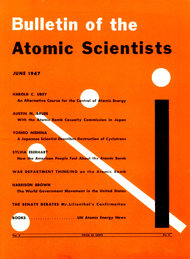
My father subscribed to the Bulletin of Atomic Scientists.  As long as I can remember, I would look at the cover each month and see what time it was.  The time was not, as my father explained to me, the current time but the time the scientists thought was left before a nuclear war.  Over my childhood, I watched the clock move closer to and further away from midnight.  The clock is currently set to 5 minutes to midnight.

So I was surprised to learn that the woman who had designed the clock had died.  If I had thought about it, of course someone created the design.  I think I’ve imagined all these years that it just appeared on the cover.

Martyl Langsdorf died at the 96.  Her obituary was in the New York Times

Mrs. Langsdorf was a painter who specialized in abstract landscapes. Her husband, Alexander Langsdorf Jr., was a physicist who had worked on the Manhattan Project developing the atomic bomb. In 1945, as preparations were being made to drop bombs on Hiroshima and Nagasaki, Dr. Langsdorf and others formed the Bulletin as debate was escalating within the group about what it had created. When the Bulletin converted from a newsletter to a magazine in 1947, Mrs. Langsdorf was hired to design the cover.

This is her 1947 cover.

1947 cover

The Times continues

Mrs. Langsdorf’s career designing magazine covers stopped and started with that first magazine issue of the Bulletin (which declared that it was 11:53 p.m.). She devoted herself instead to her artwork.

While this might be the only cover she designed, it has had a great impact.  Many know about the Doomsday Clock, but few know it came from the Bulletin of Atomic Scientist and even fewer know she was the designer.  Her clock is on their website and newsletter today.

Martyl Langsdorf

Martyl Langsdorf

Photograph from the Bulletin of Atomic Scientists

The NRA shield for schools

I have to say that the NRA plan for school safety made my husband apoplectic.  He’s been asking loud questions ever since it was released.  Questions like:  How many schools are there in the country?  How many armed officers would you need?  Who is going to pay for this?

According to the New York Times, the answer to the last question is us taxpayers.

The task force panel called on the Departments of Homeland Security, Education and Justice to coordinate school safety efforts and provide grant money for schools to assess their ability to prevent and respond to attacks. It recommended that officers or employees who are armed take a 40- to 60-hour training course to be developed by the rifle association based on a model the task force has designed.

The group also called on states to require schools to develop security plans.

But how and whether the task force recommendations will be put into effect — and the cost — was unclear.

Maybe gun owners should pay a surtax when they purchase/register weapons and ammunition.

The only way to reduce the danger that weapons pose to schoolchildren, to shoppers at malls, to bystanders, to movie goers, to law enforcement officials is to enact stricter gun safety laws.

This chart was in an article published by Atlantic Cities and is from a study done by Boston Childrens Hospital, Harvard Medical School and the Harvard School of Public Health.

Gun safety map The study found that states with the strictest gun control laws had lower rates of gun-related homicides and suicides, though it notes that these findings are limited to associations and could not determine precise cause-and-effect. Gun-related deaths were measured per 100,000 people for both homicides and suicides based on data from the Centers for Disease Control and Prevention, controlling for other factors thought to be associated with gun deaths including age, sex, race and ethnicity, poverty, unemployment, college education, population density, other violence-related deaths, and firearm ownership.

This is contrary to what many gun rights activists believe.

I believe that we need fewer guns around, not more.  While I was writing this word came of a lock down on the University of Rhode Island campus because someone had evidently waved a gun at a lecture and then left the room.  If the NRA gets its way, we will have guns all around us and how will we be able to tell who is a lunatic wanting to kill everyone and who is just a lunatic?

Energy, Keystone and climate change

Now that everyone in the world is striving to own a car, a television, at least one computer, air conditioners, electric lighting and other energy using devices we need to develop more, cheaper and better sources of energy.  President Obama says we need to move away from carbon based fuel sources but still may approve the Keystone XL pipeline project.

I used to be opposed to the pipeline because of the environmental damage caused by the actual building through the midwest, through farms and endangered dunes and prairies.

Oil swirls in the Yellowstone river after an Exxon Mobil pipeline ruptured near Billings, Montana.

Oil swirls in the Yellowstone river after an Exxon Mobil pipeline ruptured near Billings, Montana.

And then came the various ruptures of the existing pipeline in the Yellowstone River in 2011 and recently in an Arkansas neighborhood.  The New York Times reported

On Tuesday [April 2], vacuum trucks and crews were still working to clean up the accident, which the Environmental Protection Agency called a “major spill.” While it was unclear how much oil had leaked, Exxon Mobil said it had recovered thousands of gallons of oil mixed with water and had prepared for a spill as large as 420,000 gallons, though it said it believed that the amount released was smaller.

“Our focus is on the safety of the people in the community and restoring the environment as soon as we possibly can,” said Alan Jeffers, an Exxon Mobil spokesman. “We’re committed to the cleanup and will stay until it’s done.”

The spill appears to be the largest accident involving heavy crude since an Enbridge Energy pipeline spill in 2010 that dumped more than 840,000 gallons near Marshall, Mich., soiling a 39-mile stretch of the Kalamazoo River.

Somehow I can’t imagine what the interiors of the homes smell like.  The odor of the oil can permeate everything including furniture, rugs and bedding.

In addition to pipeline safety, I am learning more about the process of extracting the oil from the sand in Alberta.  Extraction of the oil releases CO2, uses water and by some estimates uses more energy to extract the oil than the oil produces.  So if our ultimate objective is to reduce dependence on fossil fuels and reduce green house emissions, extracting oil from the tar sands does not seem to be the answer.  The Scientific American has a long and interesting article on the subject.

TAR SANDS: At least 170 billion barrels of oil could be extracted from Alberta's oil sands deposits with today's technology. Image: © David Biello

TAR SANDS: At least 170 billion barrels of oil could be extracted from Alberta’s oil sands deposits with today’s technology. Image: © David Biello

If I understand the article, carbon is emitted twice:  once during the extraction and then, a will all oil, during the refining process which turns the oil into gas or heating oil.

The greenhouse gas emissions of mining and upgrading tar sands is roughly 79 kilograms per barrel of oil presently, whereas melting out the bitumen in place requires burning a lot of natural gas—boosting emissions to more than 116 kilograms per barrel, according to oil industry consultants IHS Cambridge Energy Research Associates. All told, producing and processing tar sands oil results in roughly 14 percent more greenhouse gas emissions than the average oil used in the U.S. And greenhouse gas emissions per barrel have stopped improving and started increasing slightly, thanks to increasing development of greenhouse gas–intensive melting-in-place projects. “Emissions have doubled since 1990 and will double again by 2020,” says Jennifer Grant, director of oil sands research at environmental group Pembina Institute in Canada.

In the U.S. State Department’s review of the potential environmental impacts of the Keystone project, consultants EnSys Energy suggested that building the pipeline would not have “any significant impact” on greenhouse gas emissions, largely because Canada’s tar sands would likely be developed anyway. But the Keystone pipeline represents the ability to carry away an additional 830,000 barrels per day—and the Albertan tar sands are already bumping up against constraints in the ability to move their product. That has led some to begin shipping the oil by train, truck and barge—further increasing the greenhouse gas emissions—and there is a proposal to build a new rail line, capable of carrying five million barrels of oil per year from Fort McMurray to Alaska’s Valdez oil terminal.

Then there’s the carbon hidden in the bitumen itself. Either near oil sands mines in the mini-refineries known as upgraders or farther south after the bitumen has reached Midwestern or Gulf Coast refineries, its long, tarry hydrocarbon chains are cracked into the shorter, lighter hydrocarbons used as gasoline, diesel and jet fuel. The residue of this process is a nearly pure black carbon known as petroleum (pet) coke that, if it builds up, has to be blasted loose, as if mining for coal in industrial equipment. The coke is, in fact, a kind of coal and is often burned in the dirtiest fossil fuel’s stead. Canadian tar sands upgraders produce roughly 10 million metric tons of the stuff annually, whereas U.S. refineries pump out more than 61 million metric tons per year.

Scientific American continues

In other words, tar sands are just a part of the fossil-fuel addiction—but still an important part. Projects either approved or under construction would expand tar sands production to over five million barrels per day by 2030. “Any expansion of an energy system that relies on the atmosphere to be its waste dump is bad news, whereas expansion of safe, affordable and environmentally acceptable energy technologies is good news,” Carnegie’s Caldeira says.

There’s a lot of bad news these days then, from fracking shale for gas and oil in the U.S. to new coal mines in China. Oxford’s Allen calculates that the world needs to begin reducing emissions by roughly 2.5 percent per year, starting now, in order to hit the trillion metric ton target by 2050. Instead emissions hit a new record this past year, increasing 3 percent to 34.7 billion metric tons of CO2 and other greenhouse gases.

If we are serious about climate change and serious about carbon emissions, we will not build the pipeline.  We can’t do much about what is going on in Canada, but we can not build terminals in Washington State and Alaska and stop pumping tar sands crude though existing pipelines.  It will be argued that gas at the pump is too expensive.  That is costs too much to heat one’s home in the winter and run air conditioning in the summer, but price is not determined solely by availability in the United States.  Energy is now a worldwide demand.  I hope President Obama does the right thing.

Photograph of the Yellowstone Larry Mayer/AP

Killing off our public safety officials

With the recent murders of a DA and Assistant DA in Texas as well as the head of the Colorado prison system, it seems as if the rules are changing.  Don’t like a prosecution?  Kill the prosecutor.  Don’t like what happened to you in prison?  Kill the head of the prison system.  This desire to kill public safety officials is not a new one, but we need to think more about why this sudden uptick.

There is much to write and speculate about in both of these instances.  Were, particularly the Texas slayings, the work of white supremacists?  And what about the fact that the DA McLelland was armed but unable to prevent his and his wife’s deaths?

The New York Times story begins

After the daylight assassination of his deputy two months ago, Mike McLelland, the district attorney in largely rural Kaufman County, responded with a flash of angry bravado, denigrating the perpetrators as “scum” and vowing to hunt them down.

A former Army officer who served in Iraq during Operation Desert Storm, Mr. McLelland carried a gun and refused to be intimidated, according to a friend and the local news media, even as his wife expressed unease, worrying that her husband, too, could be in danger.

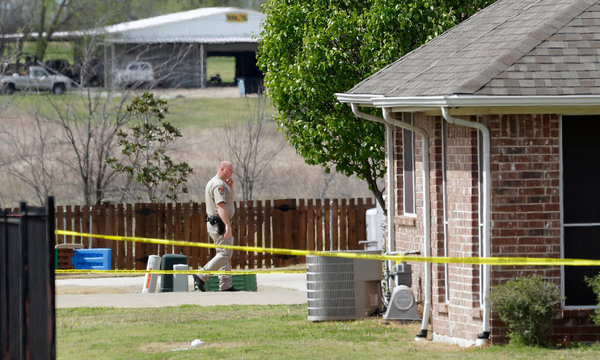
The home of Mike McLelland, the district attorney for Kaufman County.

The home of Mike McLelland, the district attorney for Kaufman County.

Is it possible that his bravado and the common knowledge that he was armed goaded the murderer?

Ceremony at the State Capitol building in Denver.

Ceremony at the State Capitol building in Denver.

The killing of prison chief, Tom Clements, does not appear to be caused by any white supremest leanings.  The cause may be prolonged solitary confinement  as Susan Greene wrote for the Colorado Independent.

In the weeks before his death, Evan Ebel, suspected killer of Colorado Department of Corrections Director Tom Clements, had broken ties with white supremacist prison gang 211 Crew and was debilitated by the transition from prolonged isolation to social contact, according to a friend and former fellow inmate.

In a series of interviews conducted with The Colorado Independent, parolee Ryan Pettigrew dismissed widespread media speculation that Ebel shot Clements as part of an orchestrated 211 Crew “gang hit.” He said that, over the course of the last few weeks, Ebel was growing increasingly agitated in his adjustment to life outside of prison and beyond the tiny “administrative segregation” cells in which he spent years deprived of regular human contact.

Ironically, Clements worried about the transition from solitary confinement.

In an exclusive interview last spring, Clements said that, immediately after Hickenlooper recruited him from Missouri to run the Colorado corrections department, he found disturbing “one very alarming statistic” he said kept him up at night — that 47 percent of Colorado prisoners being released from isolation were walking directly out onto the streets without help reintegrating into social environments and interacting with people.

Clements wanted longer transition periods and step-down programs before setting isolated prisoners free. As Pettigrew tells it, Ebel said he had little help making that transition. He said altercations during his brief period in a step-down program landed him back in isolation.

“You have to ask yourself the question – How does holding inmates in administrative segregation and then putting them out on a bus into the public, [how does that] square up?” Clements said.

“We have to think about how what we do in prisons impacts the community when [prisoners] leave,” Clements continued. “It’s not just about running the prison safely and securely. There’s a lot of research around solitary and isolation in recent years, some tied to POWs and some to corrections. My experience tells me that long periods of isolation can be counter-productive to stable behavior and long-term rehabilitation goals.”

All three acts of violence did involve guns.  The gun used to kill Clements was purchased legally, but transferred to Ebel illegally as a “straw” purchase.  Would the requirement for a background check on the private transfer have prevented Clements’ death?  Probably not.  Is that a reason not to require universal checks?  No.  There likely would have been no deterrent in this case, but it might just stop someone else.

Race may figure into Prosecutors McLelland and Hasse’s murders, but at least part of the motivation is the prosecution of a gang.  The New York Times story continues

One of several angles investigators have been exploring is whether Mr. Hasse’s killing involved members of the Aryan Brotherhood of Texas prison gang. Prosecutors in Mr. McLelland’s office had assisted in investigations of the gang, including a recent case that had dealt a major blow to the group’s leadership.

In that case, federal authorities announced in November that a grand jury in Houston had indicted more than 30 senior leaders and other members of the whites-only gang on charges of conspiring to participate in a racketeering enterprise. Federal officials said the defendants were also charged with involvement in three murders, multiple attempted murders, kidnappings and assaults and conspiracy to distribute methamphetamine and cocaine.

The indictments stemmed from an investigation led by a multiagency task force that included Kaufman County prosecutors and three other district attorneys offices. In December, the Texas Department of Public Safety issued a statewide bulletin warning officials that the Aryan Brotherhood was planning retaliation against law enforcement personnel who had helped secure the indictments.

Mr. Hasse was shot the same day that two members of the Aryan Brotherhood of Texas — Ben Christian Dillon, also known as “Tuff,” of Houston, and James Marshall Meldrum, also known as “Dirty,” of Dallas — pleaded guilty to racketeering charges in Federal District Court in Houston

Boston had a similar murder in 1995 when Paul McLaughlin an ADA known for his prosecution of gang members was murdered as he left a commuter rail station.  The man he was about to prosecute for the third time was convicted for the murder and is serving life.

It is a dangerous life working in the criminal justice system.  The sheer number of guns out there doesn’t help.  Neither does the criminal justice system itself.

Photograph of McLelland home Mike Fuentes/Associated Press

Photograph of Clements ceremony Matthew Staver for The New York Times

How to get a functioning government

Winning Progressive had a very interesting and thoughtful post this morning by NChrissie B.

We need political fringes because that’s where most new ideas begin. Many will be bad ideas, like the House Republican Budget’s plan to turn Medicare into a voucher program. Others will be good ideas, like the financial transactions tax in the Congressional Progressive Caucus “Back to Work” Budget. As the Economic Policy Institute report noted, that tax would “raise significant revenue while dampening speculative trading and encouraging more productive investment.” It would also discourage individual investors from day-trading and other mistakes that churn their savings into brokers’ profits.

New ideas tend to start on the fringes – right and left – because the fringes don’t have to govern. Think tanks, academics, pundits, and bloggers can kick around ideas without worrying about whether the ideas are politically viable. We did that at BPI when we discussed a Guaranteed Basic Income, an idea from and still on the political fringe. We didn’t talk about whether it could pass in the House or Senate. It couldn’t, at least not soon. But it might gain traction in some form, at some point, and such discussions open our eyes to other perspectives on work, wages, and the social safety net.

I wrote in my unpublished dissertation that social movements need racial fringes to make the movement look mainstream.  NChrissie B.  is arguing that the same is true of  legislating.  The danger, however, is that the Democrats ignore their progressive or left wing while the Republicans are ruled by their right or Tea Party wing.  This is where we seem to be right now and nothing is functioning.  We need to get back to a place where there is a middle ground.  NChrissie B. uses the Overton Window as an illustration.

overton window

I’d like to see the window moved a little more to the left and I think that could happen if Harry Reid would just fix the damn filibuster rules.  I also think the Democrats (and President Obama) need to take the Progressive Caucus budget a little more seriously than they do.  It would also help if Mitch McConnell grew a backbone.

The Mayor retires

He is 70 years old and has had health problems, but the big reason he is leaving is because he can’t get out and meet people the way he always has.  The New York Times put it this way

At an emotional announcement Thursday inside Faneuil Hall, Mr. Menino slowly navigated his way up the center aisle with his wife, Angela, to the thunderous applause from official Boston as well as city workers and admirers from the neighborhoods. Over the loudspeaker, Frank Sinatra crooned his defiant anthem, “My Way.”

“I am here with the people I love, to tell the city I love, that I will leave the job that I love,” Mr. Menino, 70, the city’s longest-serving mayor, told the standing-room-only crowd of well-wishers. He said essentially that he was not up to the job, at least not the way he wanted to do it. After illnesses last year that left him hospitalized for two months, he said he could not keep up his schedule of attending every ribbon-cutting, every dinner for a new homeowner, every school play — the small events that filled his days and threaded him to the city’s residents.

Thomas M. Menino says has met over 50% of the residents in Boston, a city of over 625,000 at last census.  No one will argue with that.  He’s been Mayor for 20 years.  Kevin Cullen has a slightly different take on this in today’s Boston Globe.

He talked about how he’s met half the people who live in Boston. That’s a great line, too, but it is misleading if you’re trying to figure out Tom Menino’s ability to hang onto a job for 20 years in a tough, unforgiving game. He may have met half the people who live in the city, but he’s met all the people who vote.

Eveyone has their favorite Menino moment.  I worked for the City of Boston for about 14 years.  I wrote talking points for him, letters for his signature, served on committees years before I started working for the city.  We would get the word that TMM needed something and knew it was the signal to drop everything else.  But my favorite Menino moment has little to do with my work.  Oh, I was at the event because of work, yes, but that isn’t the important part.

Thomas M. Menino spoke some comforting words to a Mattapan’s Edrei Olivero during a neighborhood walkthough.

Thomas M. Menino spoke some comforting words to a Mattapan’s Edrei Olivero during a neighborhood walkthough.

I was working at the Boston Housing Authority and everyone on executive staff had to attend some communities days.  Community days were when the residents of a public housing complex got together to socialize, picnic, and have fun.  They began as part of the push to make integration go more smoothly and to ease racial tension.  I did my share.  At one, I was helping a little girl of about 4 get an ice cream cone.  After standing in line, she got her cone.  We we walking back to where her mother was waiting and the ice cream plopped out of her cone onto the ground.  We were right in front of the Mayor.  Of course, the little girl started to cry.  Mayor Menino bent down and took her by the hand saying, “Don’t worry.  I’ll get you another one.”  And being the Mayor, he got right in front of the line and got her another cone.  We then walked  her back to her mother.  Maybe that little girl remembers the man who got her an ice cream but even if she doesn’t, I remember.  It remains my favorite Menino moment.

Kevin Cullen again

About 10 years ago, the mayor walked into a seminar at the Kennedy School of Government at Harvard. He searched for familiar faces, and he settled on mine and we laughed at the odds of a couple of knuckleheads like us being in the same room at Hahvahd.

An earnest young graduate student sheepishly interrupted our conversation and asked the mayor to explain his political success.

“I’m a Boston guy,” Tommy Menino told the kid, shrugging. “I’m just a Boston guy.”

His genius is making everyone feel they are from Boston, no matter where they came from.

Photograph Yoon S. Byun/Globe Staff/file 2010

A question for the Chief Justice

So, Mr. Chief Justice, where did you say you went to law school?  That’s what I want to ask Mr. Roberts after yesterday’s hearing on The Defense of Marriage Act or DOMA.

Here is the relevant exchange as reported by the New York Times.

He expressed irritation that the case was before the court, saying President Obama’s approach — to enforce the law but not defend it — was a contradiction.

“I don’t see why he doesn’t have the courage of his convictions,” the chief justice said. He said Mr. Obama should have stopped enforcing a statute he viewed as unconstitutional “rather than saying, ‘Oh, we’ll wait till the Supreme Court tells us we have no choice.’ ”

The White House took umbrage at the remark and said the president was upholding his constitutional duty to execute the laws until the Supreme Court rules otherwise. “There is a responsibility that the administration has to enforce laws that are on the books,” said Josh Earnest, a deputy White House press secretary. “And we’ll do that even for laws that we disagree with, including the Defense of Marriage Act.”

The Chief Justice should know that the President has to enforce laws until they are declared unconstitutional by a court.  Thus my question.

The situation, however, is a little bit more complicated.  NPR explains it this way.

Has the Obama administration abrogated its responsibility by continuing to enforce DOMA, while refusing to defend it in court?

Justice Antonin Scalia: “And I’m wondering if we’re living in this new world where the attorney general can simply decide, ‘Yeah, it’s unconstitutional, but it’s not so unconstitutional that I’m not willing to enforce it.’ If we’re in this new world, I — I don’t want these cases like this to come before this court all the time. And I think they will come all the time if that’s … the new regime in the Justice Department that we’re dealing with.”

Deputy U.S. Solicitor General Sri Srinivasan: “Justice Scalia, one recognized situation in which an act of Congress won’t be defended in court is when the president makes a determination that the act is unconstitutional. That’s what happened here. The president made an accountable legal determination that this act of Congress is unconstitutional.”

Paul Clement, lawyer for GOP House leadership in defense of DOMA: “The House’s single most important prerogative, which is to pass legislation and have that legislation, if it’s going to be repealed, only be repealed through a process where the House gets to fully participate.”

Justice Kennedy: “Suppose that constitutional scholars have grave doubts about the practice of the president signing a bill but saying that he thinks it’s unconstitutional — what do you call it, signing statements or something like that? It seems to me that if we adopt your position that that would ratify and confirm and encourage that questionable practice because if the president thinks the law is unconstitutional, he shouldn’t sign it, according to some view. And that’s a lot like what you’re arguing here. It’s very troubling.”

Deputy U.S. Solicitor General Sri Srinivasan: “But my point is simply that when the president makes a determination that a statute is unconstitutional, it can follow that the Department of Justice won’t defend it in litigation.”

What should a President do in a situation like this one?  Does he just continue to enforce the law while trying to get Congress to repeal it as Paul Clement seems to argue.  Or does he do what he did:  say he thought the law was unconstitutional while both appealing and enforcing it.  I suppose that he could have issued an executive order to the IRS to accept joint tax returns from all legally married couples but that would have created an even bigger uproar that going to the Supreme Court.

My point, Mr. Chief Justice, is that yes, this may be an unprecedented situation, but the job of the Supreme Court and therefore your job is to make the ultimate decision on Constitutionality.  So just do your job.  And by the way, where did you go to law school?

Edith Windsor, the plaintiff in the DOMA case,

Edith Windsor, the plaintiff in the DOMA case.

Photograph Christopher Gregory/The New York Times